SBS News
Nights Scarier Than Heatwaves: "Growing Heat Stress on Sleepless Nights"
Published : Aug 6, 2026 4:02 PM
Indeed, July this year set a new "nighttime record." According to the Korea Meteorological Administration, the average nighttime minimum temperature in July reached 23.4°C (74°F), the highest on record. This is 2.2°C higher than average years. Yesterday and today, Seoul's nighttime minimum temperatures were 29°C (84°F) and 28.9°C (84°F) respectively, temperatures high enough to be considered daytime highs. Yangcheon District in Seoul recorded 29.9°C (86°F), the highest in Seoul, exhibiting extreme tropical night conditions.
Heat Stress Index Intensifying Rapidly at Night
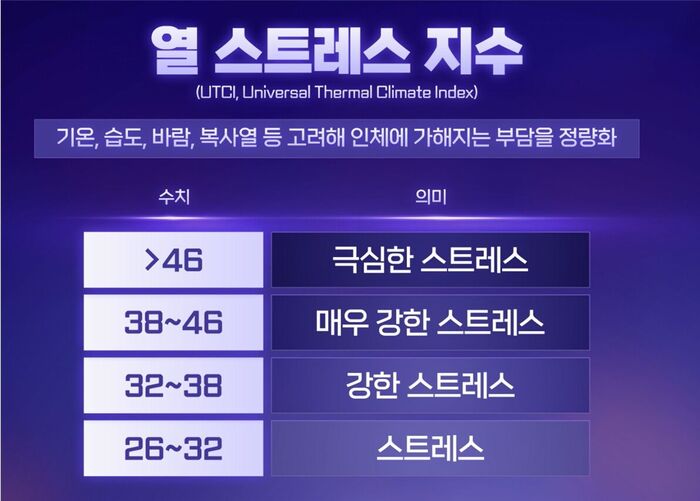
Research shows that the global Heat Stress Index has risen steadily. When comparing day and night, nighttime indices rose more steeply than daytime ones. While the daytime Heat Stress Index increased by 0.27°C per decade, the nighttime index had a larger increase at 0.32°C.
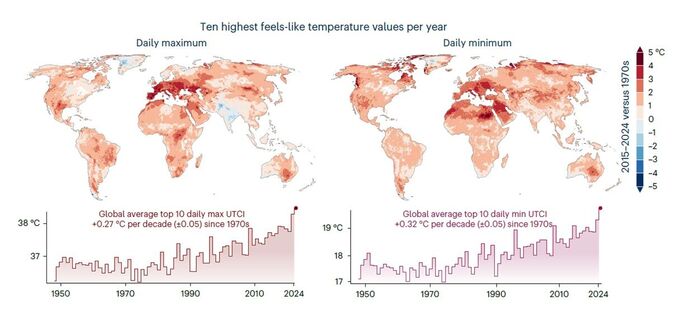
▲ Left - Graph of daytime heat stress index increase, Right - Graph of nighttime heat stress index increase / Daytime +0.27, Nighttime +0.32
Heat Stress Added During Tropical Night Periods
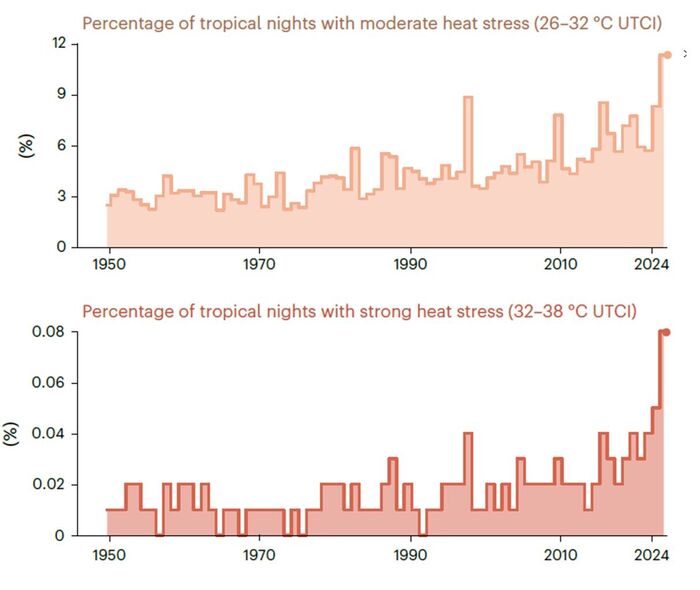
According to European researchers, days on which the human body feels heat stress during tropical nights are also steadily increasing. The levels of heat stress categorized as "moderate" and "strong" have both grown steadily, with the proportion of experiencing heat stress surging especially since 2010. Days experiencing strong heat stress in 2024 increased by 4 to 5 times compared to the 1950s. Beyond simply hot nights, nights that can adversely affect the human body are becoming more frequent.
Night is a crucial time for our body. It is the time when our body, which worked hard during the day, can recover for the next day. However, when temperatures remain high at night and cause heat stress, the time available for recovery decreases.
Kang Jae-heon | Professor of Family Medicine, Kangbuk Samsung Hospital
"(When nighttime temperatures are high,) it becomes a problem for cardiovascular disease. At night, as we rest, the cardiovascular system including the heart also gets to rest, following daytime heat where capillaries dilate and the heart pumps hard. However, if body temperature stays high at night, these cardiovascular organs, including the heart, cannot rest, causing blood pressure or pulse to accelerate. Prolonged exposure to such an environment increases the risk of cardiovascular disease."
Extreme Stress Soars in East Asia
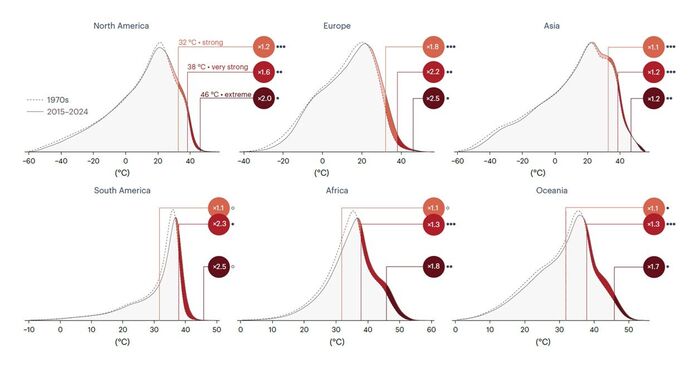
Are we then relatively safer than Europe or the Americas? A closer look at the data for Asia tells a different story. The research team divided Asia into 11 subregions, and the extreme heat stress index in the East Asia region, which includes South Korea, was analyzed to have surged by 11 times. Given that East Siberia, which showed the second highest increase, grew by about 5 times, one can immediately see how large the increase in East Asia is. It was not a situation to feel relieved by being deceived by overall Asian statistics.
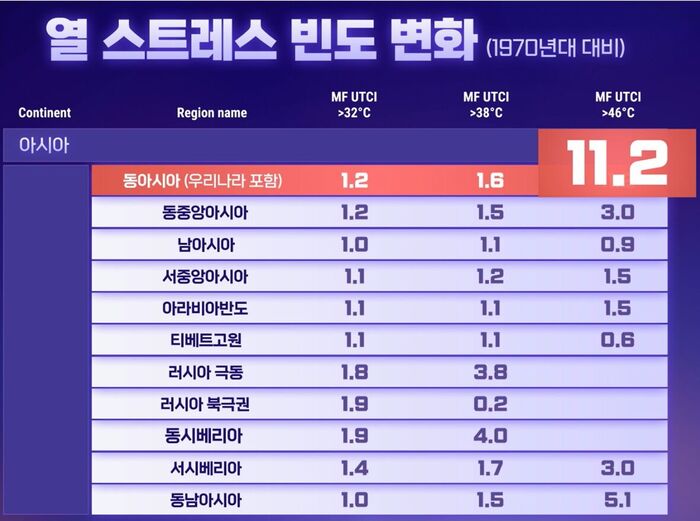
Population Exposed to Heat Stress Increases by 1 Billion… What Is the Real Cause?
The population experiencing strong heat stress for at least 90 days a year increased from 55% in the 1970s to around 70% in recent climate conditions. Seven out of 10 people worldwide are exposed to strong heat stress for more than three months a year.
The population experiencing extreme heat stress index for at least one day also increased, from around 16% in the 1970s to 22% recently. According to the research team, an additional 1 billion people in total population are exposed to extreme heat stress.
The research team analyzed that the increase in the population exposed to heat stress was not due to a larger global population than in the past, but rather because the number of days with high heat stress index has increased.
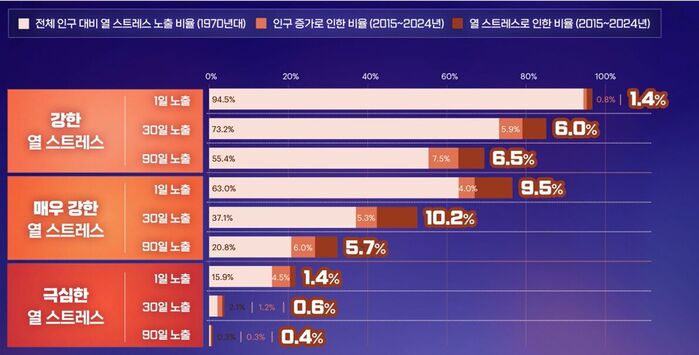
▲ The highlighted percentage (%) on the far right of the graph represents the increase in the proportion due to heat stress
This year, Yangsan in South Gyeongsang Province recorded a whopping 42.5°C (109°F), setting the highest temperature in meteorological observation history, while intense heat near 40°C (104°F) continues in Seoul. Nighttime temperatures also continue to linger near 30°C (86°F), making both day and night difficult times for us. While individual health management rules such as reducing outdoor activities and drinking plenty of water are important, measures addressing nights that are heating up even faster also seem necessary.
<References>
Rebecca Emerton, Julien Nicolas, Anna Lombardi & Claudia Di Napoli, "Global heat stress intensification and its expanding footprint on the human population", nature climate change(2026) 16, pages 989–996, doi.org/10.1038/s41558-026-02670-5
※ Please note: This article was translated by AI and may contain errors.
Copyright Ⓒ SBS. All rights reserved. Unauthorized reproduction, redistribution, and use for AI training are prohibited.