SBS News
Swarms of Cockroaches 'Pouring Out'... Truth Behind Rumors of Spread Near Seoul Station
Published : Jul 31, 2026 11:19 AM
Experts Say 'No Way to Determine Seoul's Cockroach Population'

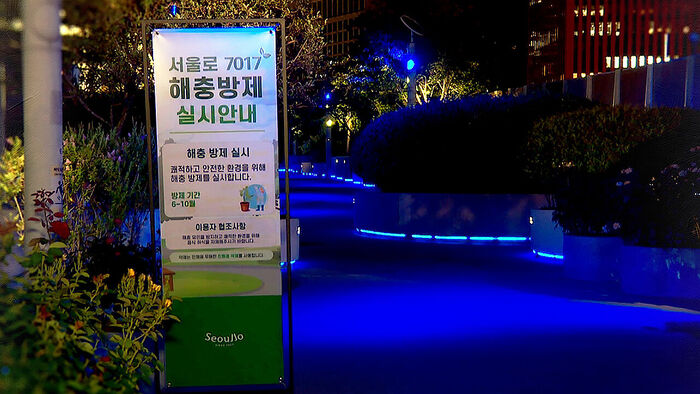
▲ Cockroaches found at Seoullo 7017
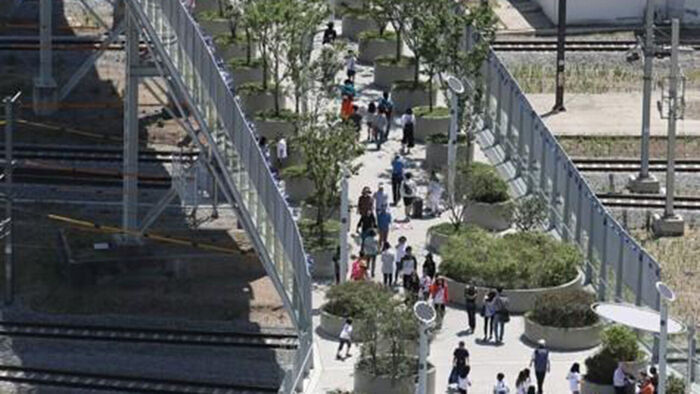
Videos showing a swarm of cockroaches appearing at "Seoullo 7017" near Seoul Station recently went viral on social media, becoming a topic of intense discussion.
Some claimed that the cockroach population is increasing, with roaches from Seoullo 7017 spreading beyond the immediate area into nearby apartment complexes.
As seen in the videos circulating on social media, it is true that cockroaches appeared at Seoullo 7017.
Cockroaches are pests known for their extraordinary survival abilities and rapid reproduction rates.
A single female cockroach can lay over 40 eggs and multiply into hundreds in a single year.
In addition, their thin, flexible bodies allow them to easily hide in tiny crevices, making them hard to detect.
High temperatures and high humidity particularly affect the growth and activity of cockroaches.
The appearance of cockroaches at Seoullo 7017 is analyzed to be a result of such environmental factors.
Yang Young-chul, a sanitary pest expert and professor in the Department of Health, Environment and Safety at Eulji University, said, "Humidity is crucial for cockroach habitats, and because flower beds were built at Seoullo 7017 and are regularly watered, it created a favorable environment for cockroaches." He added, "As the location became widely known as a walking area, food dropped by visitors likely contributed to their feeding, increasing the population."
However, experts state that an increase in cockroaches at Seoullo 7017 does not confirm whether the overall cockroach population across Seoul has increased.
Jeon Gye-nam, a senior researcher at the Korea Pest Control Association, said, "To determine whether the population has increased, data must be collected from the same location over several years and scientifically analyzed, but no such data exists."
Kim Dong-geon, head of the Environmental Ecology Research Institute at Sahmyook University, also explained, "There is no historical data showing past numbers, and just because there are many in one area does not mean there are many in other areas, making it difficult to judge whether the population has changed."
An official from the Infectious Disease Control Team of the Seoul Metropolitan Government also stated, "After checking with several experts, there appear to be no research data estimating Seoul's cockroach population, so it is impossible to tell whether numbers have risen recently."
Although there is no objective data to confirm population size, circumstantial evidence suggests that the cockroach population in Seoul may have increased.
This is because complaints requesting pest control due to cockroach sightings at district offices across Seoul have recently increased.
According to data on pest complaints received and processed by the Seoul Metropolitan Government, obtained by Rep. Kim Wi-sang of the People Power Party, a member of the National Assembly's Climate, Energy, Environment and Labor Committee, the number of cockroach-related complaints received and processed in Seoul from January to June this year reached 6,158.
This figure accounts for 52.2 percent of the total complaints received and processed during the entire previous year (11,789 cases).
Considering that pest-related complaints are concentrated in the summer months, total complaints this year are likely to be significantly higher than last year.
According to the data, cockroach-related complaints received and processed in Seoul have grown rapidly over recent years, with 2,379 cases in 2021, 3,905 in 2022, 5,470 in 2023, 7,241 in 2024, and 11,789 in 2025.
However, some experts point out that the recent rise in complaints may be influenced by increased human mobility following the end of the COVID-19 pandemic.
This is because during the pandemic, people refrained from going outdoors, leading to fewer opportunities to see cockroaches outside.
Furthermore, experts assess that even if Seoul's cockroach population has grown, it is difficult to attribute it to the cockroaches at Seoullo 7017.
Professor Yang analyzed, "Although cockroaches have highly developed wings, they can only fly about 15 to 20 meters at most," adding, "It is impossible for them to fly around and spread across all of Seoul like lovebugs."
A Seoul city official also remarked, "Everyone agrees that such an interpretation makes no sense, and experts would likely agree."
So why are claims emerging online that cockroaches are appearing far more frequently than before?
Some point to rising overall temperatures due to climate change as the cause.
However, experts agreed in unison that the widespread attention drawn to the Seoullo 7017 cockroach video could be a primary reason.
They explain that once people become aware of the presence of cockroaches, they suddenly notice them more, making it feel as if there are more around.
Senior Researcher Jeon said, "While climate change might play a role as discussed on social media, the issue at Seoullo 7017 led to a series of sensational videos by YouTubers. As a result, people who watched these videos or heard about them started paying closer attention."
Director Kim also noted, "Lovebugs have received greater public interest as they were covered in the media, and exposure on platforms like YouTube has had an effect."
Another factor is that high summer temperatures combined with the monsoon season have made cockroaches more noticeable recently.
Professor Yang Young-chul said, "With heavy rain in the Seoul metropolitan area recently, cockroaches living in sewers and around manholes appear to have emerged in large numbers. Also, extensive sewer cleaning is done in the metropolitan region right before the monsoon season for smooth drainage, and the vibrations caused during cleaning likely prompt many cockroaches to escape and move elsewhere, bringing them to people's attention."
The creation of green spaces, such as parks throughout Seoul, is also analyzed to have had an effect.
A Seoul city official said, "During heatwaves or heavy rain, cockroaches living in sewage pipes often emerge, and as more green spaces are created in urban areas, it creates favorable environments for cockroaches to live."
Director Kim explained why cockroaches are seen more often in urban centers, saying, "Urban green spaces themselves serve as habitats for insects. But when bugs appear, people dislike them, so pest control work is carried out, and ultimately, only tough species resistant to insecticides survive — which are cockroaches."
Cockroaches are pests that go beyond being unpleasant to look at; they pose a serious threat to hygiene and health.
According to a news card recently published by the Seoul Metropolitan Government's Citizen Health Bureau, cockroaches spread various infectious diseases such as food poisoning, cholera, and typhoid fever.
They also trigger asthma and chronic rhinitis.
According to the National Health Information Portal of the Korea Disease Control and Prevention Agency (KDCA), adults and children exposed to cockroaches, along with fumes, vapors from gasoline or biofuels, and mold, have a high incidence rate of asthma.
The KDCA also pointed to cockroaches as one of the causes of perennial allergic rhinitis, where symptoms persist year-round.
For this reason, some autonomous districts in Seoul, including Geumcheon-gu, Seongdong-gu, and Jungnang-gu, define flies and cockroaches, which can directly or indirectly transmit pathogens and cause harm, as "sanitary pests" in their local ordinances.
Cockroaches are also the pest most avoided by the general public among various harmful insects.
According to a report titled "Status of Harmful Urban Pest Spread in Seoul and Response Measures" published by the Seoul Institute in April last year, a survey of 1,000 Seoul residents on their perceptions of harmful urban pests showed that cockroaches were the most disliked or feared simply by looking at them at 66 percent, followed by bedbugs at 60.1 percent, lovebugs at 42.6 percent, and mosquitoes at 39.2 percent.
In this regard, how to eradicate cockroaches that appear in homes is also a matter of great curiosity for many people.
The Seoul Metropolitan Government advises that a fundamental approach is needed: blocking entry routes and managing habitats.
In terms of habitat management, food waste should be sealed and stored, and foreign matter, food scraps, and pipes around the kitchen should be properly maintained.
Since pipes, drains, windows, kitchen hoods, and ventilation fan outlets are the main entry routes, fine screens or seals should be installed in those places to block gaps.
There are posts online claiming that using specific products is highly effective.
However, even in the same space, different types of cockroaches require different chemicals and dosages, making it better to seek professional help.
This is because it is difficult for individuals to accurately identify the species or entry routes, and using the wrong chemicals may only foster resistance in the pests.
Apartment complexes are legally required to conduct self-disinfection, but when cockroaches are spotted in public places, contacting the local district health center will prompt pest control operations.
(Photo: Yonhap News)
※ Please note: This article was translated by AI and may contain errors.
Copyright Ⓒ SBS. All rights reserved. Unauthorized reproduction, redistribution, and use for AI training are prohibited.