SBS News
Random Chat App Operators Forwarded to Prosecution for Luring Paid Messages with Fake Female Chatters
Published : Jul 30, 2026 10:16 AM
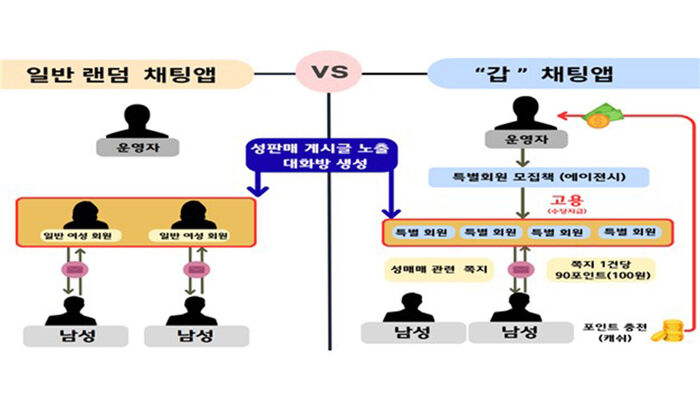
▲ Overview of the case
The operators of a random chat application who deployed chat part-timers posing as female members to induce male users into making paid purchases have been handed over to the prosecution.
The Gyeonggi Nambu Provincial Police Agency's Crime Prevention and Response Unit announced today (July 30) that a total of five individuals have been booked without detention and forwarded to the prosecution on charges including fraud. These include two people in their 50s, such as app operator A, and three people in their 50s, such as part-time job recruiter B.
Operator A and the others are accused of employing chat part-timers known as "chatters" designated as "special members" while running the chat app from January 2024 until recently, deceiving general users into believing prostitution was possible to drive paid transactions.
Recruiter B and the others are accused of posting advertisements in open chat rooms saying, "Work-from-home part-time jobs available," recruiting office workers, college students, and high school students, and instructing them to pose as female special members.
They posted notices stating that members who engaged in wholesome activities without any reports for a certain period were selected as special members, thereby luring chat app users into conversing with these special members.
During conversations with special members, users were required to pay a fee equivalent to 100 won per message (point deduction), and additional content such as photos and videos were sold for around 3,000 won and 10,000 won, respectively.
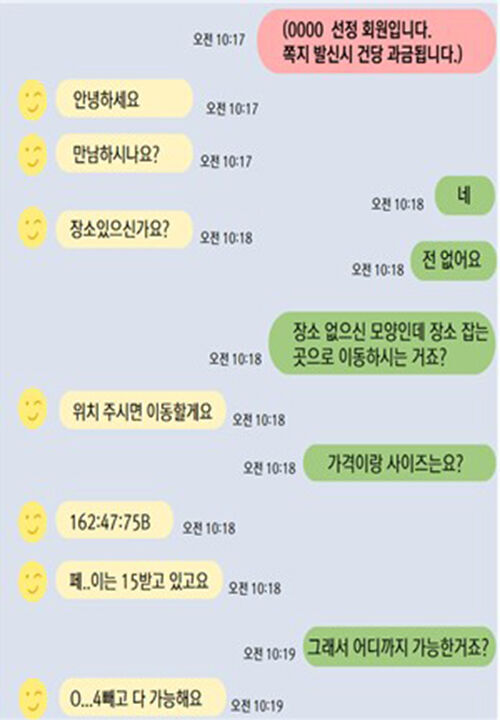
Police estimated that they amassed illicit profits totaling approximately 2.7 billion won through these methods.
The special member part-timers posted nicknames and texts implying prostitution to lure men seeking paid sex. They chatted as if they would actually meet, but once specific conversations regarding offline meetings began—such as setting the time and place—they exited the chat rooms.
Police launched an investigation after receiving a tip-off in September of last year while arresting a prostitution broker through an undercover operation, which stated, "There is a chat app that lures users into paid purchases by pretending to be women." Following a 10-month investigation, police booked A and the others.
Additionally, police applied charges of violating the Act on the Punishment of Acts of Arranging Sexual Traffic (abetting prostitution) against operator A and other managers who introduced the irregular "special member" system without taking appropriate measures despite knowing that prostitution was rampant within the chat app.
Meanwhile, the chat app, which launched service in 2019, saw its cumulative number of subscribers surpass 1 million (with an estimated 60,000 daily users) after the introduction of the special member system, up from about 830,000 in 2023.
Among prostitution arrests made by police nationwide over the past seven years (2019–2025), a total of 729 prostitution cases (668 under the Act on the Punishment of Sexual Traffic and 61 under the Act on the Protection of Children and Youths against Sex Offenses) were traced back to this app.
A police official stated, "Based on the operational format of A and the others' chat app, we determined that it provided a space where prostitution could take place at any time," adding, "This is the first nationwide case where chat app operators have been referred to prosecution with charges of abetting prostitution, and it is expected to raise awareness across the industry."
(Photo provided by Gyeonggi Nambu Provincial Police Agency, Yonhap News)
※ Please note: This article was translated by AI and may contain errors.
Copyright Ⓒ SBS. All rights reserved. Unauthorized reproduction, redistribution, and use for AI training are prohibited.