SBS News
Fed Delivers Hawkish Rate Freeze; Will Bank of Korea Speed Up Hikes?
Published : Jul 30, 2026 8:12 AM

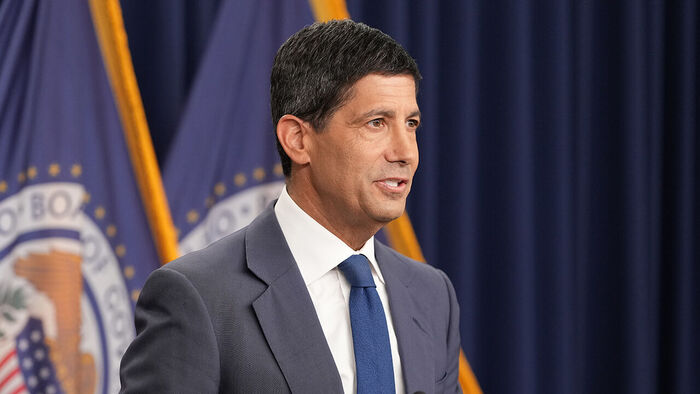
▲ Bank of Korea Governor Shin Hyun-song
As the U.S. Federal Reserve decided on a "hawkish rate freeze" favoring monetary tightening, the likelihood of the Bank of Korea (BOK) accelerating its own monetary tightening has grown.
Amid intensifying concerns over inflation originating from the Middle East, the BOK entered a monetary tightening cycle on the 16th ahead of the United States.
With expectations mounting that the U.S. may also raise interest rates at least once within the year, some observers suggest the BOK could hike rates in August following July.
The Fed froze its benchmark interest rate at 3.50% to 3.75% during its regular Federal Open Market Committee (FOMC) meeting held on the 28th to 29th (local time).
The U.S. benchmark interest rate has been frozen for five consecutive meetings in January, March, April, June, and July of this year.
This marks the second consecutive freeze since the inauguration of Fed Chair Kevin Warsh.
However, unlike last June, three members within the Fed argued for a rate hike, leading the atmosphere to be interpreted as "hawkish."
The Fed stated that this rate freeze was decided by a vote of 9 in favor to 3 against among the 12 FOMC members.
Three members—Beth Hammack (Cleveland), Neel Kashkari (Minneapolis), and Lorie Logan (Dallas)—voted against the freeze, casting their votes for a 0.25 percentage point rate hike.
The Fed's policy statement was nearly identical to the one issued at last month's meeting.
Following last month, the Fed stated, "Inflation remains elevated relative to the FOMC's 2 percent objective," adding, "The Committee will achieve price stability."
In a subsequent press conference, Chair Warsh re-emphasized, "There is only one single goal, and that is 2 percent" (inflation rate).
He stated, "High inflation over the past five years has left some households, businesses, and market experts with a hard-to-shake, incorrect impression that the Fed's implicit inflation target is higher than 2 percent," adding, "There is no relaxed inflation target."
Market expectations are growing that the Fed will raise interest rates in September.
In the "dot plot" of future interest rate projections released last month, Fed officials projected a median of one rate hike within the year.
According to CME's FedWatch, rate futures markets priced in an approximately 72% probability that the Fed will raise rates in September immediately following the rate decision announcement.
The BOK's Monetary Policy Board raised the benchmark interest rate by 0.25 percentage points to 2.75% during its monetary policy direction meeting on the 16th, entering monetary tightening for the first time in 3 years and 6 months.
There is no disagreement in the market over the outlook that the BOK will additionally raise rates at least once more within the year.
However, regarding the timing of the hike, views are split between projections that rates will be raised consecutively in July and August, and expectations that rates will be frozen in August and then hiked in October or November.
In a parliamentary report yesterday, BOK Governor Shin Hyun-song stated, "It is reasonable to curb core inflation growth by maintaining the benchmark interest rate hike stance," but regarding the timing of a hike, he only maintained a principled stance, saying, "We will monitor incoming data and economic conditions."
During a press conference on the 16th, when asked about the "consecutive August hike theory," Governor Shin did not rule out the possibility of consecutive hikes, stating, "We will conduct policy with all possibilities open."
At the same time, he stated that he would carefully examine second-quarter GDP growth figures and inflation figures coming out in early August in relation to this.
Growth indicators for the second quarter released last week maintained strong growth momentum, lending weight to the possibility of consecutive rate hikes in August.
South Korea's real gross domestic product (GDP) growth rate for the second quarter (compared to the previous quarter, advance estimate) recorded 0.6%, continuing a solid growth trend following the first quarter's 1.8%.
This performance significantly exceeds the BOK's forecast from last May (0.2%).
Accordingly, the possibility has also grown that the BOK will raise its annual growth forecast to the 3% range.
In a work report submitted to the National Assembly yesterday, the BOK stated, "The domestic economy's growth momentum this year is projected to expand significantly more than last year," adding, "It is expected to rise sharply compared to the May forecast (2.6%)."
Amidst this, depending on the July inflation rate to be announced early next month, it appears it will be decided whether the BOK will immediately proceed with consecutive rate hikes at its monetary policy direction meeting on the 28th of next month.
With international oil prices remaining at high levels in July and the recovery trends in domestic demand and consumption expanding, inflationary pressures are generally assessed to be high.
Along with exports centered on semiconductors, domestic demand and private consumption are also showing solid improvement trends, making it highly likely that demand-side inflationary pressures will mount.
Governor Shin said in yesterday's parliamentary report, "We are watching core inflation more closely, and the core inflation rate rose to 2.5% in May," adding, "Demand-side pressure following the economic boom continues to exist."
If the BOK implements consecutive benchmark rate hikes in August, room also opens up for three hikes within the year, totaling 0.75 percentage points.
Citibank economist Kim Jin-wook projected in a recent report that as second-quarter GDP growth exceeded expectations, the BOK Monetary Policy Board will raise the benchmark interest rate by 0.25 percentage points next month.
He forecasted that the BOK will raise the benchmark rate by 0.25 percentage points each in August, November, and February of next year, bringing the final rate level to 3.5%.
However, there is also a perspective that the possibility of consecutive rate hikes in August is low when considering recent exchange rate conditions and inflation outlooks.
Ahn Ye-ha, a senior research analyst at Kiom Securities, stated, "We see a higher possibility of a freeze in August followed by a hike in October," citing as grounds that "the inflation rate is expected to peak in the third quarter and then slow down, and the upward trend in exchange rates is also easing from a supply-demand perspective."
She added, "Next month's inflation indicators are more important, and if core inflation rises sharply, room for an August hike could still arise."
(Photo: AP, Yonhap News)
※ Please note: This article was translated by AI and may contain errors.
Copyright Ⓒ SBS. All rights reserved. Unauthorized reproduction, redistribution, and use for AI training are prohibited.