SBS News
Screams Echo Among Rainbow Flags: Vehicle Terror Turns Europe's Major Pride Festival into Bloodbath
Published : Jul 28, 2026 9:02 AM
Berlin Pride Festival Van Terror: Islamic Extremist Attack Sparks Outcry Over Security System Failure

⚡ Summary
Incident Overview: A terrorist attack occurred at the "Christopher Street Day" LGBTQ+ festival in Tiergarten Park, central Berlin, where a minivan rammed into a crowd, killing one person and injuring 29 others.
Suspect Hunt: The suspect was identified as Abdul Ballout, a 21-year-old Lebanese-German with a history of attempting to join ISIS. He committed the crime while serving a suspended sentence and undergoing a deradicalization program, and was shot dead by police after a 20-hour manhunt.
Political & Social Fallout: Fierce criticism has erupted over the effectiveness of the government's terrorism surveillance network, while immigration and security policy conflicts have emerged as central political issues ahead of Berlin's state parliamentary election in September.
At 10 p.m. local time on July 25, Tiergarten Park in central Berlin, Germany. A white minivan plowed into the area where "Christopher Street Day," one of Europe's largest Pride festivals, was in full swing. The vehicle struck the crowd before crashing into a tree, and the driver fled on foot wielding a bladed weapon. One person was killed and 29 others were injured. Police immediately launched a massive search and shot the suspect dead about 20 hours later. German authorities stated that all evidence points to the incident being an "Islamist terrorist attack." What exactly happened?
1. Tragedy Strikes a Peaceful Festival
On Saturday evening, hundreds of thousands of people filled the streets of Berlin for the annual Christopher Street Day event. The festival, which commemorates the 1969 Stonewall riots in New York, began in West Berlin in 1979 and has since grown into one of Europe's largest LGBTQ+ rights events. About 80 parade floats traversed the city center, and performances continued on a stage in front of the Brandenburg Gate.
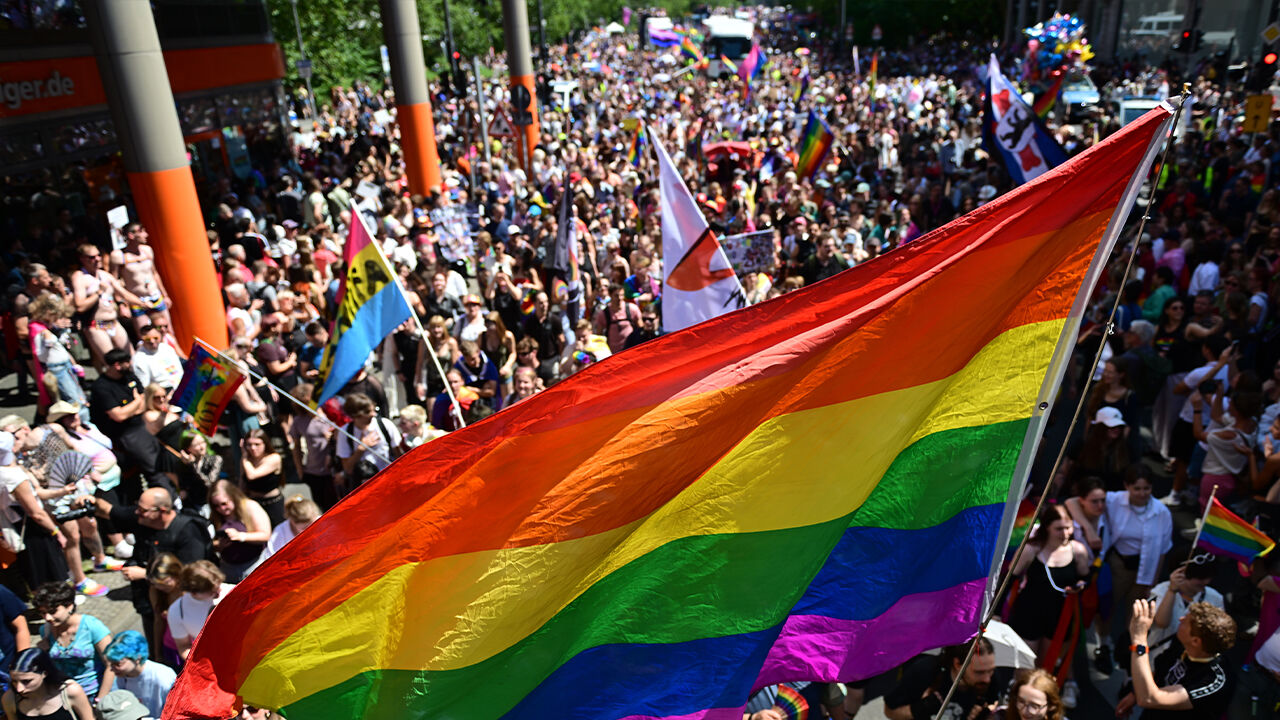
However, around 10 p.m., a white Citroën minivan plowed onto a promenade in Tiergarten Park, right next to the festival grounds. The vehicle ran down pedestrians before coming to a stop after colliding with a tree. The driver got out of the car and fled while brandishing a bladed weapon, reportedly a machete. There were victims at the scene who suffered stab wounds. One woman died, and 29 people were injured. Performances on stage were halted, and organizers issued an emergency evacuation order: "Please go home. Do not walk through the park."
That was how the festival came to an end.
2. Suspect's Identity and Flaws in the Security System
Police immediately initiated a search for the suspect. The suspect was 21-year-old Abdul Ballout, a German national of Lebanese descent. Police stated that he was "linked to Islamist circles in Berlin."
According to German media outlets Bild and Der Spiegel, Ballout was an ISIS supporter. Reuters and AP reported that German intelligence and legal authorities had placed him on a list of "high-risk terrorist threats" and kept him under observation.
In May 2025, Ballout attempted to travel to Mauritania via Turkey but failed, after which he tried to go to Syria via Lebanon to join ISIS. He was arrested in Lebanon while contacting ISIS-related individuals and served three months in prison, before being arrested again at Berlin Airport in November 2025. In May, a court sentenced him to one year and 10 months in prison on charges of "preparing a serious act of violence endangering the state," but suspended the sentence. He had been ordered to participate in a deradicalization program.
With the confirmation that a suspect accused of serious crimes, who was already registered by authorities as a potential terror threat, committed the crime while receiving only deradicalization training under a suspended sentence rather than serving time in prison, criticism is mounting over fatal loopholes in Germany's judicial system and security network.
3. Massive Search Involving 2,200 Officers and Suspect Shot Dead
Throughout Sunday, police expanded the scope of their search across Berlin, including airports, train stations, and border areas. Helicopters hovered overhead, and officers armed with submachine guns patrolled the streets. More than 2,200 police officers were deployed.
Then, at 6 p.m. Sunday, Ballout was located in an allotment garden area in Spandau, western Berlin. He charged at officers while wielding a knife, and police opened fire. He died at the scene.
4. Condemnation from German Leadership and Citizen Resistance
Interior Minister Alexander Dobrindt said at a press conference on Sunday afternoon:
"Everything we see points to an Islamist terrorist attack. The suspect was an individual known to authorities with a history of multiple criminal offenses, radicalization, and affiliation with Islamist organizations."
Chancellor Friedrich Merz said at a memorial service:
"We will defend our freedom, openness, and liberal way of life with everything we have. The sole goal of these people is to divide our society. Please do not give in to threats."
Berlin Mayor Kai Wegner condemned the attack, saying, "After a peaceful and vibrant Pride parade, a gathering for tolerance and peace was attacked in the most brutal manner. This is an attack on our free and open society."
At 2 p.m. Sunday, thousands gathered at the square in front of the Brandenburg Gate. Despite the rain, people waved rainbow flags and held a moment of silence for the victims. One participant held a large placard reading, "From grief to anger, from anger to resistance!"
Alfonso Pantisano, the Berlin state government commissioner for LGBTQ+ affairs, wrote on Instagram: "Dear beloved community, I know that many of you are feeling fearful right now. To be honest, so am I. But in this fear, in this grief, and in this anger, you are not alone."
49-year-old drag artist Armin Dönnhölter said, "Events in recent years did make us think that our event could be targeted someday. But we will not bow down."
5. Recurring Vehicle Attacks and Political Fallout Ahead of September Election
Germany has experienced several similar vehicle-ramming attacks in recent years. In December 2016, a Tunisian man drove a truck into a Berlin Christmas market, killing 13 people. In December 2024, a Saudi-born psychiatrist rammed a vehicle into a Christmas market in Magdeburg, leaving six dead and more than 300 injured.
The latest attack occurred ahead of Berlin's state parliamentary election in September. Amid a strong rightward shift across Europe, controversy over failures in immigration and security policies has emerged as the biggest variable deciding the outcome of the state election.
The far-right party Alternative for Germany (AfD) reacted immediately. Co-leader Tino Chrupalla wrote, "We will not allow religious extremists to divide our country through violence and intolerance." AfD MP Martin Hess criticized, "Islamism is the greatest security threat to our country," calling it a "complete failure of government security policy."
Debate within German society over immigration and security is reigniting once again. As terrorism targeting ordinary people enjoying a festival strikes, can Germany safeguard its freedom and openness?
Deep Dive Q&A
Q1. Why were authorities unable to prevent the crime even though the suspect was already under surveillance?
A. The suspect, Abdul Ballout, was convicted of preparing a serious act of violence endangering the state, but received a suspended sentence and was undergoing a deradicalization program intended for rehabilitation. Although investigative authorities classified him as a "high-risk individual," physical detention or 24-hour tight surveillance was legally impossible, preventing them from stopping the crime in advance. Consequently, lenient punishment for high-risk terror threats and flaws in the surveillance system have come under intense scrutiny.
Q2. How will this affect the upcoming Berlin state parliamentary election in September?
A. Immediately following the terror attack, the far-right Alternative for Germany (AfD) labeled the current government's immigration and security policies a "complete failure" and intensified its offensive. Since terrorism and security issues are pivotal factors shaping German voter sentiment, this incident is expected to fuel the rally of far-right forces while significantly escalating political strife between ruling and opposition parties over immigration policy and judicial reform.
Q3. Why do events like Christmas markets and Pride parades become primary targets?
A. Large outdoor festivals feature dense crowds while making access control and perimeter security difficult, leaving them vulnerable to vehicle-ramming and knife attacks. Furthermore, LGBTQ+ events and religious festivals symbolize Western society's "freedom, tolerance, and openness." Thus, Islamic extremist forces frequently target them to highlight their ideological opposition and maximize societal division.
※ Please note: This article was translated by AI and may contain errors.
Copyright Ⓒ SBS. All rights reserved. Unauthorized reproduction, redistribution, and use for AI training are prohibited.