SBS News

The End of Reform Detached from Reality
Under the banner of enriching the country and strengthening the military, the New Policies aimed to prevent exploitation by large landowners and wealthy merchants, stabilize public livelihoods, and particularly protect self-farming peasants. He implemented the Green Sprouts Law (Qingmiao Law), which allowed the government to lend grain and funds to farmers at low interest rates during the spring famine and have them repay during the autumn harvest; the Service Exemption Law (Moyi Law), which hired professional laborers using tax revenue collected from citizens instead of requiring them to perform direct labor service; and the Equal Delivery Law (Junshu Law) and Market Exchange Law (Shiyi Law), under which the state directly engaged in buying and selling goods and intervened in market transactions to actively manage prices. There was a valid rationale, good intentions, and strong resolve, but ultimately, the New Policies failed. This was because they failed to properly reflect reality. The Green Sprouts Law degenerated into an instrument of exploitation as corrupt local officials forced loans on farmers to boost their performance records. The Service Exemption Law also resulted in merely increasing the burden on the people by raising taxes. The Equal Delivery Law and Market Exchange Law produced the counterproductive effect of undermining the market's autonomous adjustment mechanisms through excessive state intervention. The old vested interests, who were already dissatisfied with the New Policies, abolished most of them and revived the old laws once the emperor supporting the reform died. Amid severe backlash, the social system worsened beyond what it had been before the implementation of the New Policies, eventually serving as a trigger for the fall of the Northern Song Dynasty. The greatest legacy left by the New Policies was the lesson that "reform is bound to fail if detached from reality."
2. Concerns and Backlash Over Abolishing Supplementary Investigation Authority
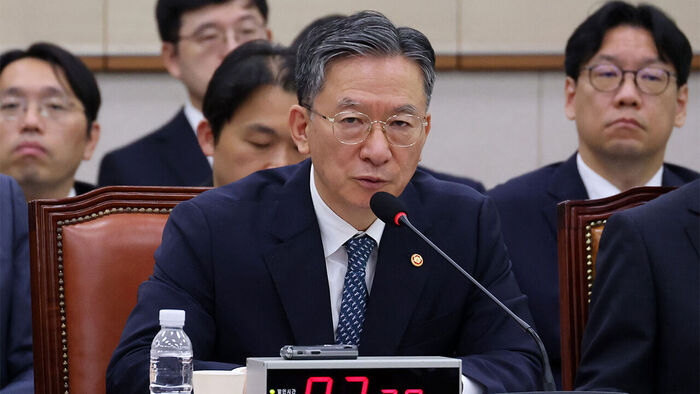
Justice Minister Jung Sung-ho has virtually made clear his intention to resign. Attending a plenary session of the National Assembly's Legislation and Judiciary Committee today (July 27), Minister Jung stated when asked about offering his resignation, "Because prosecutorial reform is mostly complete in the big picture, I had been thinking even before (the Democratic Party) announced the abolition of supplementary investigation authority that new wine should be put into new wineskins." He further said, "My health is not good. I had surgery and suffer from quite severe sleep disorders. It is with those aspects in mind that (I expressed my intent to resign)." Minister Jung had consistently voiced concerns about side effects regarding the pro-government block's complete abolition of supplementary investigation authority, arguing for complementary measures to keep the police in check, such as transferring all cases. For this reason, he engaged in heated debates with some hardline lawmakers from the Democratic Party of Korea and the Rebuilding Korea Party. However, after the Democratic Party ultimately adopted the complete abolition of supplementary investigation authority as its party platform, he is reported to have solidified his decision to resign from his position as minister.
Talk is also emerging that Acting Prosecutor General Ku Ja-hyun will express his intention to resign soon. Within legal circles and inside and outside the prosecution service, observers predict that Acting Chief Ku will decide on his position after watching the passage through the National Assembly plenary session of the revision bill to the Criminal Procedure Act, which contains the complete abolition of supplementary investigation authority. Acting Chief Ku had reportedly conveyed concerns to the political sphere about side effects stemming from the abolition of supplementary investigation authority, but after they were not accepted, he expressed a sense of helplessness to those around him.
② Even Within Democratic Party, Progressive Civic Groups and Media Say 'This Isn't Right'
Following the "Jang Yun-gi case," concerns over the complete abolition of supplementary investigation authority are not being raised solely by the opposition People Power Party. Some lawmakers within the Democratic Party have also presented legislative amendments exceptionally granting prosecutors supplementary investigation authority. Furthermore, calls to retain prosecutors' supplementary investigation authority are spreading to progressive victim organizations and civic groups. Progressive media outlets also argue for the necessity of complementary measures. However, the Democratic Party remains immovable.
③ Loopholes Affecting Public Livelihoods Must Be Plugged
The biggest concern they raise is the suffering of crime victims caused by delays in case processing and "ping-pong investigations." They say that if prosecutors cannot conduct supplementary investigations directly and are left with only the right to request supplementary investigations from the police, the phenomenon of cases bouncing back and forth between the prosecution and police could intensify. They point out that this carries the risk of infringing on victims' rights to a speedy trial due to prolonged investigation periods, and making timely punishment of criminals difficult owing to the expiration of detention periods.
They also worry about the weakening of national crime response capabilities and gaps in protecting the socially vulnerable. In complex economic and financial crimes or power-based corruption cases, if prosecutors in charge of maintaining public prosecution cannot conduct supplementary investigations directly, supplementing evidence required to maintain indictment could become inadequate. There is also the possibility that prosecutors' active efforts to prove charges could be restricted in cases involving children, persons with disabilities, or sexual violence where victims find it difficult to file objections on their own.
There is also a major issue regarding the effectiveness of check-and-balance mechanisms against the police, who will become a new power group. If verification measures regarding the police's authority to conclude investigations or their monopoly on investigations are not properly established during the process of reducing prosecutorial powers, society could be exposed to risks of another abuse of power or investigation cover-ups. We witnessed in the "Jang Yun-gi case" that such concerns could easily materialize in reality.
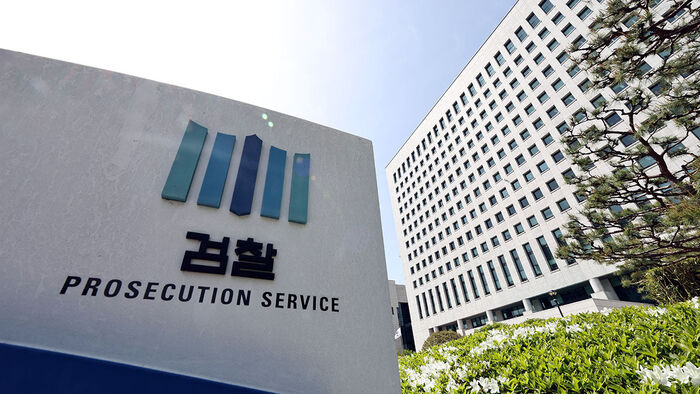
3. The Key Element for Reform Success Is 'Public Support'
Throughout history, the success or failure of countless reforms did not lie in grand justifications or purity of intentions. It was mostly decided by "whether it actually works well in practice." The reform separating investigation and prosecution also requires an intricate approach that satisfies practical needs—such as crime victim protection and efficiency in criminal justice procedures—beyond merely presenting grand justifications for reform to succeed. Pushing forward relying solely on justification while ignoring concerns over numerous obvious side effects will bring prosecutorial reform face-to-face with a fundamental question: "Is a reform focused solely on 'weakening the prosecution' while risking a practical crisis of criminal justice system breakdown and victim neglect a reform for the people? Or is it politicians 'serving their own interests'?" If a responsible answer cannot be provided to this question, rather than becoming an "irreversible reform," it risks being denounced as an "unreasonable reform," bringing about an even greater retreat due to backlash.
※ Please note: This article was translated by AI and may contain errors.
Copyright Ⓒ SBS. All rights reserved. Unauthorized reproduction, redistribution, and use for AI training are prohibited.