SBS News
Taking Anti-Cancer Injections to Terminate Pregnancy... Will the Mother and Child Health Act Remain a 'Hot Potato' Forever?
Published : Jul 27, 2026 5:48 PM
A Legislative Vacuum Unchanged Even After 7 Years

The deadline set by the ruling to amend the provisions was December 31, 2020, but the National Assembly failed to reach an agreement by then, causing the clauses to lose effect starting that day. The legislative vacuum that began then continues to this day in 2026. Although the penal provision lapsed, Article 14 of the Mother and Child Health Act and Article 15 of its Enforcement Decree on the "Permitted Limits of Induced Abortion Operations"—which specify under what circumstances, up to how many weeks of gestation, and through which methods abortion is allowed—remain in place. While some view that all abortions have essentially become permissible due to the removal of criminal penalties, confusion persists in the medical field because these provisions of the Mother and Child Health Act have not been clearly settled. Recently, another axis of debate has emerged: whether to introduce—or legalize—abortion pills, epitomized by Mifegyne. Although the clause in Article 269, Paragraph 1 of the Criminal Act penalizing abortion through "drugs or other methods" has lapsed, there is still no legal provision explicitly permitting pregnancy termination through medication. As a result, South Korea's Ministry of Food and Drug Safety (MFDS) continues to withhold approval for abortion pills.
98th National Agenda Item: "Improvement of Laws/Systems for Pregnancy Termination and Introduction of Medication"
These provisions of the Mother and Child Health Act, which repeatedly resurfaced and subsided after April 2019, came back into the spotlight last year when the Lee Jae-myung administration took office. The State Affairs Planning Advisory Committee, created in place of a presidential transition committee, released the "Five-Year Plan for the Lee Jae-myung Administration," which included "Guaranteeing Women's Safety and Right to Health" as the 98th national agenda item. Specifically, it promised to improve laws and systems regarding pregnancy termination and to introduce abortion medication to guarantee sexual and reproductive health rights.
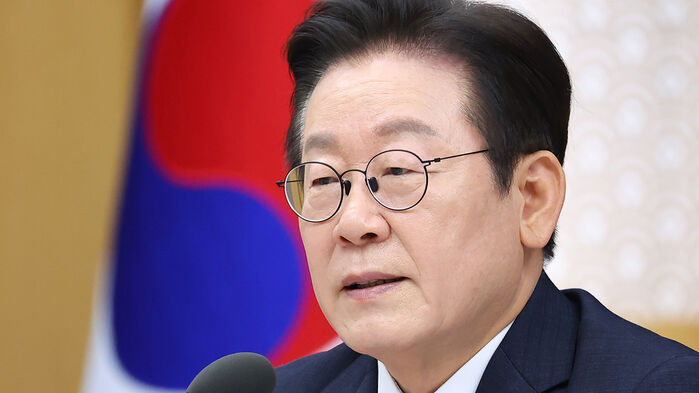
President Lee Jae-myung has also personally brought up abortion pills on a consistent basis. Last December, during a work report session for the Ministry of Gender Equality and Family, President Lee emphasized the need to introduce abortion pills, questioning, "Isn't the government essentially pretending not to see and leaving the situation neglected?" Won Min-kyong, Minister of Gender Equality and Family, responded, "I have been reported that several ministries are deliberating on this together," to which President Lee reiterated, "I don't know how many years they have been deliberating." When responses followed that revisions to the Criminal Act and the Mother and Child Health Act were ultimately necessary, President Lee ended the discussion for the time being by asking, "Is there really no administrative way to handle this unless the law is clarified? Let's keep thinking about it."
And seven months have passed. A similar conversation was repeated at a Cabinet meeting on July 14. Pointing out again the reality that women are purchasing unverified abortion pills through overseas direct purchases or secondhand markets without a doctor's prescription, President Lee remarked, "We should enable proper administration, and I feel it is irresponsible for the government to proceed like this." Oh Yu-kyeong, Minister of Food and Drug Safety, replied, "Once the legal system is completed, we execute administrative action," while Won Min-kyong, Minister of Gender Equality and Family, said, "Even before a legal amendment, the MFDS can approve it," exchanging answers that seemed to pass responsibility to each other. Watching the exchange, President Lee diagnosed the reality, stating, "By leaving it outside the law, the government may shirk responsibility, but the public is put in danger."
The Reality of Seeking Even Anti-Cancer Injections to Terminate Pregnancy
While it is a medication already used in 101 countries worldwide, in South Korea, besides buying and taking 'illegal' drugs on the black market, some women are opting for anti-cancer injections: specifically, MTX injections. Methotrexate (MTX), an injectable drug originally approved for treating conditions such as leukemia and osteosarcoma, is being used for pregnancy termination. According to obstetrician-gynecologists, the drug had originally been used off-label to terminate ectopic pregnancies. When this reporter visited an OB-GYN clinic in Gyeonggi Province last week requesting a consultation for pregnancy termination, the clinic explained that there were two methods: surgery and this MTX injection. An official at the clinic, quoting 850,000 won for two injections, responded to the reporter's question on whether it was dangerous by saying, "Rather than saying whether it's good or bad for the body, since it's an anti-cancer drug that kills good cells too, your immunity may drop." Some clinics even used MTX injections to terminate 'intrauterine' pregnancies. Searching for MTX injections on web portals revealed OB-GYN clinics advertising the injection for pregnancy termination. Some included promotional lines claiming it was 'very safe for the uterus.' When calling directly to inquire whether the MTX injection could be administered for an 'intrauterine' pregnancy, the clinic explained that many women hesitant to undergo early-stage surgery seek out this injection.

In fact, MTX injections are not a newly emerged choice for women. Going back 17 years, the existence of MTX injections was already mentioned in official government documents. A case in point is a "Drug Safety Letter" sent by the MFDS under the name of the Director General of the Pharmaceutical Safety Bureau to the medical and pharmaceutical communities in November 2009 (before the Constitutional Court's decision on the unconstitutionality of abortion criminalization). Pointing out that information had been received that MTX injections were being used for "illegal abortions" rather than approved purposes, raising safety concerns such as misuse and side effects, the MFDS issued a warning letter to doctors and pharmacists stating that off-label use was inappropriate. The MFDS also listed potential side effects for patients administered the drug, noting reported adverse reactions such as abnormal oogenesis, ovarian failure, infertility, hemorrhagic enteritis, and various severe infections. Women have been using a medication capable of leaving such severe sequelae beyond mere pregnancy termination for at least 17 years, raising doubts about whether this can simply be dismissed as 'a choice made because women do not value their own bodies.' It calls for examining whether women were pushed to this option while access to safer alternatives remained blocked. One cannot help but ask what the relevant authorities—who knew this reality better than anyone—have been doing, and whether they were literally 'shirking responsibility while leaving the issue outside the law.'
Has a Platform for Discussing "Improvement of Laws/Systems for Pregnancy Termination" Even Opened?

Under the Lee Jae-myung administration, following the announcement by the State Affairs Planning Advisory Committee, a series of partial amendment bills for the Mother and Child Health Act were proposed. In July and December 2025, Representatives Nam In-soon and Park Joo-min of the Democratic Party introduced bills, while Representative Cho Bae-sook of the People Power Party introduced a bill in November 2025. While all agree on filling the legislative vacuum left by the Constitutional Court's unconstitutionality ruling, the proposals by Representatives Nam and Park on one hand, and Representative Cho on the other, differ in direction. Looking closely at the bills by Rep. Nam and Rep. Cho, which show significant differences: Rep. Nam proposes removing Article 14, "Permitted Limits of Induced Abortion Operations," from the Mother and Child Health Act altogether, arguing that women face major difficulties because official information on pregnancy termination remains lacking and medical access has gone underground despite abortion being decriminalized for over six years. In other words, eliminating the five restricted conditions for permitted abortions would further expand women's right to self-determination. Furthermore, in Article 2 (Definitions), her proposal replaces "induced abortion operation" with "induced pregnancy termination," enabling termination through medication as well as surgery, and goes a step further to apply health insurance coverage for such procedures. Conversely, Rep. Cho Bae-sook emphasized above all that a fetus is a life. Stating that public consciousness regarding the boundary between abortion and murder has blurred since the Constitutional Court ruling, her bill proposes moving the 24-week limit currently in the Enforcement Decree into the parent statute itself and restricting it to 22 weeks. It also introduces a provision ensuring doctors face no unfavorable treatment if they refuse an abortion request. It contains no provisions regarding the introduction of abortion pills.
In March, bills containing these various perspectives were jointly tabled at a plenary meeting of the National Assembly Health and Welfare Committee and referred to the 1st Bill Review Sub-committee the next day. Attending this sub-committee, then-First Vice Minister of Health and Welfare Lee Se-ran stated that given the significant public interest in the Mother and Child Health Act centered around Article 14, discussions should continue after the government prepares a consolidated bill. Representative Kim Sun-min of the Rebuilding Korea Party expressed concern that discussions might end up going in circles and urged setting a deadline or beginning discussion on at least a portion of the bill, followed by Democratic Party Representative Baek Hye-ryun stating that it would be right for the government to produce a consensus proposal if possible, requesting a government bill within one to two months. In response to lawmakers repeatedly asking for a timeline, Vice Minister Lee replied, "We will ensure it can be discussed in the first half of the year at the latest." Yet now, having passed the first half and entered the second half of the year, there is no sign of a government bill being presented.
Under these circumstances, President Lee Jae-myung raised the question at the Cabinet meeting on July 14 as to whether a legislative amendment must strictly be a prerequisite. His argument was that debating up to how many weeks pregnancy termination should be allowed could take all night, and since it is not an issue that should be handled that way, a practical approach should be taken instead. In doing so, he brought up the phrase "doctor's discretion." Since a doctor's duty involves making judgments about human life, the idea was to let doctors decide on whether to prescribe abortion pills based on the situation, weighing respect for fetal life and women's health comprehensively. Although he suggested that this would be better than women taking medication in the shadows without any prescription or management, without any explanation of whether the government had truly 'pulled an all-nighter' debating fiercely, or whether it had gathered public opinion through intense discussion with ruling and opposition parties and civil society to create a government bill by the promised first half of the year, one cannot erase the impression that the heavy burden of ethical decision-making is being shifted onto individual doctors. Immediately, the Korean Association of Obstetricians and Gynecologists criticized, "The National Assembly and the government have neglected their duty to enact alternative legislation and overhaul systems," adding, "Allowing medication to be prescribed solely based on a doctor's arbitrary judgment without a clear legal framework—such as an amended Mother and Child Health Act specifying legal gestational limits and permitted standards—is a cowardly act that plunges medical practice into judicial risk and dispute."

The Mother and Child Health Act Has Reflected the Times... What About in 2026?
Since then, the history of amendments to the Mother and Child Health Act has reflected changing state ideology over time. In 2005, entering an era where population decline became a concern, regulations on postpartum care center businesses were codified in the Mother and Child Health Act in step with the enactment of the Framework Act on Low Birthrate in an Aging Society. In 2009, the law was amended to define "maternity" in the Mother and Child Health Act to include not only pregnant women but also "women of childbearing age." The Ministry of Government Legislation stated the reason for the amendment was to efficiently promote measures to improve maternal and infant health in an era of low birth rates. Provisions on sterilization and contraceptive procedures were removed, and new legal grounds were established for support programs for in vitro fertilization costs. In 2015, the concept of "subfertility" (infertility) was newly specified in the Mother and Child Health Act. The reason for the amendment was to contribute to solving low birth rate issues by encouraging active pregnancy and childbirth. Ultimately, from its inception, the Mother and Child Health Act held an instrumental character designed as part of family planning projects, and today functions as legal grounds supporting natalist policies.
The reason for revisiting the history of the Mother and Child Health Act here is to point out that the Act reflects the times, as well as the state's perspective in viewing and resolving the embedded problems. Therefore, considering the reality of pregnancy terminations taking place today in 2026, one reaches the conclusion that the state must not leave the Mother and Child Health Act 'neglected' like this. Meanwhile, critics also point out that viewing pregnancy termination solely within the framework of the current Mother and Child Health Act risks reducing it to merely a factor threatening maternal health. Such arguments are interpreted as calling for a comprehensive revision of the Mother and Child Health Act or new legislation. There are also arguments that the inclusion of "socioeconomic reasons" under Article 14's "Permitted Limits of Induced Abortion Operations"—a point of debate since its enactment—must be addressed together. However, far from reaching discussions on these potentially more controversial aspects, the dominant view is that the current Mother and Child Health Act and the relevant authorities surrounding it have engaged in continuous 'omission.' In a commentary, the People's Health Institute stated that authorities have functioned in a manner that 'delays access to safe pregnancy termination and shifts the resulting risks onto individuals,' adding that it was 'not an absence of responsibility, but a political choice'—an 'exercise of power deferring the state's duty to guarantee reproductive health.' To avoid further criticism, relevant authorities must step forward responsibly to engage in discussions on amending the Mother and Child Health Act, embodying the spirit of protecting women's right to self-determination, which was the intent of the Constitutional Court's decision. There is no reason for the Mother and Child Health Act to remain a 'hot potato' forever. This is also a demand from reality to literally fulfill 'Improvement of laws and systems for pregnancy termination and introduction of medication,' which this administration personally pledged as its 98th national agenda item.
References used for writing this article
- Kim, Sun-hye. 2020. From Duty of Motherhood to Reproductive Rights: Critical Review of the Mother and Child Health Act and Exploration of Directions for Revision. Ewha Gender Law Review Vol. 12 No. 2. 1-44.
- People's Health Institute. The Oldest Decision Surrounding Abortion: Doing Nothing. People's Health Commentary.
- Shin, Yu-na and Choi, Kyu-jin. 2020. History of Article 14 of the Mother and Child Health Act (Permitted Limits of Induced Abortion Operations): Focusing on Changes in Meaning According to Population Policy Shifts and Debates on Including 'Socioeconomic Reasons'. Critical Social Policy No. 66. 93-130.
- Jang, Min-sun. 2015. Study on Directions for Amending the Mother and Child Health Act to Support Healthy Pregnancy and Childbirth. Issue Analysis 2015-04. Korea Legislation Research Institute.
- Korea Institute for Health and Social Affairs. 1991. 30 Years of Population Policy.
※ Please note: This article was translated by AI and may contain errors.
Copyright Ⓒ SBS. All rights reserved. Unauthorized reproduction, redistribution, and use for AI training are prohibited.