SBS News
"I Bet My Life Like a Gamble": An Jae-hyung & Jiao Zhimin's 'Love of the Century' Transcending Borders and Ideology
Published : Jul 26, 2026 3:19 PM

The story of "that day" we want to tell "you" this time is from the episode aired on July 23, titled "Love of the Century - An Jae-hyung ♥ Jiao Zhimin." Appearing as "story friends" were Vernon of SEVENTEEN, Sandeul of B1A4, and actor Kim Su-jin. (In line with Kkokkomu's signature style, this review is conducted in an informal tone.)
▲ The Woman He Fell For at First Sight
1984, 42 years ago. The Asian Table Tennis Championships were held in Islamabad, the capital of Pakistan. South Korea's national team competed in this tournament. Let me introduce one of the players.
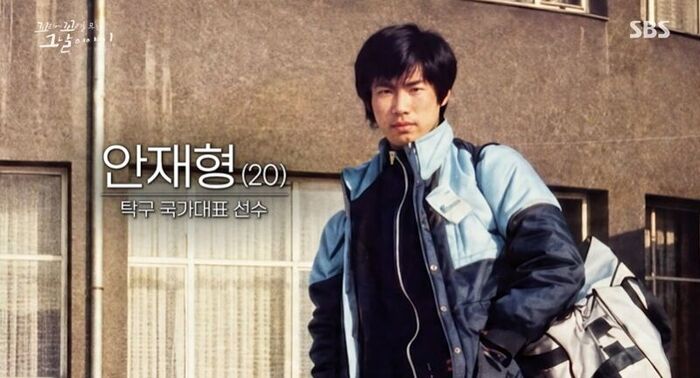
His name is An Jae-hyung. Age 20. The youngest on the national team. It was his second international tournament. You can imagine how eager he was to do well. On top of that, Jae-hyung was extremely diligent. Analyzing other players' matches was part of his routine.
That day was no exception. As he watched intently with wide eyes, carefully analyzing the movement of the ball, a female player's black hair swished back and forth in front of his eyes. A ponytail, as we call it today. Every time she moved following the ball, her tightly tied hair swung back and forth. It was right at that moment. Just as she was about to receive her opponent's serve, she brushed back the hair that had fallen over her forehead with her hand. Suddenly, the bouncing sound of the ping-pong ball, the referee calling out the score, and the cheers of the crowd—none of it reached Jae-hyung's ears at that moment. Right in the middle of a crowded arena, everything turned quiet, as if only that female player and Jae-hyung were left in the world. He fell in love in an instant. Let's hear what he had to say about that moment.
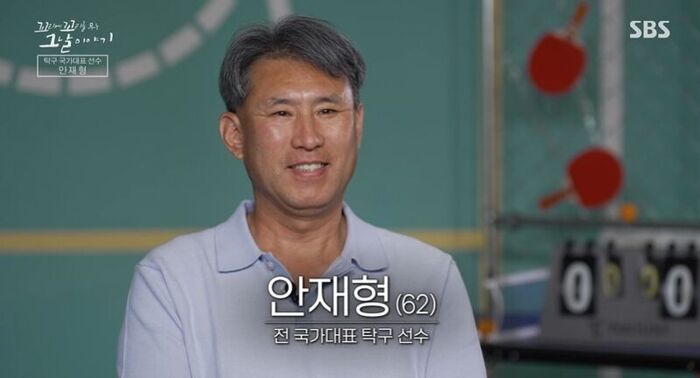
"Hello, I'm An Jae-hyung, who served as a national team table tennis player from 1983 through the 1988 Olympics. When I first saw her at the 1984 tournament, she immediately caught my eye. She was great at table tennis and was also exceptionally beautiful, so I was interested in her. At the time, she had long, straight hair flowing gracefully. She also played table tennis gracefully, and she had a unique habit. Because her hair was long, she kept brushing it back like this. At first, she just looked so pretty."
- An Jae-hyung (62), former national table tennis player
Do you believe in love at first sight? You know, when out of a vast crowd you can only see that one person, and that scene gets imprinted in your mind like a photograph, coming back to you day and night. For 20-year-old Jae-hyung, this was that exact moment.
So who was the person Jae-hyung fell for at first sight? The woman he was smitten with... it was this player.
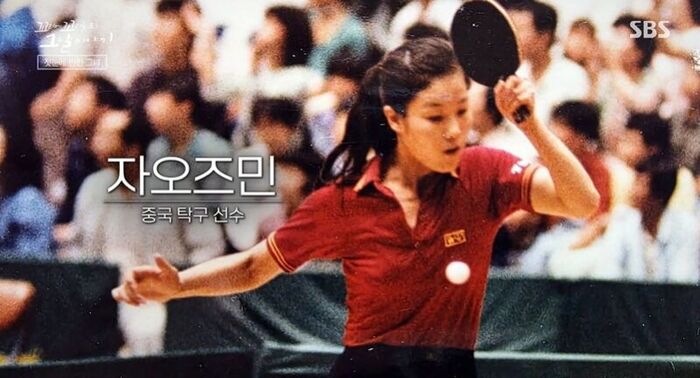
Chinese table tennis player Jiao Zhimin. In South Korea, she was also called 'Cho Ji-min', reading her Hanja characters directly. Let me show you a newspaper article about her from back then.
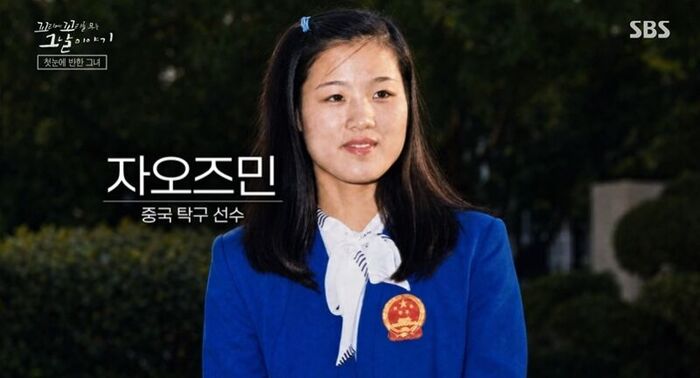
"Who is the most beautiful athlete in the athletes' village? Table tennis player Jiao Zhimin. Black hair falling on both sides and fair skin. Not only is she pretty, but her table tennis skills are remarkable. She contends for the top spot in Communist China."
In other words, she was a top star of her era who had both looks and skills. Let's hear what a teammate who competed alongside Jae-hyung that day had to say.
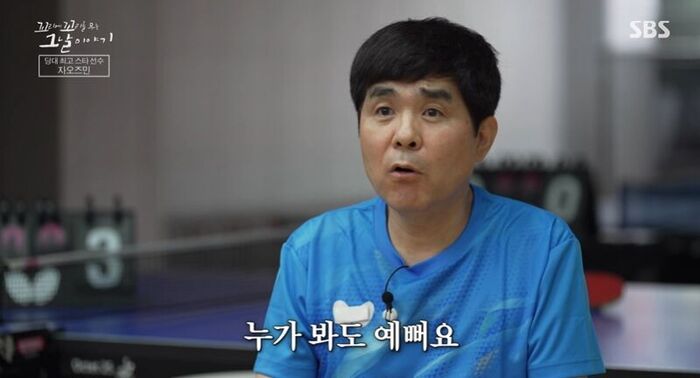
"Hello, I'm Kim Ki-taek, former national team table tennis player. Everyone liked (Jiao Zhimin). She was beautiful by anyone's standards. But she was also great at table tennis. Jiao Zhimin was skilled at high-toss 'sky serves,' tossing the ball high into the air. She had long hair tied up, and after serving and hitting the ball, she would flip her hair back. That would make guys' hearts skip a beat—it's totally understandable from a guy's perspective. But I didn't have a crush on her. That's why I can talk about this so confidently. I just thought 'She's pretty,' but never thought beyond that. I mean, she was everyone's ideal type. But what could we do? We didn't speak the same language. So we just watched her from a distance."
- Kim Ki-taek, former national table tennis player
Players from various countries lingered around her, just hoping to strike up a conversation. But the real issue now was time. The tournament lasted only nine days. International tournaments were not frequent, and there was no guarantee of being selected for the national team again next year. If he didn't talk to her now, he might never know when he would see her again. Did Jae-hyung end up speaking to Zhimin?
A few days passed, and after finishing a match, Jae-hyung casually looked around and spotted her nearby. She was wiping her face with a towel. At that exact moment, the thought flashed through Jae-hyung's mind: 'Now is my chance.' Acting as if he just happened to have business nearby, Jae-hyung walked up to her, trying his best to look calm. His legs were trembling. But there was an even bigger problem: language. What could he say to her in Chinese? The only Chinese he knew was a simple greeting, "Ni hao."
With every step closer, thump-thump, all Jae-hyung could hear was his own heartbeat. Finally, he stood in front of her. Gathering all his courage, he spoke: "Ni hao." Her eyes turned toward Jae-hyung. Then, coolly, she tossed back a single word: "Ni hao." That was it. From Zhimin's perspective, imagine how many male players greeted her at the arena. Just like that, she walked away.
So he had managed to do what every other guy did—say hello. What did Jae-hyung do next? He imitated the very gesture that had burned into his mind when he first saw Zhimin: brushing back the hair falling over her forehead.
What kind of expression did Zhimin have when she looked at Jae-hyung? An 'Uh, what is he doing?' kind of look. From that day on, every time Jae-hyung ran into her, he brushed his hair back and grinned. Once, twice, three times. He kept doing it, and then one day, for the first time, Zhimin looked at Jae-hyung and smiled back.
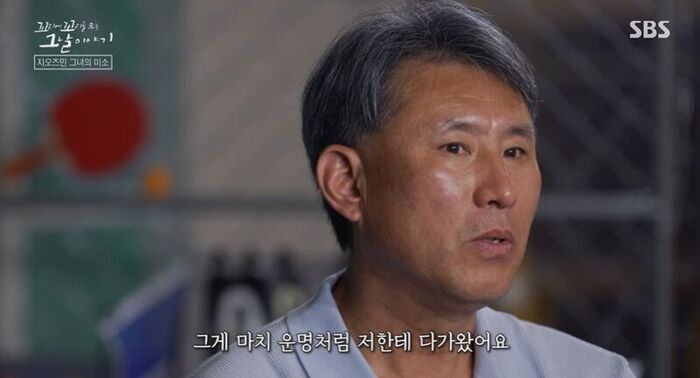
"She wasn't even aware of her own habit, so when I kept imitating how she did that while playing table tennis, I remember her laughing. Every time we met, it was fun and enjoyable, and it felt like destiny approaching me."
- An Jae-hyung, former national table tennis player
Jae-hyung's heart was pounding. The woman he fell for at first sight was smiling at him. Even though they couldn't speak the same language, every meeting was filled with joy. This was what people today call "flirting" or a "spark."
Traditionally, the start of a romance begins with exchanging phone numbers. But this was 1984. There were no mobile phones, let alone social media. In the end, letters were the only thing that could connect the two. After brief encounters that began with "Ni hao" and ended with "Zai jian," they had to return to their respective countries—without knowing when they would meet again.
It wasn't just a matter of having no way to contact each other or not speaking the same language. An even higher and sturdier wall stood between them. Today, we call it the People's Republic of China, or China for short. But back then, South Korea referred to it as Communist China. In 1984, South Korea and Communist China did not even have diplomatic relations. Official exchanges were extremely limited. During the Korean War, the two nations had even pointed guns at each other. Thus, visiting each other was out of the question, and even making a phone call or sending a single letter wasn't free. Simply put, Communist China back then was a country almost as distant and cautious as North Korea.
And so, half a year passed without the two having any contact.
▲ A Love Fondly Nurtured
In 1985, the following year, the World Table Tennis Championships kicked off in Sweden. Jae-hyung was selected for the national team once again. 'Could Zhimin be here too?' naturally crossed his mind, but he quickly snapped out of it. Right now, he had to focus entirely on table tennis. He had no choice, because the men's national team's performance at the time was at its worst.
Jae-hyung, too, sat with a heavy heart, his head lowered for a long time. Right at that moment!
"Ni hao!"
After half a year, Zhimin appeared right in front of his eyes. Jae-hyung said he was shaking so much he felt like his breath had stopped. His heart, which had been dark just moments ago, brightened like magic. He wanted to tell her, "Zhimin, I missed you. Seeing you makes me smile for no reason," but his lips could only quiver. Unable to speak Chinese, he was overwhelmed with frustration.
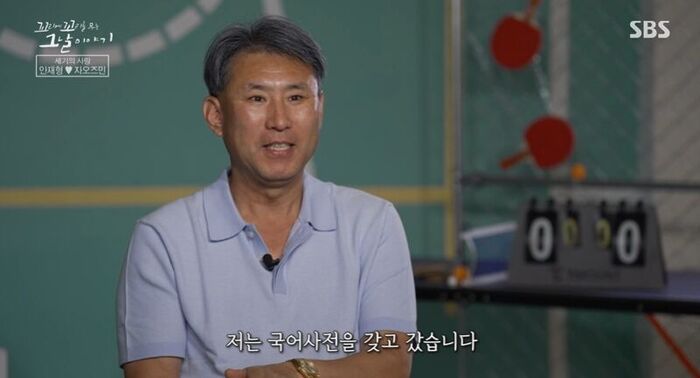
"When you meet again at the next tournament after several months, you're so glad to see each other. But even though you're happy to see her face, you can't say much. So to communicate back then, I brought a Korean dictionary with me."
- An Jae-hyung, former national table tennis player
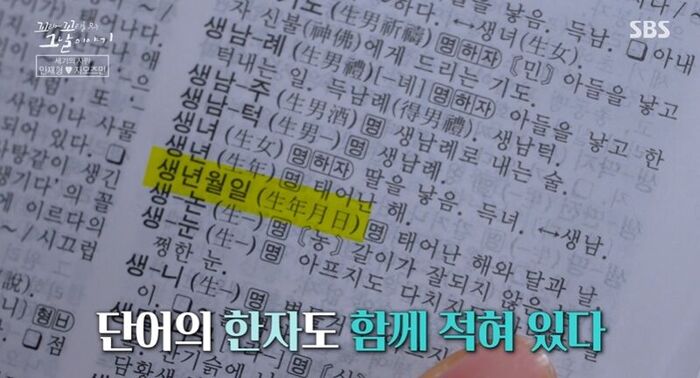
No matter how much you try to communicate with hand gestures and body language, there's a limit. The secret weapon he brought was a Korean dictionary. In Korean dictionaries, Chinese characters (Hanja) are printed next to the words. The first thing Jae-hyung asked that day was her age. They conversed in writing, asking and answering by writing down Chinese characters.
"We happened to sit near each other during meals. So I asked her how old she was, and she said she was born in such-and-such month of 1963. I lied about my age and said I was born in 1962. I didn't want to say 'I'm younger than you,' so in the spur of the moment I said that. (laughs)"
- An Jae-hyung, former national table tennis player
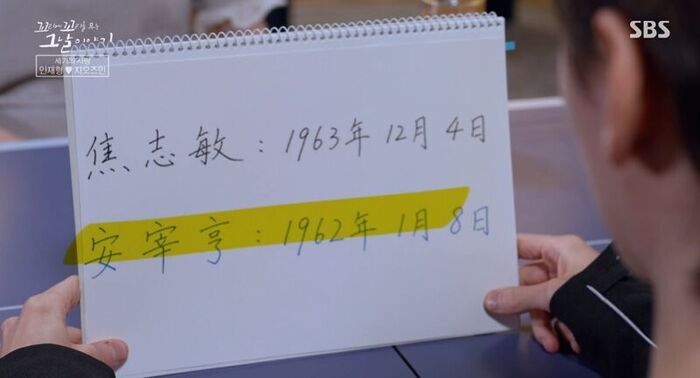
At the time, Zhimin was 23 years old. Jae-hyung was shocked. She was older than him. Jae-hyung was actually 21 years old at the time. Being 21, Jae-hyung wrote that he was 24—one year older than Zhimin. Whether Zhimin knew how Jae-hyung felt or not, she just wrote things like, "Jae-hyung! Wrist important for smash!" And so, with passion for table tennis, their final night in Sweden deepened.
Now it was time to part ways again. Jae-hyung gathered his courage. "Zhimin, if you ever come to Korea, I really want to show you around Seoul," he said. But was it easy for Zhimin, a Communist Chinese athlete at the time, to come to South Korea? It was virtually impossible.
Yet was heaven helping them? Two months later, an international table tennis tournament was held in Seoul. Hearing the news, Jae-hyung's heart began to flutter with excitement, knowing Zhimin might come to Korea. Unfortunately, however, Zhimin couldn't make it. The pool of Chinese players was so deep that different athletes competed in each tournament. Jae-hyung was deeply disappointed. How he wished he could convey his feelings to Zhimin.
After all the matches ended, watching the Chinese player who won the championship, an idea suddenly struck Jae-hyung: sending a letter through that Chinese player. Gladly, the player accepted Jae-hyung's request. Though their ideology and language differed, love must have been a universal emotion.
So was Jae-hyung able to get a reply from Zhimin? Three months later, toward the end of a table tennis tournament in Australia, a Chinese player came looking for Jae-hyung. In that player's hands were a gift and a letter sent by Zhimin.

However, the moment Jae-hyung opened the letter, he froze. He couldn't read it at all.
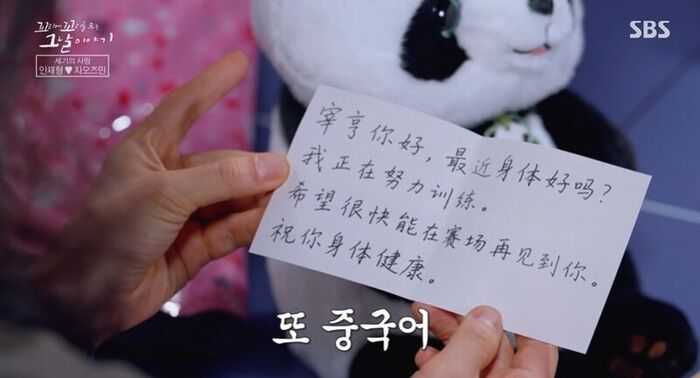
He couldn't understand a single word. From that point on, strange sounds began echoing continuously from Jae-hyung's room. Kim Ki-taek, who lived in the same dorm at the time, found those sounds so annoying.
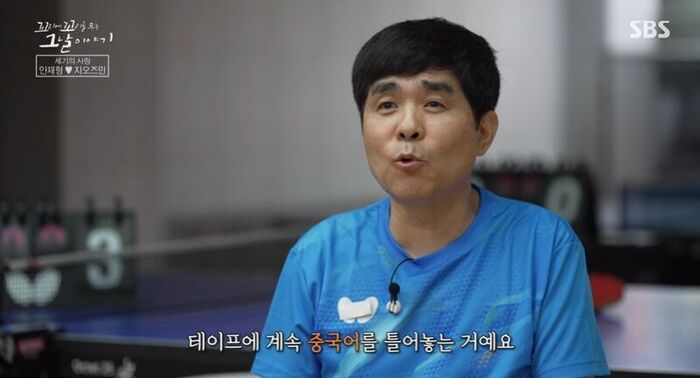
"It drove me crazy because he kept playing Chinese language audio tapes non-stop. 'What's wrong with him?' Even when he went to the bathroom, he could have turned it off. Why keep it playing when you're not listening? But he kept it playing anyway. He didn't turn it off when walking down the hallway, and he didn't turn it off when going in to shower. As far as I know, Jae-hyung never turned that tape off."
- Kim Ki-taek, former national table tennis player
Following conversation tapes, he also frequently listened to Teresa Teng's hit song "Tian Mi Mi," the biggest hit of the time. Watching Jae-hyung do all this, his teammates rooted for him with one heart.
"Because Jae-hyung had to learn even one more word. You can imagine how hard he worked. We couldn't even fathom it. But as far as I remember, no one ever told him, 'Hey, turn off that tape!'"
- Kim Ki-taek, former national table tennis player
Jae-hyung devoted himself not only to studying Chinese, but also to practicing table tennis. Only by excelling at table tennis could he be selected for the national team and go to international tournaments. Around that time, Jae-hyung wrote these words:
"When I missed the opportunity to meet her because I couldn't go to a tournament she was competing in, I felt extremely disappointed. How could I not miss her? My table tennis must get stronger. I need to improve my skills. Let me become a player recognized by world table tennis."
There was only one way to meet Zhimin: competing in international tournaments. His table tennis had to get stronger. He was the first to come out for training, and at night, he stayed until the very end, hitting balls. His desire to meet Zhimin pushed him relentlessly.
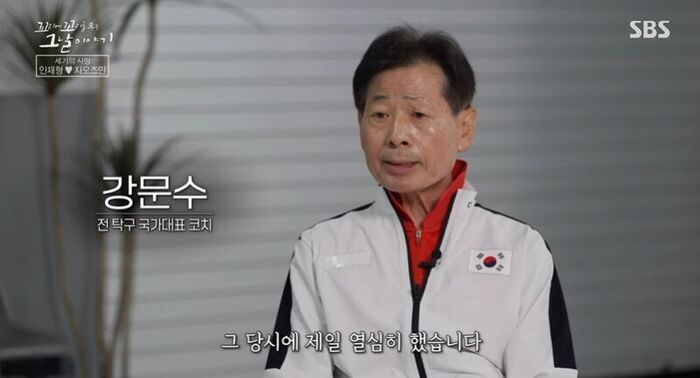
"At that time, he worked harder than anyone. Even when exhausted, he would push for one more round. His effort was remarkable."
- Kang Moon-soo, former national table tennis team coach
And finally, he made the final 5-member national table tennis roster for the 1986 Asian Games. Zhimin was also selected for her national team. On September 20, 1986, as the Asian Games opened, the two finally met in Seoul, South Korea.
▲ The Greatest Match of 1986
During the heated 1986 Asian Games, among countless matches, there was one match that later left a major mark on Korean sports history. That was the men's table tennis team final. It is considered one of the greatest matches in South Korean history. Standing at the center of that match was none other than An Jae-hyung. The opponent he faced was world-dominant Communist China.
"China back then was world rank number 1. To the players, China was like a god."
- Kang Moon-soo, former national table tennis team coach
"At the time, Communist China's players were so strong that people said 'Becoming a national team member means becoming a world representative.' You know the idiom 'mountain beyond mountain'? That phrase fits Chinese table tennis perfectly. You win in the round of 16, but there's another Chinese player in the quarterfinals. You win in the quarterfinals, and there's another in the semifinals. They used to say Communist China's table tennis population equaled South Korea's total population. The sheer number of players was enormous, and Chinese players filled the world top 10 rankings, so that says it all."
- Kim Ki-taek, former national table tennis player
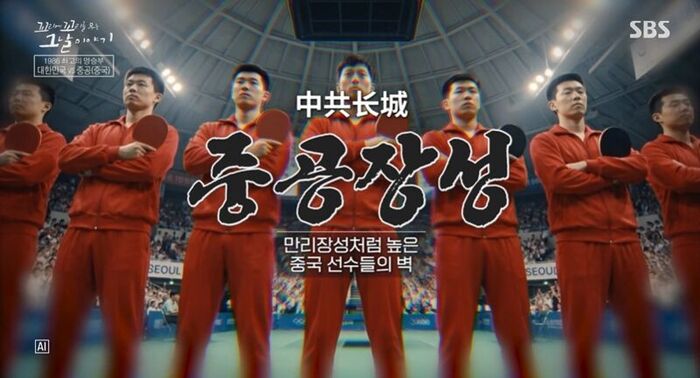
That's why they earned the nickname "the Great Wall of Communist China." It referred to the formidable wall of Chinese players, seemingly impossible to overcome, much like the Great Wall of China.
At the time, the team match followed a best-of-nine singles format, where the team winning five matches first would take the victory. But Communist China's lineup back then was the strongest in history. Led by Chen Xinhua, considered the top defensive player of his era, Hui Jun, a master of lightning-fast attacks, and Jiang Jialiang, world number 1 and the symbol of Chinese table tennis. It felt like another wall standing behind a wall.
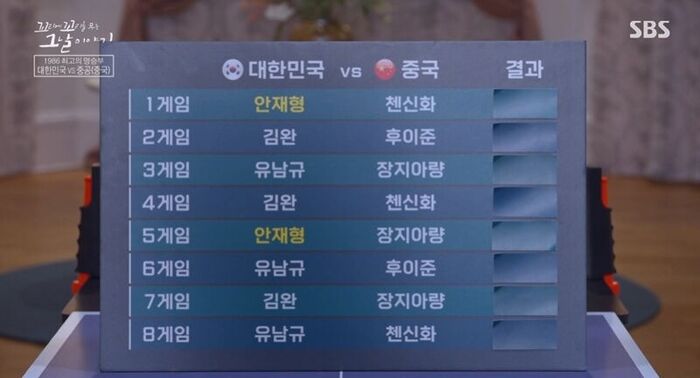
September 24, 1986. It is the day of the match. The crowd filling all 5,000 seats holds their hands together in prayer. Match 1 begins between An Jae-hyung and Chen Xinhua. From the start, China's pressure is intense. But An holds on with relentless defense, holding out time and again. As a result, An wins.
South Korea wins Match 2 as well. But China takes Match 3. Then South Korea wins Match 4, with the score turning back and forth. South Korea leads 3-1 overall. Match 5 is An's turn again. His opponent is Jiang Jialiang, ranked number one in the world—a player who relentlessly overwhelms opponents with fast and delicate play. However, as the match progresses, the Chinese team grows restless. In Match 5, An wins again! A massive upset has taken place.
Now, they only need to win one more match. The heat in the arena is intense. Just one match away from the gold medal. But China is not a team to crumble easily. South Korea surrenders Matches 6, 7, and 8 to China. By Match 8, the overall score is tied at 4-4. Now, the outcome hinges on the ninth match.
The final ninth match is between An Jae-hyung and Hui Jun. A best-of-three set battle. An scores right from the first rally—a great start. But Hui Jun tenaciously catches up. After exchanging four deuces, An takes the first set. However, the momentum shifts in the second set, and Hui Jun wins it. Now comes the final third set. Everyone holds their breath as they watch. The result:
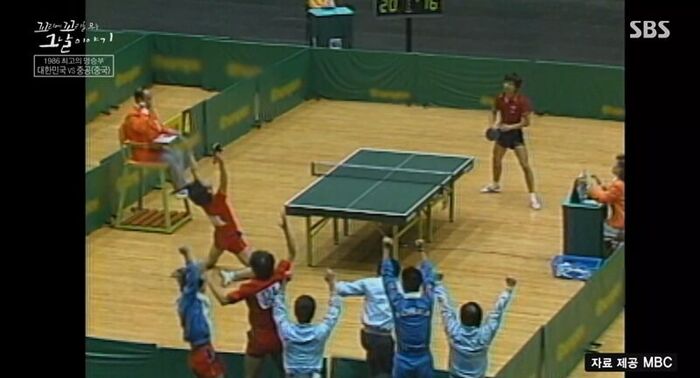
An did it! An secures the final third set, bringing the overall victory to South Korea. Everyone rushes out to embrace each other, savoring the joy of the gold medal.
"I happened to play the first, second, and the final ninth singles matches. I won all three of those matches."
- An Jae-hyung, former national table tennis player
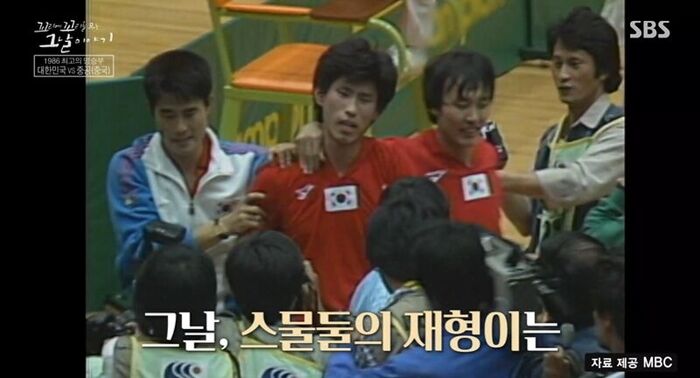
In 1986, 22-year-old An tore down the giant wall known as the Great Wall of Communist China—believed to be impenetrable—with a tiny 2.5-gram ball. It was the moment the name 'An Jae-hyung' was clearly etched onto the world stage.
▲ 'I Love You'
The moment An won the gold medal, he thought of Jiao Zhimin. Jiao had won the gold medal in the women's singles event at the same tournament. At the most brilliant moment in their respective careers, the two met again.
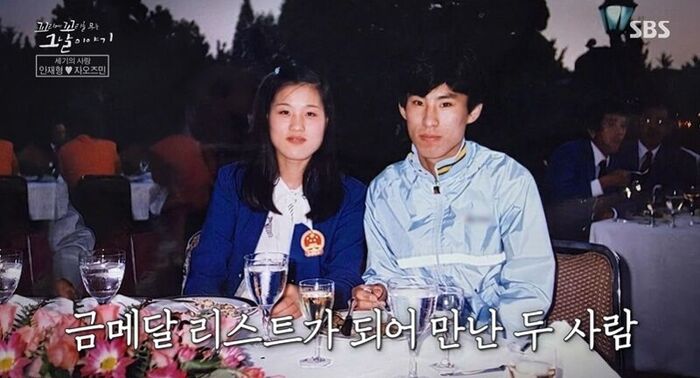
The two were quite different from when they first met. Though not completely fluent, they could now converse in Chinese. An had become an athlete showcasing the power of Korean table tennis, while Jiao was shining as a star of Chinese table tennis.
Yet, even in this brilliant moment, the reality that they had to part ways soon remained unchanged. Before saying goodbye, An handed Jiao a South Korean national team tracksuit. He hadn't missed Jiao's passing comment, "Your tracksuits are pretty." At the time, they had no idea what kind of repercussions this single tracksuit would bring them later.
In the autumn of 1986, they said goodbye. When Jiao said, "Bye, Jae-hyung! See you next time!", An's heart sank. On any other day, he would have smiled and said goodbye, but that day, he could hardly speak.
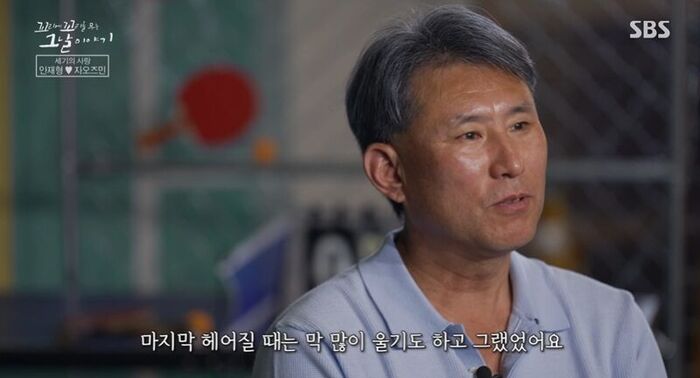
"I don't know what kind of courage or thought suddenly came over me... but it was from that moment. Yes... I think I liked her. We could only see each other during tournaments, and when a tournament ended, having to part ways without knowing when we would meet again was so difficult. On the final day of a tournament, when we said goodbye at the end, we used to cry a lot. As I turned around after saying goodbye, that song kept coming to my mind: 'Love is walking away / Leaving me all alone / Love is leaving / Once this night passes / We won't see each other again / My heart breaks...' That song kept coming to my mind as we parted."
- An Jae-hyung, former national table tennis player
It was the moment 22-year-old An realized his own feelings after two years. The song that came to his mind when parting with Jiao was 'Love Walks Away' by singer Kim Jong-chan. There is even a cassette tape from 40 years ago on which 20-something An recorded himself singing the song and sent it to Jiao.
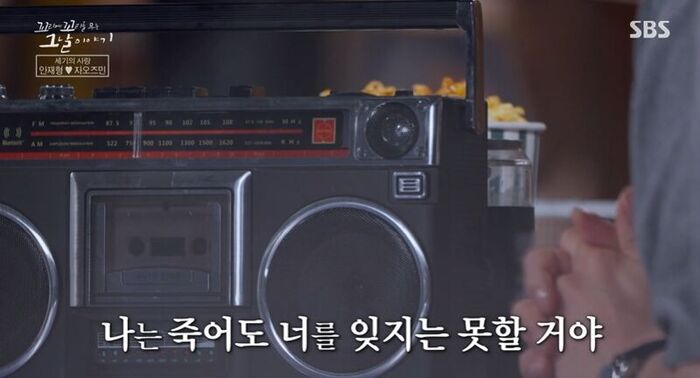
'I will never be able to forget you, even if I die...' An thought to himself, but he couldn't bring himself to say it out loud. In An's eyes, Jiao was also desperately holding back her tears. Both of them likely knew that no one could guarantee when 'next time' would be. Before they knew it, their feelings of liking each other were deepening into love.
So, what should be done with these feelings? An decided that day to confess his feelings to Jiao.
As soon as he returned after saying goodbye, the place An headed to was a Chinese restaurant in Myeong-dong. Why a Chinese restaurant all of a sudden?
"There were many Chinese restaurants in Myeong-dong. I picked one of them, ordered a bowl of jjajangmyeon, and..."
- An Jae-hyung, former national table tennis player
The moment Chinese is heard from the kitchen, An's ears perk up. Do you get why An came here? At the counter, after hesitating for a long time, An pulls out a sheet of paper from inside his coat and hands it over. He then asks if it can be translated into Chinese. He is trying to confess to Jiao through a letter. However, knowing that rumors could cause trouble, he asked the Chinese restaurant owner—who was fluent in both Korean and Chinese at the time—to translate it. Here is the content of An's confession letter.
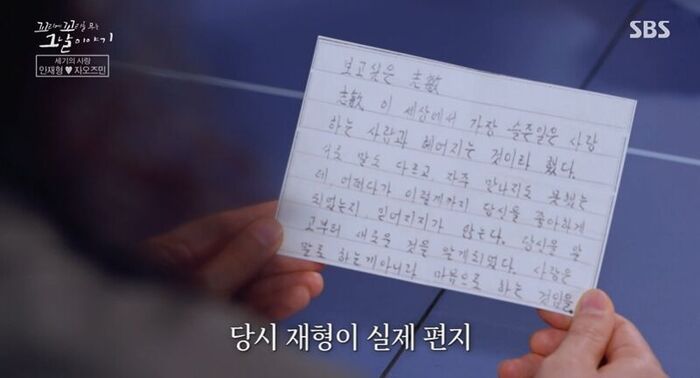
"Dear Jiao, whom I miss.
They say the saddest thing in the world is parting from the one you love. We speak different languages and cannot meet often. I can hardly believe how I have come to like you this much. Ever since I got to know you, I have learned something new: that love is done not with words, but with the heart."
This is the letter translated like that.
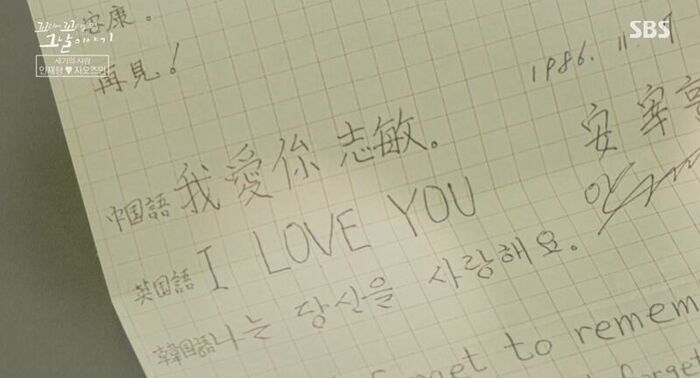
"I love you. Please don't forget me. I won't forget you either."
After receiving the confession letter, Jiao sent a photo to An. It was a photo Jiao took in her quarters.
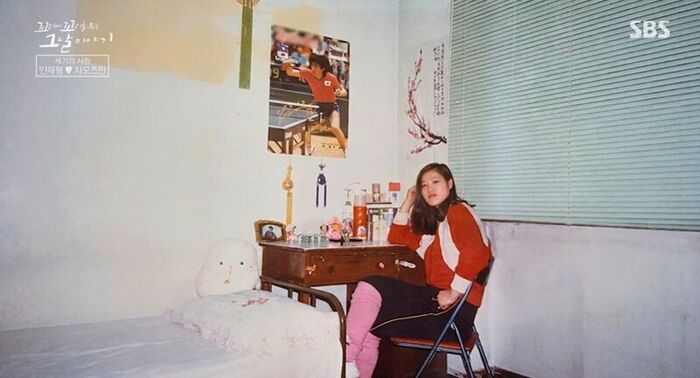
Looking closely, the man in the poster on the wall is none other than An. Even without words, Jiao's feelings were fully conveyed through this single photo.
In the autumn of 1986, their love story began. But it was also the beginning of a major problem.
▲ The Barrier of the Era
"My father was a bit more level-headed, worrying about my duties as an athlete, as well as concerns about socialist and communist countries..."
- An Jae-hyung, former national table tennis player
A wall of reality that love alone could never easily overcome. Crises hit all at once. In January 1987, an unexpected major incident occurred: a Japanese newspaper reported a dating rumor between the two.
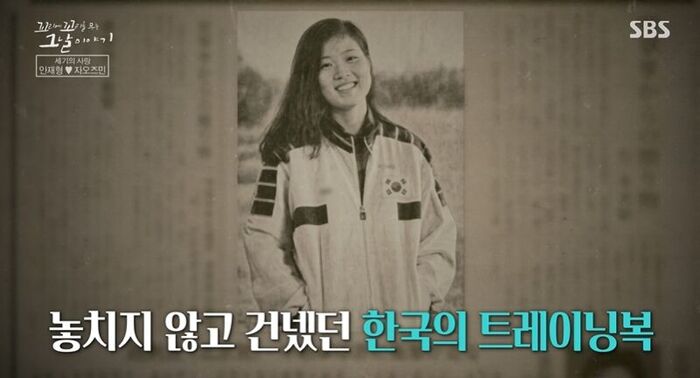
"Communist China's women's table tennis ace Jiao Zhimin wearing a Taegeuk tracksuit. The tracksuit she is wearing was gifted by athlete An as a token of affection right after the close of last year's Seoul Asian Games."
That tracksuit that An gave Jiao after she mentioned it looked pretty following the Asian Games.
"The newspaper reporter's goal was to write about the political trend of South Korea and Communist China growing closer. We were used as material for that story."
- An Jae-hyung, former national table tennis player
This was not something that would end as a simple dating rumor. The domestic media also began to boil over. Questions poured in asking about his relationship with China's Jiao Zhimin. An did his best to deny the dating rumors—all for Jiao's sake. He feared that Jiao might face trouble within the Chinese national team or that the government might take issue with it because of him. However, the rumors spread far and wide.
Shortly after, the World Table Tennis Championships were held in New Delhi, India. Even there, the two were not free. Even if he just brushed past Jiao, camera flashes went off everywhere. An looked at Jiao with concern, but Jiao tried hard to maintain a cold expression. In the end, they pretended not to see each other.
To make matters worse, shocking news broke. Jiao suddenly announced her breakup with An through the media. An was filled with anxiety: Has Jiao's heart changed? Has everything ended without me even knowing? He urgently sent a letter to Jiao. A month later, Jiao's reply arrived.
"Jae-hyung, that wasn't how I really felt."
Jiao's heart had not changed. She said it was something she said to divert at least a little bit of the media's excessive attention. It was a white lie to protect each other. Around that time, the serious word 'marriage' began entering An's mind.
▲ A Secret Operation Staking One's Life
In November 1987, An covertly requested help from someone.
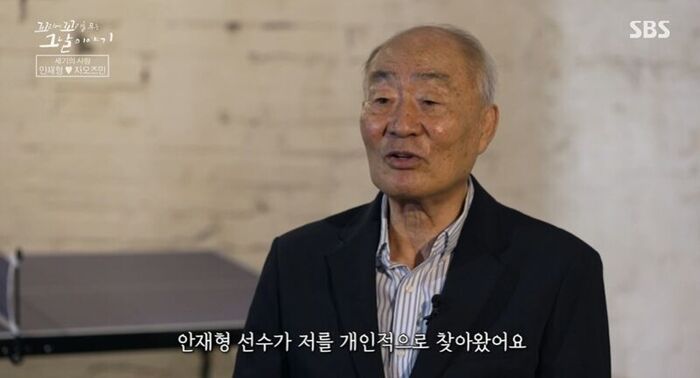
"I served as the team doctor for the Table Tennis Association. Athlete An Jae-hyung came to see me personally. He came and said, 'Jiao Zhimin is coming to Korea, so please help me, Doctor, so that Jiao Zhimin and I can have a chance to meet.'"
- Yang Won-chan, former head physician of the national table tennis team
From An's perspective, Dr. Yang was one of the few adults who could help him meet Jiao. Dr. Yang also didn't ignore An's feelings.
"It's beautiful, isn't it? Love. When cultures are different, languages are different, loving someone like this is no ordinary thing. So I felt I truly had to help this love out of pure intentions..."
- Yang Won-chan, former head physician of the national table tennis team
Thus began Dr. Yang's secret operation step one: arranging a meeting between Jiao and An's parents. However, somehow the plan leaked out, and rumors of their marriage were splashed across the headlines.
"We decided this won't work, that there was no way to stop the reporters..."
- An Jae-hyung, former national table tennis player
On the very night the marriage rumor broke, An stood in front of the camera himself—on the live 9 o'clock news watched by the entire nation.
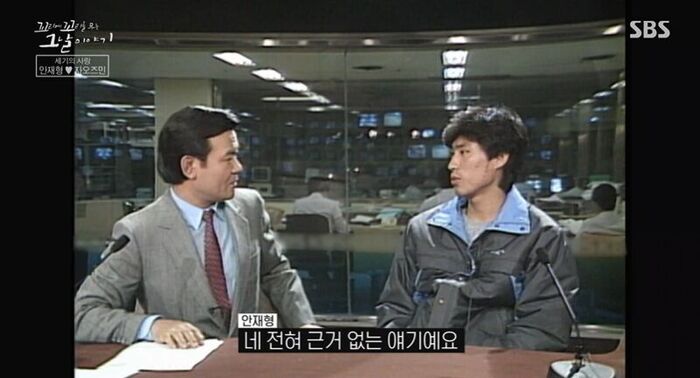
[Anchor]: Are the marriage rumors not true?
An Jae-hyung: Yes. They are completely groundless.
[Anchor]: Do you mean you have no plans to marry, or fundamentally no intention to marry?
An Jae-hyung: I have no plans, and no such thoughts.
[Anchor]: But it seems true that you share love for each other?
An Jae-hyung: You can just think of us as friends.
An drew a firm line regarding the marriage rumors. Dating rumors and marriage rumors carried different weight. A South Korean athlete and a Communist Chinese athlete becoming husband and wife? That was no simple gossip. While it could look like a sign of the two nations drawing closer, it could also be perceived as a highly sensitive political issue.
"From China's perspective, they couldn't help but be conscious of North Korea. Diplomatic issues could arise, and if North Korea got involved, athlete Jiao Zhimin might also find herself in great difficulty. So no matter who asked, we had to say 'it's nothing more than friendship'..."
- Yang Won-chan, former head physician of the national table tennis team
Dr. Yang decided to change the direction of the operation: to meet Jiao's family in utmost secrecy. Since An could not go to China himself, Dr. Yang decided to travel to China in his capacity as the team physician. Via Hong Kong to Beijing, and on to Harbin. After a long journey, Dr. Yang finally met Jiao's family. He showered Jiao's mother with praise for An. However, her mother's expression looked serious.
"I told her that if her daughter could marry into a Korean family, if she permitted it, this is how she would live in Korea, telling her not to worry... But back then, China and South Korea were hostile nations. She was extremely shocked about the marriage."
- Yang Won-chan, former head physician of the national table tennis team
After listening quietly for a long time, her mother asked an unexpected question. At that question, Dr. Yang could not hide his embarrassment.
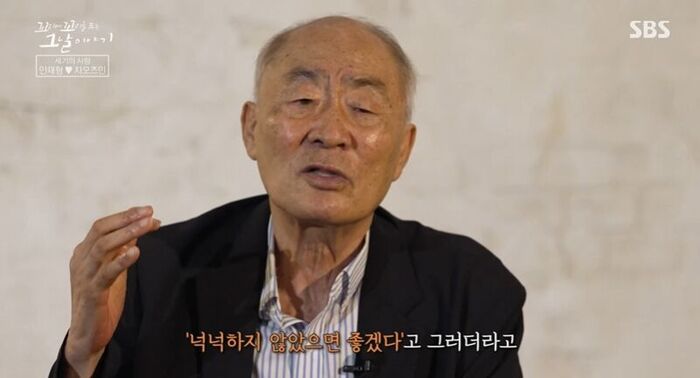
"Jiao Zhimin's mother asked about the circumstances, such as what An's parents did for a living and their financial situation. But as she asked, she said, 'I hope they are not wealthy.' While some people might wish for wealth, that statement remained deeply memorable to me, and I was so thankful and grateful."
- Yang Won-chan, former head physician of the national table tennis team
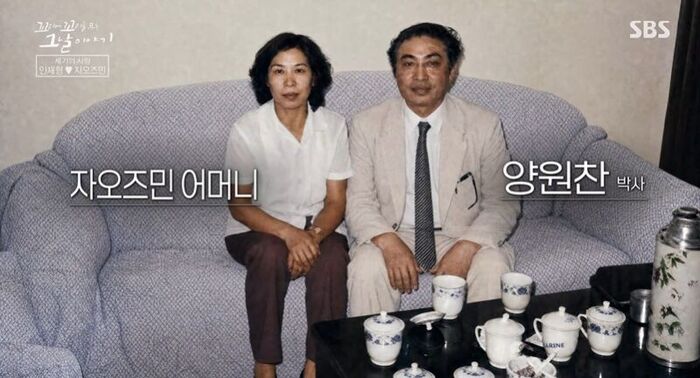
She did not wish for wealth; rather, she was agreeing to the marriage because An's family was not wealthy. Her daughter was proposing to spend the rest of her life with someone across borders, with a different language and culture—a country that was not even easy to travel to and from. She wanted to confirm whether these two world-renowned table tennis players could rely on each other and live well like an ordinary couple, and whether their love was built on genuine feelings rather than conditions.
Time passed, and it became October 2, 1988—the final day of the Seoul Olympics. But that day, rumors spread among reporters that 'An Jae-hyung and Jiao Zhimin are holding their wedding today.' Reporters began searching for the two.
Here comes step three of Dr. Yang's secret operation: successfully arranging a meeting between Jiao and her prospective in-laws. The place the two headed that day was right here.
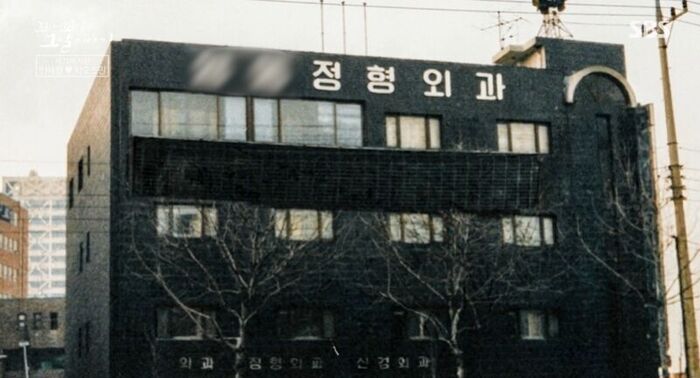
It was Dr. Yang's clinic, and the 4th floor was Dr. Yang's residence. Someone was waiting for them there: An's parents. Hadn't An's father opposed the marriage earlier? The father's first words were, "Will you be able to adapt to life in Korea?" He had given his consent to the marriage. In that warm atmosphere, Jiao couldn't help but laugh. It was a moment of overcoming another high wall on the path to marriage.
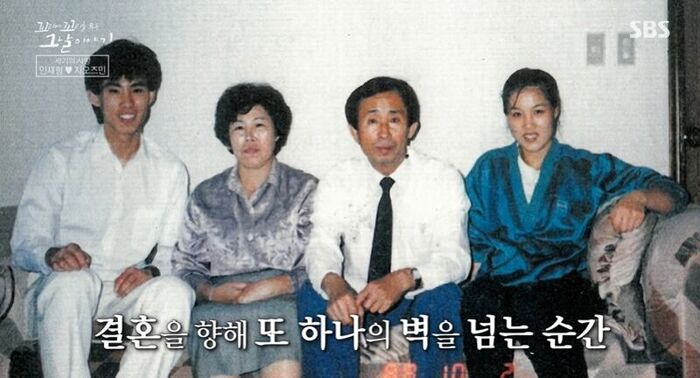
Right at that moment, a sudden knock came from outside the door.
"Reporters were chasing us everywhere. They even came into the hospital room and searched through everything. I couldn't handle the anxiety."
- Yang Won-chan, former team doctor for the national table tennis team
Reporters who knew about the relationship between Dr. Yang and Jae-hyung had tracked them all the way here. They had to escape quickly before being caught.
"There was a back door at home. There was a ladder at the back door, so we climbed down through there..."
- Yang Won-chan, former team doctor for the national table tennis team
Holding their breath, everyone climbed down the ladder through the back door and sneaked into the car as if hiding themselves. The place the two headed to that day was Namhansanseong. Dr. Yang had taken them there so they could spend some quiet time together.
"We couldn't go around downtown and go on dates like ordinary couples do. Driving to Namhansanseong and back was about all we could do. I can never forget the short time we spent together."
- An Jae-hyung, former national table tennis player
Although the future remained uncertain, those moments together were deeply precious to both of them. Dr. Yang's secret operation was a resounding success. Now, only one question remained: Could this love reach a happy ending?
▲ An Unending 'Rally of Love'
For the two to get married, they had to be able to meet. There was only one way: meeting in a third country that both could enter. It was easier said than done. But Jae-hyung was now desperate. With Dr. Yang's help, he invited Zhimin under the pretext of an invitation from a table tennis club in Sweden. Then, he prepared to register their marriage at the Korean Embassy there.
However, the problem was that Zhimin arrived without knowing any of this. In fact, Zhimin had retired after the 1988 Seoul Olympics. No longer being a national athlete meant there would be no reason for them to meet again. Meeting in person to talk was the only option.
From Zhimin's perspective, how terrifying must it have been to suddenly face marriage registration? Although it was a moment she had waited for and imagined, it was an immensely terrifying and huge choice. It could easily be perceived as a defection. If that happened, she might never be able to return to China or see her family again. Zhimin was confused. But no one could give her the right answer. In the end, the choice had to be hers.
And when she looked to her side, Jae-hyung was looking at her. Jae-hyung spoke in a calm voice:
"Zhimin, it's okay if we don't register our marriage right now. I will always wait by your side."
So that day, did the two register their marriage?
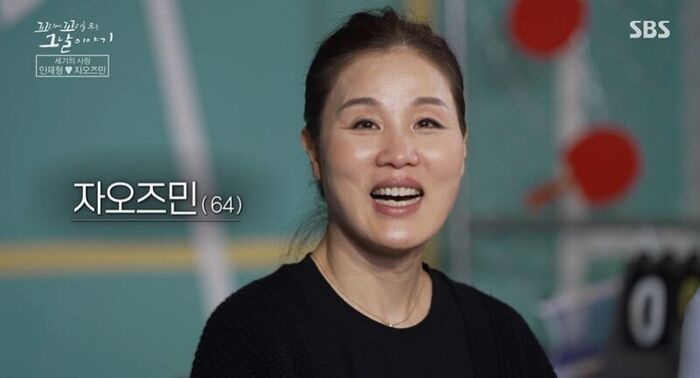
"I am a former table tennis player, and now An Jae-hyung's wife, Jiao Zhimin."
- Jiao Zhimin (64), former Chinese table tennis player
The two registered their marriage and officially became husband and wife.
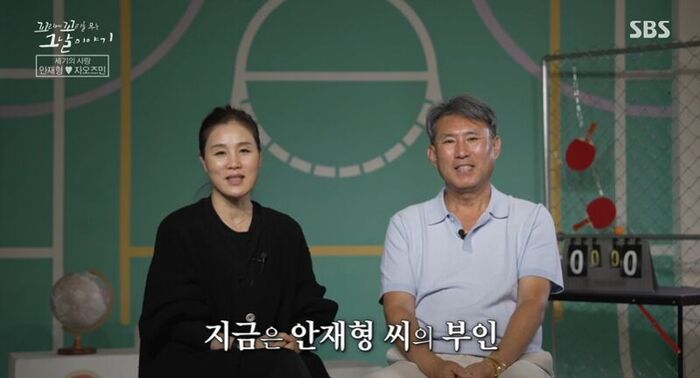
"Suddenly going to Sweden, meeting, and registering a marriage... Wow, back then I was like... 'What should I do?' At that time, diplomatic relations hadn't been established. If I got married and it was considered fleeing, I wouldn't be able to enter China later, so what should I do...?"
- Jiao Zhimin, former Chinese table tennis player
A decision that wasn't easy through love alone. When asked what was on her mind when she made that decision that day, she answered like this:
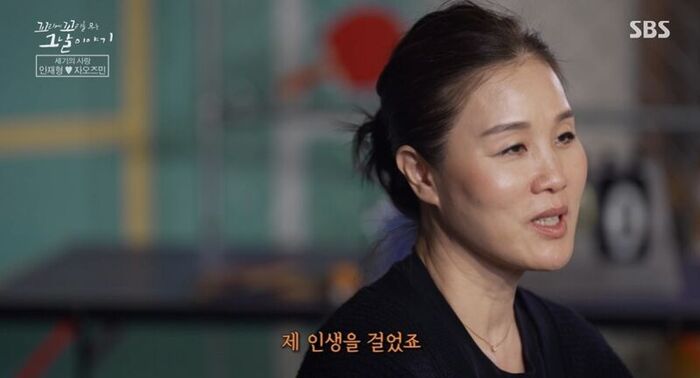
"Because I liked him, I didn't want to lose this opportunity and this person. With that heart, I gambled with my life. So I thought of registering the marriage as taking a gamble, and even if it went wrong, it was my own decision. I made a good... gamble."
- Jiao Zhimin, former Chinese table tennis player
Because she liked him, because she didn't want to lose him. Staking her life like a gamble, she took Jae-hyung's hand. On October 19, 1989, the two finally became husband and wife.
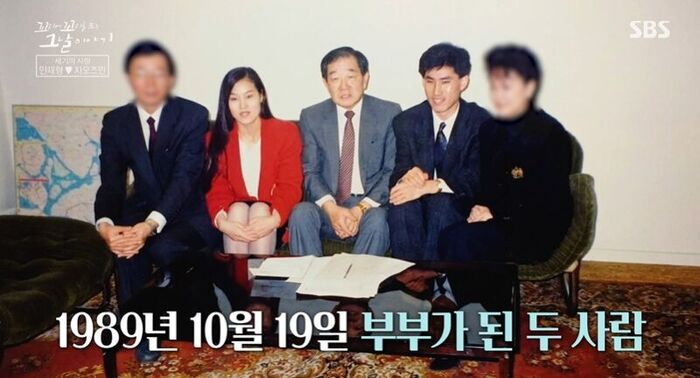
But doesn't something seem unusual? A citizen of Communist China, with which South Korea had no diplomatic ties, came to register a marriage, and it went through without any problem at the Korean Embassy. As it turned out, before the two arrived, the Ministry of Foreign Affairs had already contacted the embassy, saying, "Marry them safely and send them back to Korea." How was such a thing possible?
In fact, around that time, an event that shocked the entire world took place: the Berlin Wall, which divided East and West Germany, collapsed. The massive wall that symbolized the Cold War crumbled, and an atmosphere of reconciliation began to spread across the globe. South Korea was also part of that wave. At the time, the Roh Tae-woo administration was pursuing the so-called "Nordpolitik" (Northern Policy), gradually opening relations with socialist countries such as the Soviet Union and Communist China. So while the two were knocking on the wall with their love, the world was also tearing down those walls bit by bit.
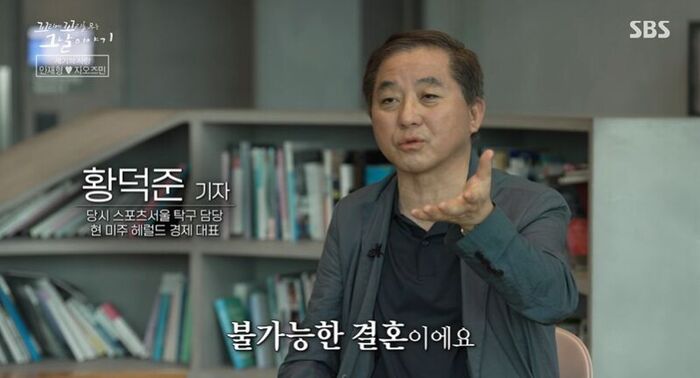
"It was an impossible marriage. In the diplomatic history of the three Northeast Asian nations, the relationship between An Jae-hyung and Jiao Zhimin clearly had an impact... Where did that power come from? It must have been the power of love they held for each other."
- Reporter Hwang Deok-jun, then table tennis correspondent for Sports Seoul, currently CEO of The Korea Herald Business USA
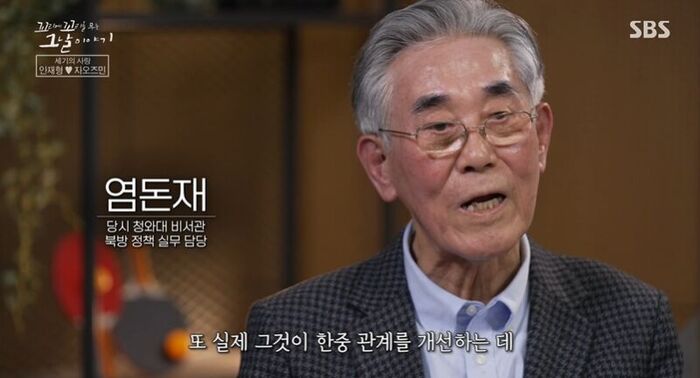
"It served as an important momentum in promoting Nordpolitik, and it is true that it actually acted as a catalyst for improving South Korea-China relations. The relationship between Jiao Zhimin and An Jae-hyung was about marrying across high ideological barriers..."
- Yeom Don-jae, then Presidential Secretary in charge of working-level Nordpolitik
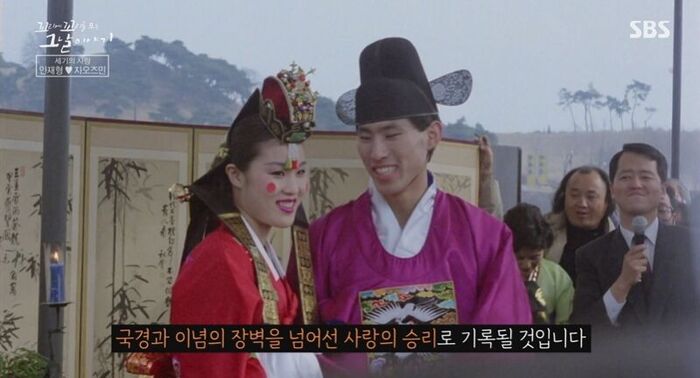
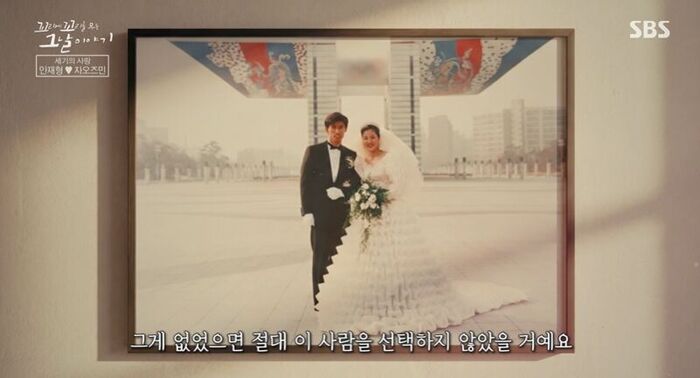
And two months later, on December 22, 1989, the two held a grand traditional wedding—right at the Peace Plaza in Olympic Park.
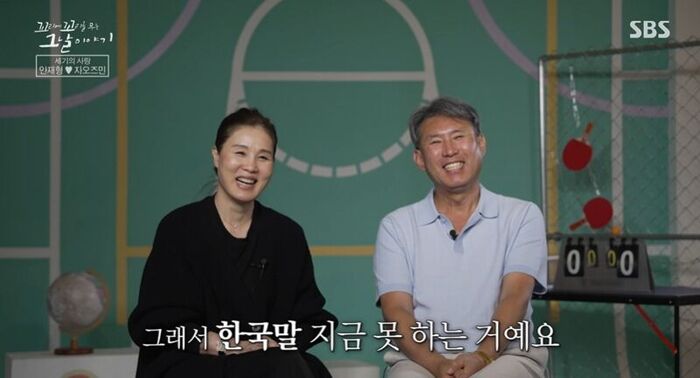
"Because he treated me so well after marriage and made me feel so comfortable, that's why I can't speak Korean well now. You take responsibility for it!"
- Jiao Zhimin, former Chinese table tennis player
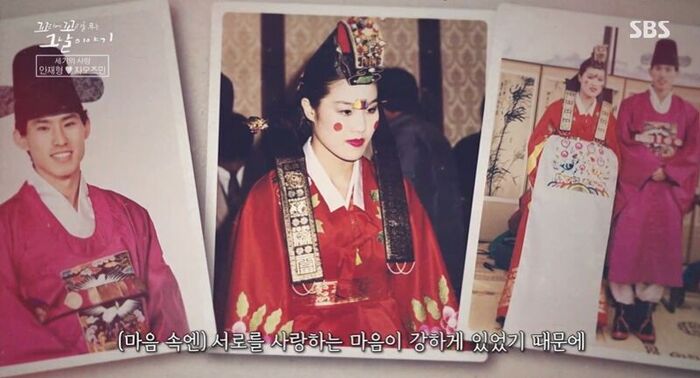
"Others might think of youthful feelings of love as being blinded by love, but I believe everyone has moments like that. I don't know what specific things we liked about each other, but because we had a strong love for each other in our hearts, I think we were able to endure those difficult situations."
- An Jae-hyung, former national table tennis player
"Since being a table tennis player inherently involves observing and analyzing other people, I watched player An Jae-hyung even more closely and wondered, 'Is this man really the person I am looking for, someone I want to live with?' In the end, I think what mattered most was the feeling of love. Without that, I would have never chosen him."
- Jiao Zhimin, former Chinese table tennis player
37 years have passed since their marriage. The letters that connected the two still remain like treasures. Do you remember the letter translated at the Chinese restaurant earlier—the first letter confessing his love? What feelings did Jae-hyung pour into that letter back then? Now 62 years old, Jae-hyung, and 64-year-old Jiao Zhimin read those letters again after so much time.
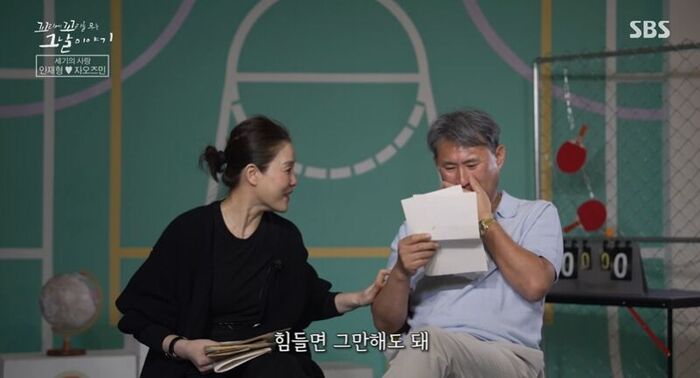
"November 7, 1986. That was probably the first letter sent after feelings of mutual love developed..."
As those emotions flooded back, Jae-hyung broke into tears while reading the letter.
Table tennis is a game where the ball must cross the net. As the two players exchange rallies, the rally continues even when it seems about to end. Perhaps Jae-hyung and Zhimin's love was just like that. The wall of borders in front of them, the wall of language, and the wall of an era where they could neither meet as they pleased nor freely say they loved each other. Yet, they did not crumble before those walls. If they couldn't meet, they sent letters; if they couldn't communicate through language, they learned each other's hearts; and even in moments when they had no choice but to be apart, they returned to each other.
If someone were to ask what love is, the rally between these two would come to mind: never giving up even when it seems over, receiving each other's hearts in the end, and sending one's heart back to that person once more. Though the wall seemed insurmountable, their feelings for each other ultimately transcended it.
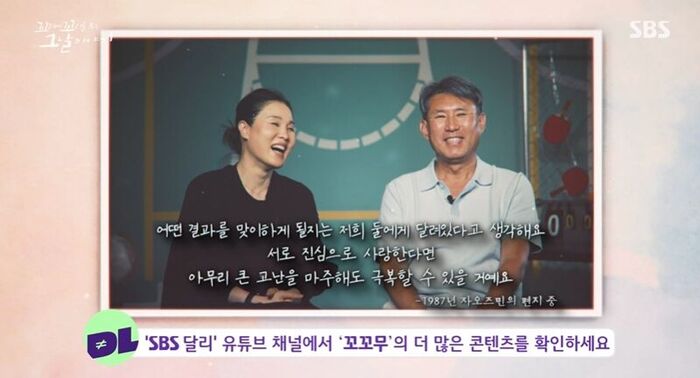
What are your thoughts today after hearing the story of 'that day'?
Reported by Kang Seon-ae
(SBS Entertainment News / Kang Seon-ae, Reporter)
※ Please note: This article was translated by AI and may contain errors.
Copyright Ⓒ SBS. All rights reserved. Unauthorized reproduction, redistribution, and use for AI training are prohibited.