SBS News
Imperial House Law Revision Excludes 'Female Emperor'... Was Former PM Aso Behind It?
Published : Jul 23, 2026 10:58 AM

Approval Rating Plunges Immediately After Imperial House Law Revision... Why?
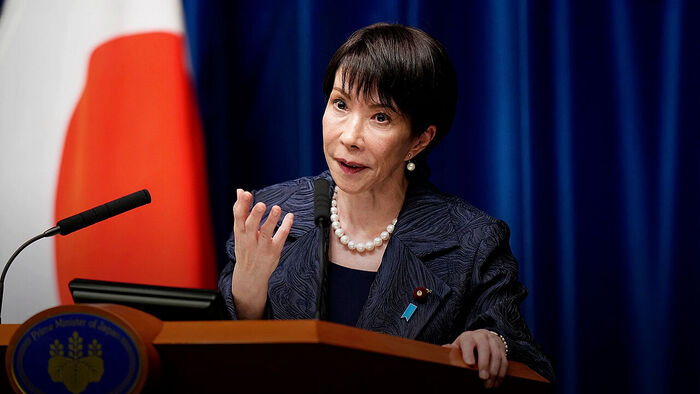 In opinion polls conducted immediately after the revision to the Imperial House Law was passed in the Japanese parliament on July 17, the approval rating for the Takaichi Cabinet was found to have plunged. In a survey reported by the Mainichi Shimbun on July 20, the Takaichi Cabinet's approval rating fell to 41%, down 10 percentage points from a month earlier. The approval rating, which had been riding high above 60 to 70% ever since taking office last year, dropped below 50% for the first time. The average cabinet approval rating across July polls released by three media outlets on July 20 – 21 stood at 47.6%, down 12.8 percentage points from the average of 60.4% in polls by eight major news outlets a month earlier. While other factors likely contributed, the revision of the Imperial House Law appears to have played a major role in the steep drop of over 10 percentage points in just a single month. Why did the Japanese public react so sensitively to a revision of the Imperial House Law, an issue far removed from daily living?
Breaking Agreement and Hasty Passage Expanding 'Succession Rights'
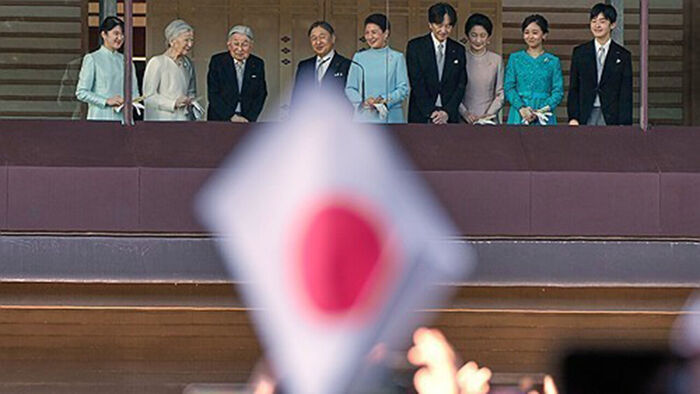 After discussions, the key points of the bill previously agreed upon by the ruling and opposition parties were twofold: ① allowing female royals to remain in the imperial family after marriage, and ② permitting the adoption of male-line men from former imperial branch families that were removed in 1947. However, it was agreed that adopted males would not be granted succession rights, and that the issue of succession rights would be omitted from this revision for future discussion. Yet, the government and ruling party abruptly changed their stance, included a provision granting succession rights to the sons of adopted males, and forced the bill through. With the option of a "female emperor"—which over 70% of the public supports—excluded, the public could not help but be shocked by a revision stating that the children of adopted sons who are virtually complete strangers due to distant relation to the current Emperor could become emperor, resulting in the sharp drop in approval ratings.
It was not just progressive public opinion either. On May 15 last year, a special editorial by the Yomiuri Shimbun, a leading center-right newspaper in Japan, caused a major stir. Criticizing the proposal to adopt former imperial relatives, the Yomiuri wrote at the time that "considering Prince Hisahito is the sole male heir of the next generation, Japan must move beyond an obsession with male-line succession and engage in forward-looking discussions without ruling out the possibility of female or matrilineal emperors." Because the newspaper had typically aligned with the LDP mainstream, the editorial sent shockwaves through political and media circles, raising questions over whether top management had reviewed it in advance. Why did the LDP push through a revision to the Imperial House Law that risks turning even traditional center-right conservatives away?
The Shadow of Taro Aso
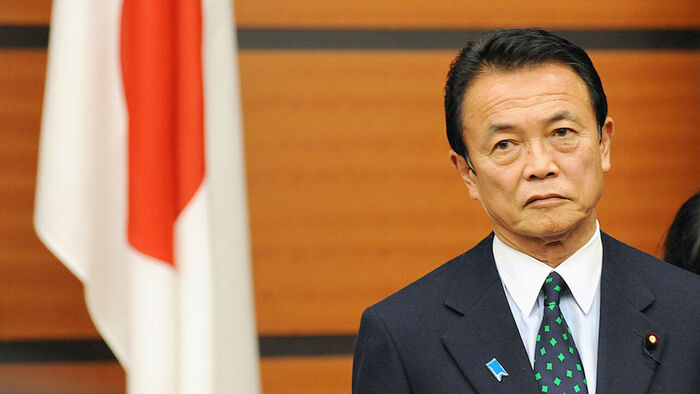 There is another reason the public is so angered by a royal family matter detached from daily livelihoods. Suspicions are being raised that former Prime Minister Taro Aso exerted influence behind the LDP's decision to break its agreement with opposition parties and ram through a revision so out of step with public opinion.
Former Prime Minister Aso, who leads the Aso faction, is the very figure who backed Takaichi in the final stages of the LDP presidential election in September last year against current Defense Minister Shinjiro Koizumi, effectively installing her as prime minister. In other words, as patron of the Takaichi Cabinet, he holds powerful influence over both the prime minister and the LDP.
Moreover, former Prime Minister Aso's younger sister is Princess Nobuko, who is currently a member of the royal family. Nobuko joined the royal family upon marrying Prince Tomohito of Mikasa in 1980. Her husband passed away in 2012, and last year, when the 'Princess Tomohito of Mikasa Household' composed of female royals in the Mikasa branch was established, Nobuko became head of the household. Excluding elderly and unmarried royals, word has it that Nobuko is the most likely candidate to adopt a son. If Nobuko adopts a son from a former imperial branch, that son's male heir in the next generation would hold succession rights under the revised law. In effect, a new emperor could emerge from the Aso family line rather than current Emperor Naruhito's family. The shadow of former Prime Minister Aso, who still refuses to let go of power, stands in sharp contrast to 25-year-old Princess Aiko—Emperor Naruhito's only child who is widely beloved for her modest demeanor—which may have further fueled public outrage over the Imperial House Law revision.
A New Emperor... The Intentions of Conservative Right-Wingers
On April 29, a symbolic incident occurred. It was the day the government hosted the 'Showa Centenary Commemoration,' marking the birthday of Emperor Showa.
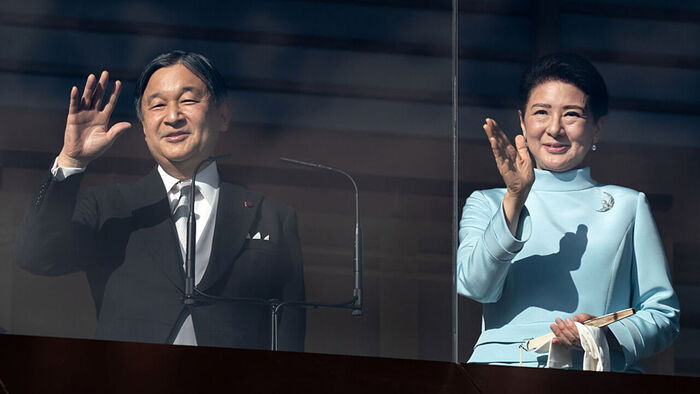 Emperor Naruhito and Empress Masako attended, but unlike typical official state events, there was no address scheduled for the Emperor; only remarks by the prime minister and greetings from officials took place. The Emperor was effectively 'passed over.' Criticism poured in that keeping the Imperial couple in attendance at a once-in-a-century ceremony without granting them an opportunity to speak was a grave disrespect to the royal family. Japanese weekly Shukan Bunshun reported, citing a government source, that there were explicit instructions from the government. Some interpreted that with the current conservative administration seeking to promote a nationalistic message of a 'strong Japan' symbolized by the Showa era, it intentionally omitted the address out of caution against Emperor Naruhito delivering personal remarks emphasizing peace and reflection on war.
In fact, both Emperor Naruhito and his predecessor, Emperor Emeritus Akihito, have occasionally made statements distant from the LDP mainstream. In 2001, Akihito personally mentioned the blood relationship between the Japanese royal family and Baekje, and in 2004, he voiced opposition to forcing students to sing Kimigayo in schools. Meanwhile, Emperor Naruhito has repeatedly conveyed messages on the importance of accurately handing down the tragic experiences and history of war. While such statements may seem subtle or insufficient from a South Korean perspective, from the view of the LDP mainstream seeking a return to a 'war-capable nation,' they must have been deeply irritating.
In this context, if former Prime Minister Aso opens the door to producing a new emperor from his own family line, setting aside whether he can actually install an emperor, he gains a foundation to check current Emperor Naruhito. If the right-wing Aso family—originating from a Fukuoka business conglomerate—gains both real political power and royal symbolism, how will Japanese society change going forward?
Will Prime Minister Takaichi's Support Base Wobble?
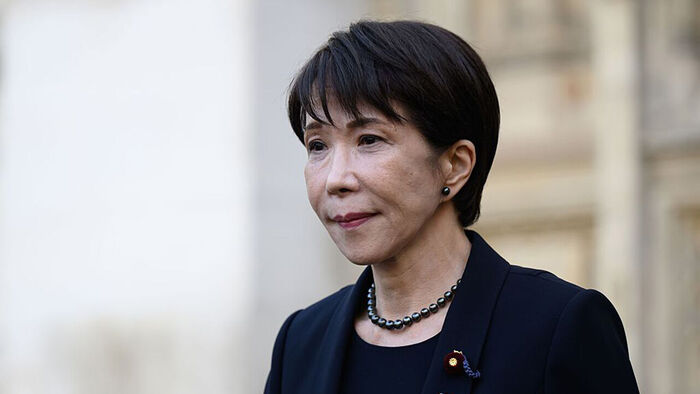 One pillar of power that enabled Sanae Takaichi—who had not been popular among established political elites—to become prime minister was the Aso faction, while the other pillar was public opinion. If either pillar collapses, the foundation of the Takaichi administration wobbles. This Imperial House Law revision is the exact point where these two pillars collide. Of course, public opinion that turned away due to the revision may return over time. However, given that this drop in approval ratings could represent the 'winner's curse' repeated in world politics, there is a chance it marks a turning point in the trend.
Prime Minister Takaichi won a historic landslide victory in the House of Representatives election in February, securing a supermajority to unilaterally propose constitutional amendments. Since then, she has used numerical dominance to accelerate conservative right-wing policies, including revising the three key security documents, pushing for revisions to the pacifist Constitution, passing legislation against desecrating the national flag, and revising the Imperial House Law. As a result, however, the gap between the administration and the silent majority of the public is widening. A protest participant outside the Diet recently vented, "With naphtha shortages and people's livelihoods growing tougher, why are they dealing with something like the Imperial House Law revision bill now? This is not the time for that."
Indeed, public suffering due to high oil prices and inflation following the war with Iran is mounting. Even without events like the Imperial House Law revision, it is a time when cabinet popularity could naturally wane. If the administration fails to turn approval ratings around in short order and talk of replacing the prime minister arises, Prime Minister Takaichi may resort to moves aimed at rallying her conservative right-wing base. In South Korea-Japan relations, for instance, she might fulfill her pre-inauguration pledge to visit Yasukuni Shrine. While the prevailing view for now is that Japan would not turn its back on South Korea while locked in confrontation with China, future trends in approval ratings bear close watching.
※ Please note: This article was translated by AI and may contain errors.
Copyright Ⓒ SBS. All rights reserved. Unauthorized reproduction, redistribution, and use for AI training are prohibited.