SBS News
"Electing a Good President Is Not Enough"... South Korean Football on the Brink
Published : Jul 14, 2026 3:14 PM
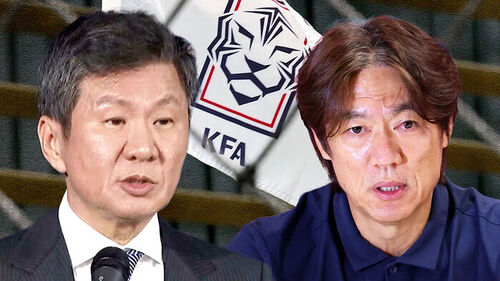
With the North and Central America World Cup now narrowed down to the semifinals, a strong aftermath is sweeping through South Korean football. Let us briefly turn back the clock on "Korean football," which moved rapidly over the past week. On July 6, President Chung Mong-gyu, who had led the Korea Football Association (KFA) for 13 years, stepped down, and the K-Football Innovation Committee was launched on the afternoon of the same day. The initiative, led by the government, aims to bring together experts from the football world and the broader sports community to drive innovation within the KFA. Consequently, the KFA has entered a transition phase for the next presidential election, while its parent organization, the Korean Sport & Olympic Committee (KSOC), is simultaneously pushing for a revision of the election rules.
Voices demanding reform in South Korean football are louder than ever, and the momentum is stronger than ever. Critics point out that the shocking failure to advance to the round of 32 in the World Cup was not just a loss in a sports match, but a result stemming from structural flaws in South Korean football. Fans are understandably furious that despite continuously pointing out these fatal flaws over the past three years, they ultimately faced this outcome. South Korean football is truly standing on the edge of a cliff, and a single misstep will inevitably lead to a plunge into the abyss. Currently, concerns outweigh hope. A prime example is the recent attempt to summon players to a National Assembly hearing, which was later withdrawn. Members of the National Assembly, as constitutional bodies representing the public, have a responsibility to oversee the KFA. However, past precedents show that instead of uncovering and correcting structural issues, the reality has often been a "political show" filled with shouting and public shaming.
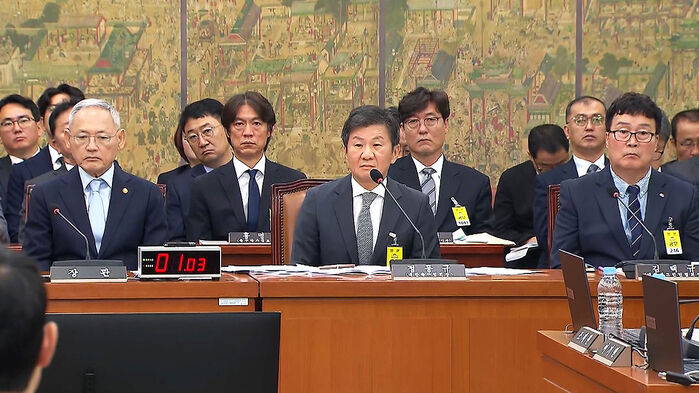
Questions that lack expertise and a proper understanding of the field only undermine trust in the National Assembly. This was the case for Italy in 1966 and France in 2010. Parliaments tried to investigate the causes of their World Cup failures, but in the end, they only worsened the wounds of their national football. Taking these past cases as lessons, one can only hope that this time, things will proceed in a constructive direction. The steps of the Innovation Committee are also precarious. Choi Hwi-young, Minister of Culture, Sports and Tourism, took the first step of the committee with an opening remark before the first meeting, handing over his co-chairmanship to Ryu Seung-min, President of the KSOC.
This decision appears to be mindful of the FIFA statutes, which strictly prohibit government interference. However, it creates a structure where the government's intentions can easily influence the process of reforming the KFA's decision-making system and governance. The revision of the election rules is a prime example. The Innovation Committee maintains that the upcoming election cannot be held under the existing indirect election system, where an electoral college of 100 to 300 people votes. They aim to significantly expand the electoral college, but for that to happen, the election regulations of the parent organization, the KSOC, must be revised first. Furthermore, the resulting KFA amendment must be approached carefully and precisely to ensure it does not violate FIFA's statutes or regulations. With the President virtually calling for a "direct election," the key is how the Innovation Committee will solve this puzzle. The number of registered individuals in the KFA exceeds 100,000. If a direct election is held, it would be on a scale similar to the election of the Jongno-gu District Office head, costing billions of won.
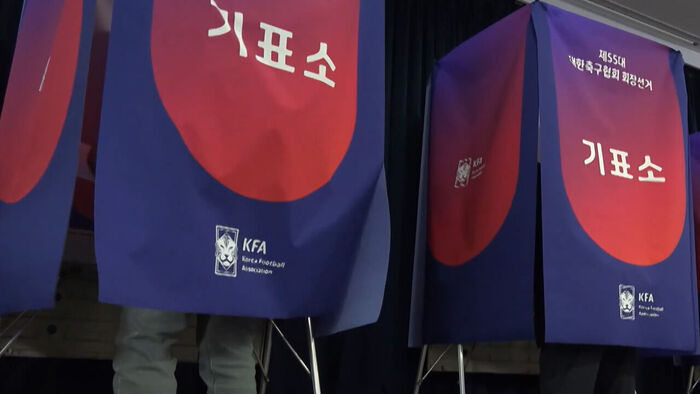
Given the already chaotic reality of the association and its capacity, it might not be able to touch any other work besides the election. Moreover, most of the registered individuals are recreational sports participants, whereas the system we are trying to change mainly concerns elite sports. Therefore, deciding how much and how to expand the electoral college will likely be a far from easy process. With the parent organization, the KSOC, having already concluded that transitioning to a direct election is virtually impossible, the Innovation Committee faces the difficult task of finding a realistic solution that satisfies both the public and the government. The process of appointing the next head coach is also an uphill battle. Although the Innovation Committee drew a line, saying that the coach appointment is a matter for the National Team Committee, the extent of the National Team Committee's authority and responsibility is closely linked to the governance structure, making it difficult to separate the two completely. Right away, there is a three-week international break starting in late September. Whether to spend this unusually long period under an interim manager, or, if a permanent manager is appointed, whether the next administration can maintain continuity with decisions made under the current acting presidency, and more specifically, what contract size and duration to negotiate—these are just some of the issues piling up for the National Team Committee even before selecting candidates. It is not easy to speed up, but if they proceed hesitantly while only reading the room, they are bound to repeat the chaos of the past four years.
We can learn from the examples of other countries. To improve performance, even if it takes time, we must thoroughly analyze the youth football scene and, based on that, overhaul training methods, systems, and policies. After becoming the first host nation to be eliminated in the group stage of the European Championship in 2000, Belgium spent the next two years solely focusing on analyzing youth football. They established policies to solve the problems they identified, and the result was the emergence of a "golden generation" led by Kevin De Bruyne. To select a good manager, the association's decision-making structure must be clearly established. Standards must be set regarding the extent of the National Team Committee's authority, whether it is merely an advisory body, and if they are to handle negotiations to the end, what conditions will be permitted. To elect a good president, changing the election system alone is not enough. There is another important factor. No matter how democratically the election system changes, it is useless if the right candidate does not step forward. Rather than stepping back, calling it a position where anyone will face criticism, now is the time when responsibility and courage toward South Korean football are needed.
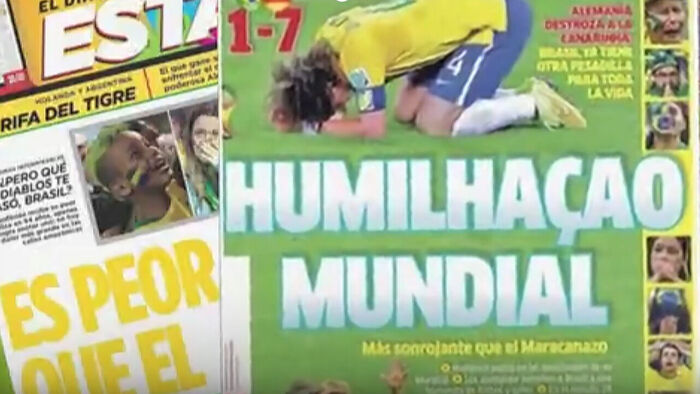
In 2014, Brazil suffered a shocking 7-1 defeat to Germany in the semifinals of the World Cup held in their home country. This is known as the "Mineirazo" tragedy. Immediately after the match, former Brazilian national team player Juninho Paulista, in an interview with the British public broadcaster BBC, responded to a reporter offering condolences for the devastating loss: "No, no. I like football. This is what football wants. We have to look at what is wrong with Brazilian football from now on, calmly and coolly. It is not because we lost today. It is because there is clearly something wrong with youth education and the way our players are playing now." It is painful, but we too have received the result that football wanted. It is time for us to solve our problems calmly, coolly, and clearly, even if it takes time.
 Video
Video
Cho Gye-won / Democratic Party Representative
Key figures in the case, including former President Chung Mong-gyu, former Head Coach Hong Myung-bo, and former Director Lee Lim-saeng, are resigning one after another and fleeing abroad...
Lee Jae-jung / Chairperson of the National Assembly's Culture, Sports and Tourism Committee
Are there any objections to holding a hearing on Wednesday, July 22, at 10:00 AM? I declare that it has been passed.
The Power of Anger... South Korean Football in Crisis Amid a Storm
Questions that lack expertise and a proper understanding of the field only undermine trust in the National Assembly. This was the case for Italy in 1966 and France in 2010. Parliaments tried to investigate the causes of their World Cup failures, but in the end, they only worsened the wounds of their national football. Taking these past cases as lessons, one can only hope that this time, things will proceed in a constructive direction. The steps of the Innovation Committee are also precarious. Choi Hwi-young, Minister of Culture, Sports and Tourism, took the first step of the committee with an opening remark before the first meeting, handing over his co-chairmanship to Ryu Seung-min, President of the KSOC.
Choi Hwi-young / Minister of Culture, Sports and Tourism
You will accept it, right? (Yes.) Then, I will step down from the co-chairmanship.
This decision appears to be mindful of the FIFA statutes, which strictly prohibit government interference. However, it creates a structure where the government's intentions can easily influence the process of reforming the KFA's decision-making system and governance. The revision of the election rules is a prime example. The Innovation Committee maintains that the upcoming election cannot be held under the existing indirect election system, where an electoral college of 100 to 300 people votes. They aim to significantly expand the electoral college, but for that to happen, the election regulations of the parent organization, the KSOC, must be revised first. Furthermore, the resulting KFA amendment must be approached carefully and precisely to ensure it does not violate FIFA's statutes or regulations. With the President virtually calling for a "direct election," the key is how the Innovation Committee will solve this puzzle. The number of registered individuals in the KFA exceeds 100,000. If a direct election is held, it would be on a scale similar to the election of the Jongno-gu District Office head, costing billions of won.
Official from the Korean Sport & Olympic Committee
If we have to split it across about 100 gymnasiums, it could cost billions of won, so the first concern would be how to cover this cost.
Given the already chaotic reality of the association and its capacity, it might not be able to touch any other work besides the election. Moreover, most of the registered individuals are recreational sports participants, whereas the system we are trying to change mainly concerns elite sports. Therefore, deciding how much and how to expand the electoral college will likely be a far from easy process. With the parent organization, the KSOC, having already concluded that transitioning to a direct election is virtually impossible, the Innovation Committee faces the difficult task of finding a realistic solution that satisfies both the public and the government. The process of appointing the next head coach is also an uphill battle. Although the Innovation Committee drew a line, saying that the coach appointment is a matter for the National Team Committee, the extent of the National Team Committee's authority and responsibility is closely linked to the governance structure, making it difficult to separate the two completely. Right away, there is a three-week international break starting in late September. Whether to spend this unusually long period under an interim manager, or, if a permanent manager is appointed, whether the next administration can maintain continuity with decisions made under the current acting presidency, and more specifically, what contract size and duration to negotiate—these are just some of the issues piling up for the National Team Committee even before selecting candidates. It is not easy to speed up, but if they proceed hesitantly while only reading the room, they are bound to repeat the chaos of the past four years.
Carefully, Calmly, but Clearly!
In 2014, Brazil suffered a shocking 7-1 defeat to Germany in the semifinals of the World Cup held in their home country. This is known as the "Mineirazo" tragedy. Immediately after the match, former Brazilian national team player Juninho Paulista, in an interview with the British public broadcaster BBC, responded to a reporter offering condolences for the devastating loss: "No, no. I like football. This is what football wants. We have to look at what is wrong with Brazilian football from now on, calmly and coolly. It is not because we lost today. It is because there is clearly something wrong with youth education and the way our players are playing now." It is painful, but we too have received the result that football wanted. It is time for us to solve our problems calmly, coolly, and clearly, even if it takes time.
 Video
Video※ Please note: This article was translated by AI and may contain errors.
Copyright Ⓒ SBS. All rights reserved. Unauthorized reproduction, redistribution, and use for AI training are prohibited.