SBS News
"She Deserved to Be Beaten": Shameless US Soldier Murderer... Tears of Camp Town Women and "State-Sponsored Prostitution"
Published : Jul 12, 2026 3:21 PM

The story of "that day" we want to tell "you" this time is the episode "Stranger in the Flophouse", which aired on July 9. Webtoon artist and broadcaster Kim Poong, and actors Kim Tae-hoon and Kim Sung-eun appeared as story buddies. (In line with the style of "Kkokkomu", this review is written in an informal, conversational tone.)
▲ The Woman of Dongducheon
The time is late summer of 1992. Thirty-five-year-old Sun-nam, who lives in Dongducheon, Gyeonggi Province, is busy with housework from early morning. Her husband left for work early, and she is home alone. Just as a drizzling rain makes the atmosphere feel somewhat bleak, someone quietly walks into the house. The person who arrives, soaked in rain, is Haemi, a younger woman from the neighborhood. She is 26 years old. Sun-nam reportedly got to know Haemi through an acquaintance.

"She said, 'Unni, I have a friend I know who is kind and lonely. Could you let her come and eat with us when I have meals?' That's how Haemi started coming over. I told her, 'Come to my house whenever you're hungry, I can at least cook rice for you.' She was pretty, kind, and very warm-hearted toward others. People in Dongducheon called her Haemi."
- Kim Sun-nam (pseudonym), acquaintance of Haemi
No one knew exactly when Haemi, whose hometown was Sunchang in North Jeolla Province, started living in Dongducheon. Haemi was extremely quiet and not the type to talk about herself. Instead of asking about her past, Sun-nam simply prepared a warm meal for her every time she visited.
On this day as well, Sun-nam wiped Haemi's rain-soaked body with a towel and boiled a bubbling stew. Haemi's favorite was Sun-nam's signature kimchi stew. She ate it so deliciously. However, since that incident, Sun-nam has not cooked kimchi stew. In fact, she says she couldn't bring herself to cook it.
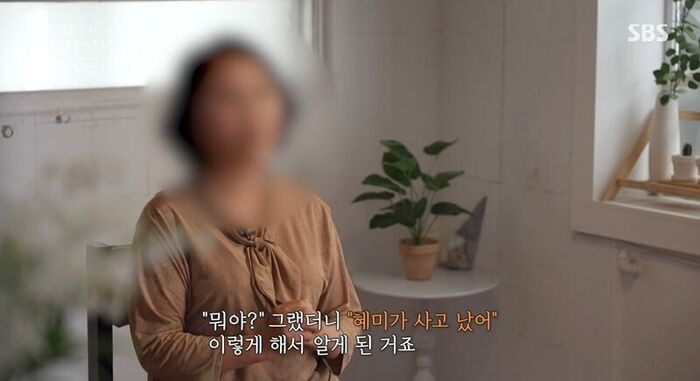
"I hadn't seen Haemi for a while. Back then, everyone went to the public bathhouse. So I went to the bathhouse during the day, and her place (Haemi's house) was completely barricaded off, and people were blocked from going there. When I asked, 'What's going on?' they said, 'Haemi met with an accident.' That's how I found out... Back then, I didn't eat kimchi stew because it reminded me of making it for Haemi. It's truly chilling. There will never be another incident like that as long as I live. It was just too cruel."
- Kim Sun-nam (pseudonym), acquaintance of Haemi
Haemi had been murdered. It was a memory so painful that Sun-nam wished she could erase it. The brutal incident that shocked Dongducheon—and indeed, all of South Korea—took place around 2:00 AM on Wednesday, October 28, 1992.
▲ Who Killed Her?
At 6:30 PM, 16 hours and 30 minutes after the incident occurred. This is Hankuk University of Foreign Studies located in Dongdaemun-gu, Seoul. Professor Lee Jang-hee, an expert in international law, was preparing to leave work. But just as he was about to step out of his office, he received an unexpected phone call.
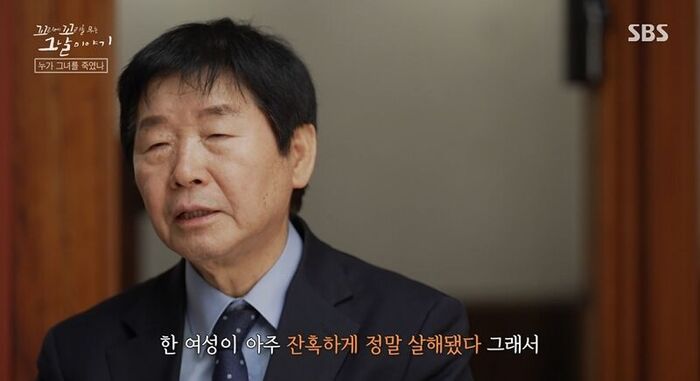
"Professor Kim Chan-guk, the vice president of Yonsei University and a professor at the College of Theology, contacted me and said, 'A woman was brutally murdered in Dongducheon.' He called and said, 'Let's go to the scene together.'"
- Lee Jang-hee, Professor Emeritus at Hankuk University of Foreign Studies Law School
Around 8:00 PM, the place Professor Lee arrived at was this location in Bosan-dong, Dongducheon.
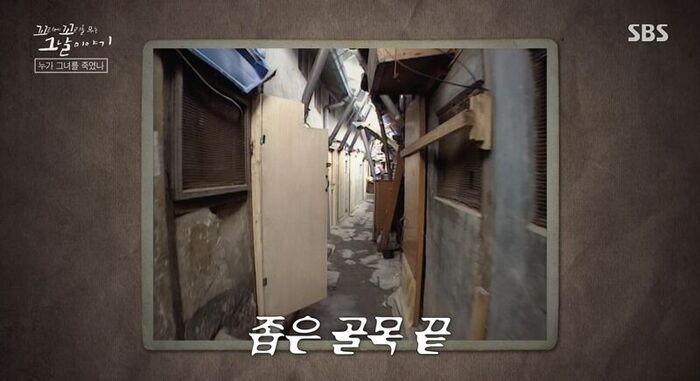
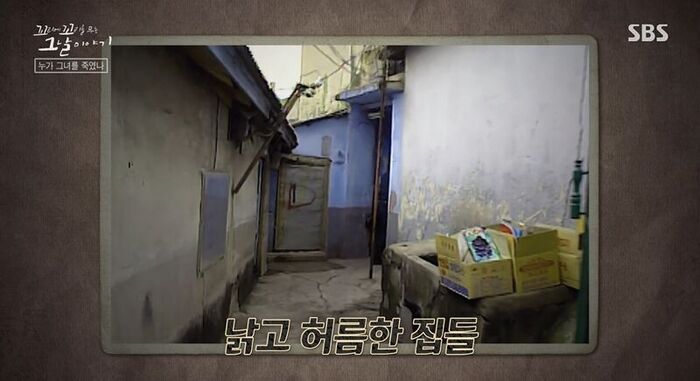
At the end of a narrow alley stood old, shabby houses. It was a flophouse neighborhood with several small rooms of about 6.6 square meters clustered together. When the door to the front room was carefully opened, a scene far more shocking than imagined appeared before their eyes.
"Since the police were still in disarray, we were able to see the scene."
- Lee Jang-hee, Professor Emeritus at Hankuk University of Foreign Studies
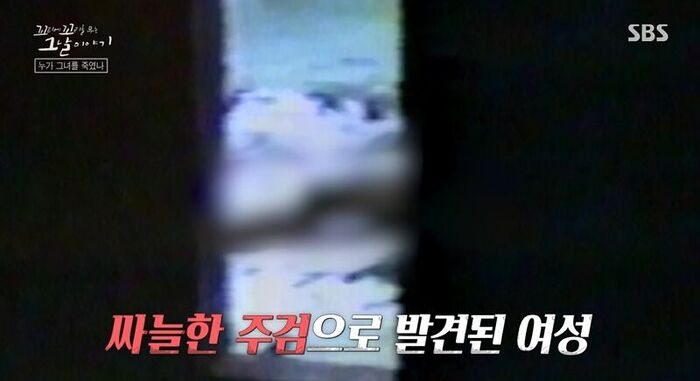
The woman was found as a cold corpse. Bloodstains all over the walls hinted at the situation at the time. The cause of death for the woman, who was found naked with her face fractured, was blood loss due to lacerations on her forehead. She had bled to death. However, everyone examining the woman's body froze in shock.
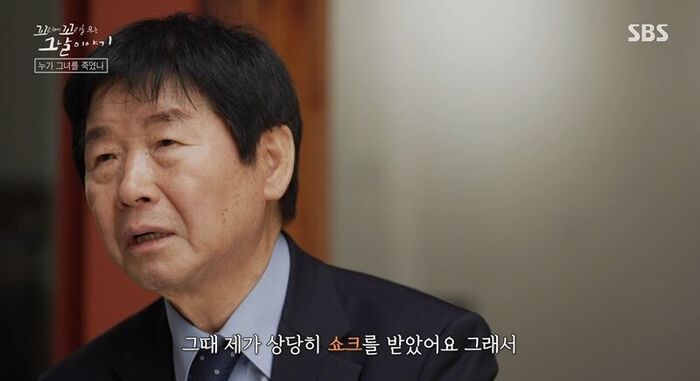
"First of all, the very first scene was just so much blood. And a beer bottle... it's hard to put into words... I was extremely shocked back then. I thought, 'This investigation must be conducted properly from now on.'"
- Lee Jang-hee, Professor Emeritus at Hankuk University of Foreign Studies
The killer had inserted several foreign objects into the victim's body. Matches were stuffed into the woman's mouth, presenting a horrific scene that is difficult to describe. It was an atrocious crime that made people wonder how a human being could do such a thing. There was another strange detail left at the scene.
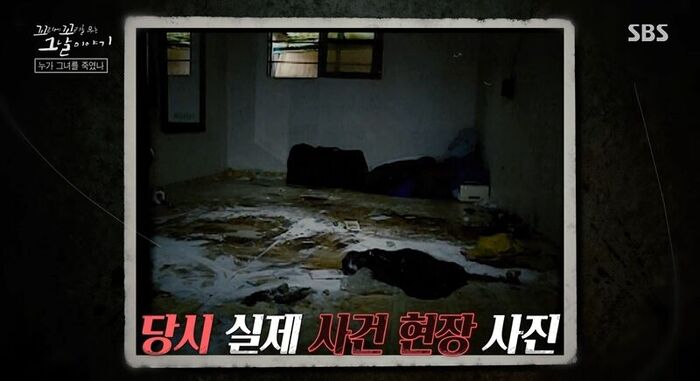
White powder was scattered on the floor. The identity of this white powder was laundry detergent. What was the intention behind scattering this? To destroy evidence?
Amidst the devastating and chaotic situation for everyone in the room, the police belatedly began securing the scene. The victim who met this brutal death was indeed Haemi.
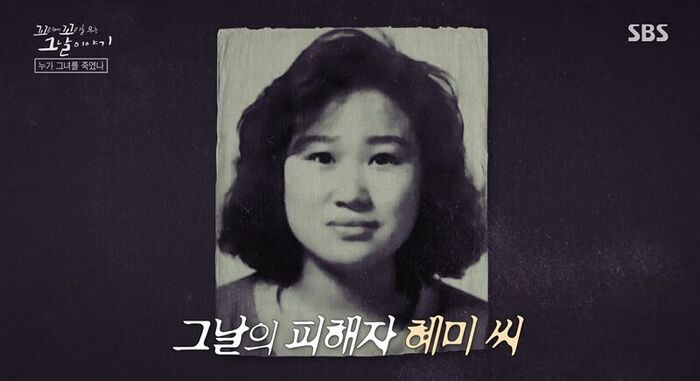
In fact, "Haemi" was not her real name. Her real name, which was learned later, was Yun Geum-i. Yun worked tirelessly but was always poor. The small flophouse room where she lived did not even have proper household goods. At the time, the monthly rent for the room was 40,000 won (equivalent to around the early 100,000 won range in today's money). It wasn't as if Yun indulged in any other luxuries. At just 26 years old, why did Yun, who had lived more diligently than anyone, have to meet such a brutal death?
▲ Identity of the Suspect
The incident occurred in 1992, a time when forensic investigation as we know it today did not exist. Of course, there were no CCTVs or black boxes either. The investigation team mobilized all available personnel to start questioning people in the area. They met and spoke with Yun's acquaintances as well as local high-risk individuals. Then, one of the neighbors gave a significant testimony.
"Was it past 12:30 AM? A young white man was supporting her and walking into the room with her. I don't know who he is, but I saw his face!"
Through questioning, they had found an eyewitness. The "white man" seen by the witness. To talk about this, we first need to understand the characteristics of this area.
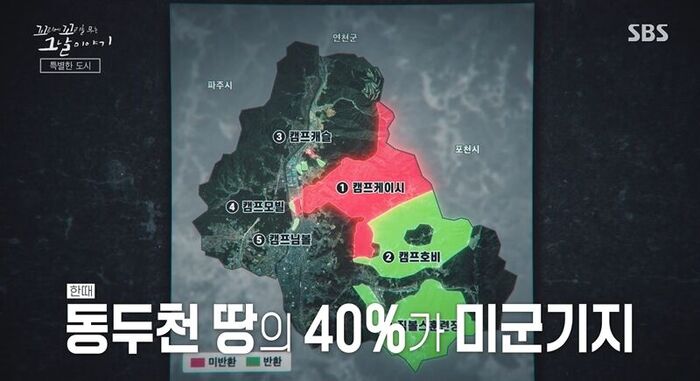
Dongducheon is home to the US 2nd Infantry Division, including Camp Casey, the largest US military base north of the Han River. At one point, 40% of the land in Dongducheon was occupied by US military bases. At the time, the size of the stationed troops was as many as 10,000. As US soldiers settled in Dongducheon, Koreans naturally gathered there one by one. The landscape of the town created around the US military base looked like this.
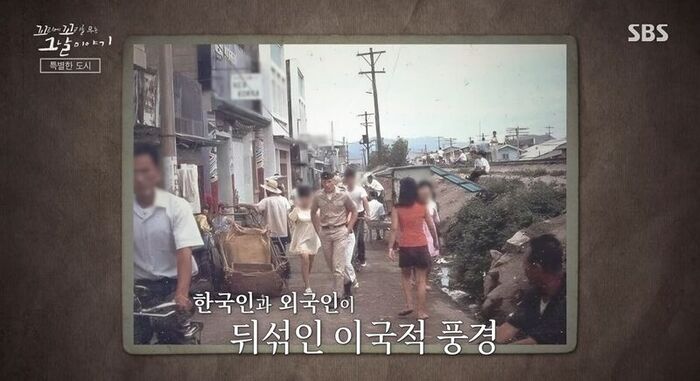
With English signs everywhere and pop music playing in the streets, it was an exotic scene where Koreans and foreigners mingled. Because of this, Dongducheon was once called the city where the most US dollars accumulated. There was even a joke that "even the dogs walk around with dollars in their mouths."
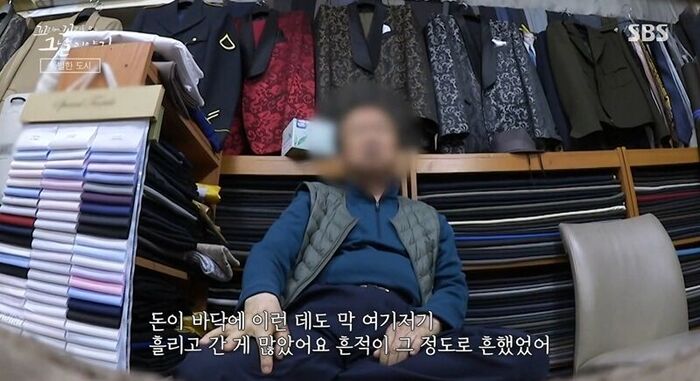
"The US soldiers' payday was Dongducheon's payday. It was twice a month—the soldiers' paydays on the 15th and 30th. This town didn't have factories or anything like that; it was a time when we made a living solely by catering to the US military base. Even when cleaning up in the morning, there was a lot of money dropped here and there on the ground. Traces of it were that common."
- Dongducheon merchant
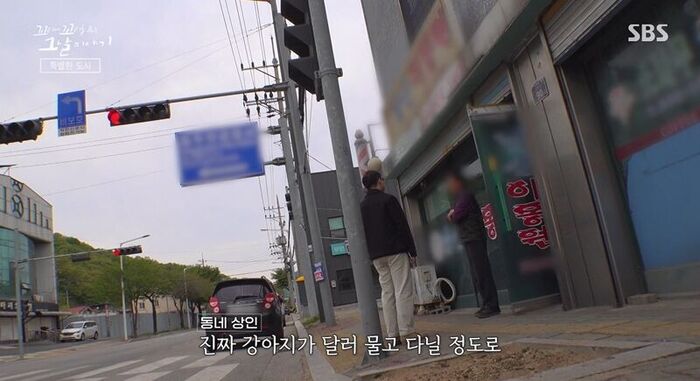
"Dollars were so common that it was indeed like dogs walking around with dollars in their mouths."
- Dongducheon merchant
Then, what was the occupation of the white man who killed Yun? There was a high probability he was a US soldier. To catch him, they had to go to the US military base. The police and the eyewitness decided to watch the front of the base. On the third day of closely watching the faces of people entering and leaving the main gate, a suspect finally appeared before them, wearing the exact same clothes as on the day of the incident, with bloodstains still visible on them.
If the man went inside the base and hid, there would be no way to take action. The moment the eyewitness grabbed the man's clothes in front of the main gate of the base, the police quickly handcuffed him. Here is the face of the man who was arrested.
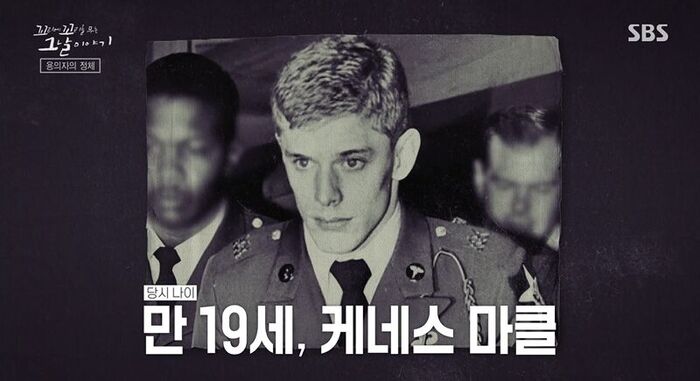
His name was Kenneth Markle. He was 19 years old at the time. He was a private in the US Army's 2nd Infantry Division. However, the police did not investigate Markle, whom they had gone to such lengths to catch. They did not even detain him. This was because of the Agreement under Article IV of the Mutual Defense Treaty between the Republic of Korea and the United States of America, Regarding Facilities and Areas and the Status of United States Armed Forces in the Republic of Korea, commonly known as the "US-ROK SOFA" (Status of Forces Agreement).
▲ Unfair US-ROK SOFA
The "US-ROK SOFA" agreement, signed in July 1966, defines the legal status of US military personnel in South Korea. It contains detailed provisions ranging from issues regarding facilities and areas that the US military can use, to daily life matters such as taxes and driver's licenses, and punishment when they commit crimes.
When US Forces Korea (USFK) personnel commit a crime against a South Korean citizen, who has jurisdiction? In principle, South Korea held primary jurisdiction. However, there was a condition. If the US military authorities requested jurisdiction, South Korea had to give "sympathetic consideration." "Sympathy" was just a nominal term; it essentially meant complying with the US military's request.
Then, if South Korean police arrest a US military suspect, which side can detain them until indictment? That had to be done by the US side.
These agreement terms. Extremely unfair, right? There is a reason for this imbalance of power. Although the US-ROK SOFA was signed in July 1966, its framework was created on July 12, 1950, during the so-called "Daejeon Agreement." This was about two weeks after the outbreak of the Korean War. After the fall of Seoul, the government had retreated all the way to Daejeon. It was the US that stepped forward to help at this time. In such a situation, could they think about the fairness of negotiations? The problem was that even in 1992, decades after the agreement was signed and when Yun was murdered, reality had not changed much. Therefore, South Korean police had no choice but to hand custody of Markle over to the US military.
A South Korean woman in her 20s met a brutal death on South Korean soil. Yet, the South Korean side could not detain the killer. Furthermore, the investigation of Markle was only possible for a limited time and in the presence of US military officials. Not only was proper interrogation impossible, but even the initiative in the initial investigation was handed over to the US. Amidst all this, South Korean investigative authorities showed no will to even exercise jurisdiction.
▲ Citizens' Rage
Hearing this news, Dongducheon citizens were outraged. Concerns grew that the killer might flee to the United States. Around this time, notices like this began to be posted in shops across downtown Dongducheon:
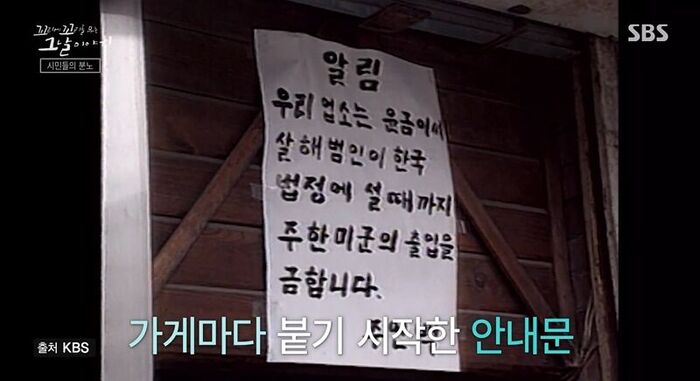
"Our establishment bans USFK personnel from entering until the murderer of Yun Geum-i stands in a South Korean court."
Even though the entire city was highly dependent on the US military base, citizens could not contain their anger and took action. In fact, the number of merchants who had been assaulted after asking for payment from US soldiers trying to eat without paying, or injured while trying to break up fights, was countless. If they tried to protest to the US military, the US military side would instead threaten that they would not visit that restaurant anymore. Under these circumstances, they had no choice but to grin and bear it.
But this time was different. Each of them risked their own livelihood to demand Markle's punishment. Among those who joined the protest were taxi workers.
<Letter to Dongducheon Taxi Workers>
"Upon hearing the news of Yun Geum-i's murder by a US soldier on October 28, let us taxi workers, who have suffered from US military violence more than anyone, step forward and make efforts to properly bring this case to our courts. It must no longer end with them simply being repatriated to the United States. Let us refuse to pick up USFK personnel until the South Korean prosecution exercises jurisdiction."
They started the so-called "Refusal to Carry US Soldiers Movement." The person who gathered the will of the taxi workers was Kim Yong-soo, a taxi driver born and raised in Dongducheon. There was a reason why Kim was more outraged by Yun's case than anyone else.
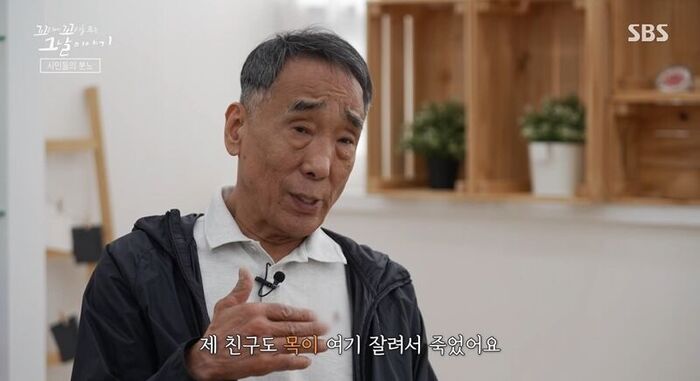
"Back then, the taxis were Ponies. People here kept screwdrivers stuck in front of the driver's seat because we had to fight with the US soldiers. We had to fight. Some would hit us and run away, some would run away without paying the fare—there were all kinds of guys. Before the Yun Geum-i incident, my friend also had his throat cut and died. It hadn't been long since we went through that. Not long after, the Yun Geum-i incident broke out again. For me, the thought suddenly surged up: 'Aren't these bastards going way too far?'"
- Kim Yong-soo, Dongducheon taxi driver
November 1987. Inside a car heading from the hospital emergency room to the funeral home. In front of Kim, who is weeping endlessly, a man lies silently. It is his fellow taxi driver, Park, with whom he had been drinking coffee and chatting just a day before. The cause of death was excessive bleeding due to a stab wound to the neck. The exact circumstances are unknown. However, according to local merchants, after a US soldier got out of his taxi, Park opened the door, stepped out, and collapsed. Yet, it is unknown what punishment the US soldier perpetrator received. Because the prosecution waived jurisdiction, the perpetrator's trial was not held in a South Korean court.
In fact, it was extremely rare for U.S. soldiers to stand in a South Korean court. Between 1967 and 1987, there were 39,452 confirmed crimes committed by U.S. soldiers. Among them, only 234 cases went to trial in South Korea. That is a mere 0.59%—less than one in 100 cases. Under these circumstances, Yong-soo, who had lost a friend to a U.S. soldier and faced the death of a fellow Dongducheon citizen, could not contain his anger. On November 7, 1992, something astonishing happened in Dongducheon.
"The riot police blocked the road starting from the Seoul Hospital intersection downtown as we were heading there. But we know the streets of Dongducheon so well, so what was the point of them blocking it? We pretended to fight them for a bit, then slipped into an alleyway and went straight to the main gate."
- Kim Yong-soo, Dongducheon taxi driver
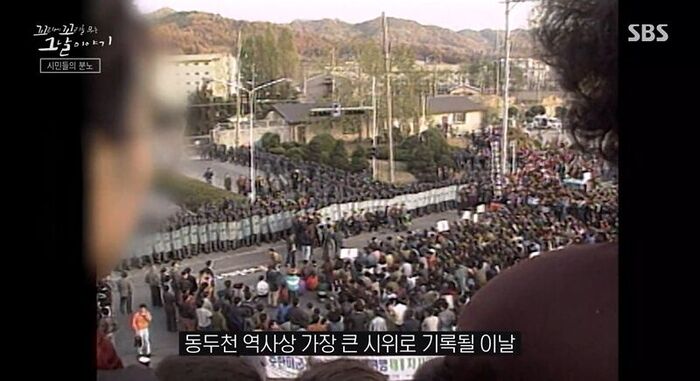
A large-scale protest broke out in Dongducheon. It was called the "Dongducheon Citizens' Rally of Condemnation." On this day, which would be recorded as the largest rally in Dongducheon's history, about 1,000 citizens from 43 organizations gathered in front of the main gate of Camp Casey in Dongducheon. The military base seemed to shake with the loud shouts of people crying, "Punish the murderer U.S. soldier!" and "Hand over custody of the U.S. soldier!" Raw eggs were thrown at the "Indianhead," the symbol of the division.
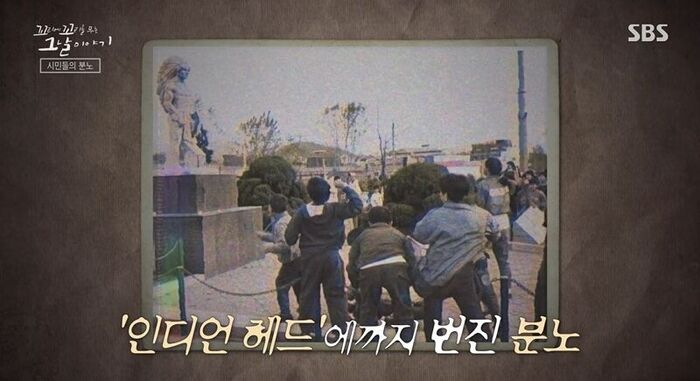
By this point, the U.S. soldiers looking outside also realized the gravity of the situation. So, was custody of Markle handed over to the South Korean side? Six days later, the United States Forces Korea (USFK) Command announced its position. They stated that if Markle were found guilty and sentenced to prison by a South Korean court, they would allow him to be incarcerated in a South Korean correctional facility. While they permitted a trial in South Korea, pre-sentencing detention was virtually impossible. Ultimately, Markle remained under U.S. military custody during the investigation. Would they be able to properly punish someone like Markle?
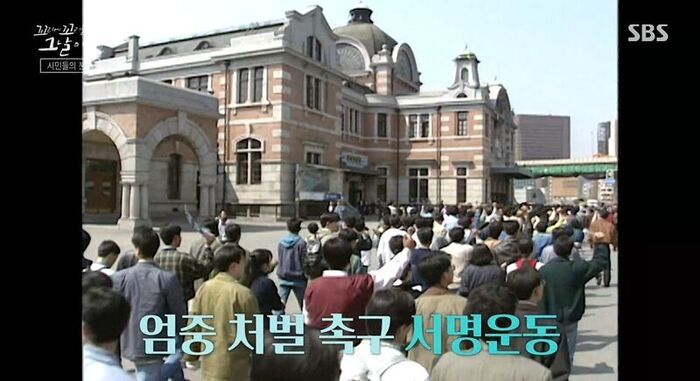
Afterward, a signature campaign calling for strict punishment was held in front of Seoul Station every Saturday. The incident was now beginning to be known nationwide, far beyond Dongducheon.
On February 17, 1993, the following year. From early morning, the inside and outside of the courthouse were packed with civic groups, reporters, and students. This was the day of Markle's first trial hearing. The moment the defendant, Markle, made his first public appearance, citizens boiled over with anger.
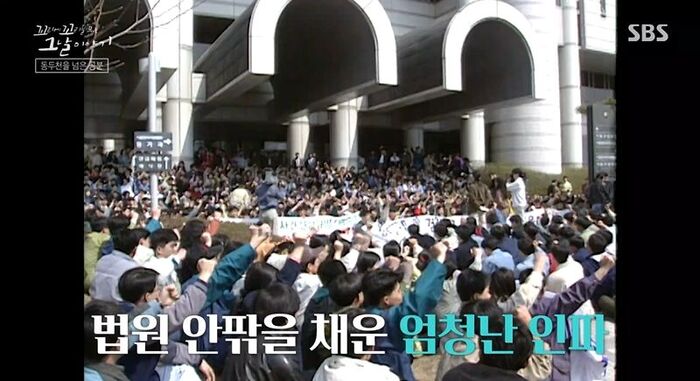
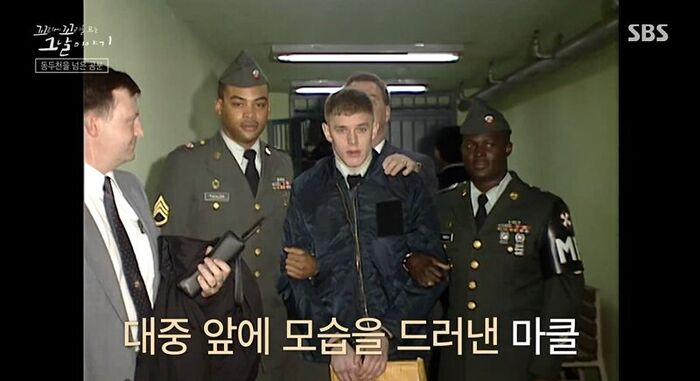
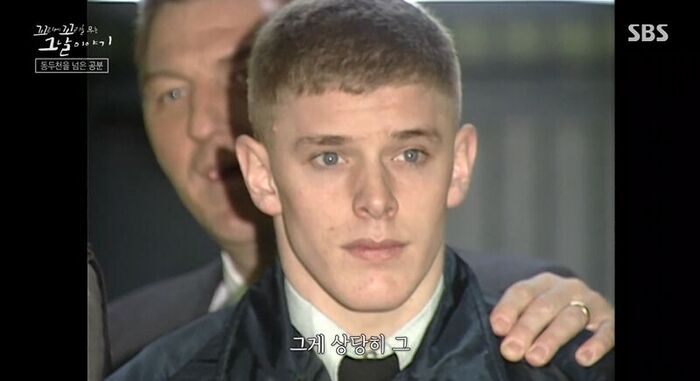
"I went there at the time, and the crowd was immense. It was just... incredible. It was beyond imagination, both inside and outside. Rather than showing any remorse for his actions, he looked somewhat arrogant, and I think that really provoked the feelings of the ordinary people in the courtroom."
- Lee Jang-hee, Professor Emeritus at Hankuk University of Foreign Studies
The trial began amid intense public interest. And finally, what happened on the day of the incident was revealed.
▲ What Happened on That Day
Around 10:30 PM on October 27, 1992, the night before the incident. Markle reportedly visited a club in front of the main gate of Camp Casey in Dongducheon. He had already consumed 16 bottles of beer and two glasses of gin at his quarters before heading out, and he drank an additional five bottles of beer at the club. He was heavily intoxicated. As he left the establishment to return to his base, he saw a woman who appeared drunk at the end of an alley. It was Geum-i. In the chilly late October weather, Markle claimed that, as a former medic, he simply walked her home out of goodwill because she looked vulnerable.
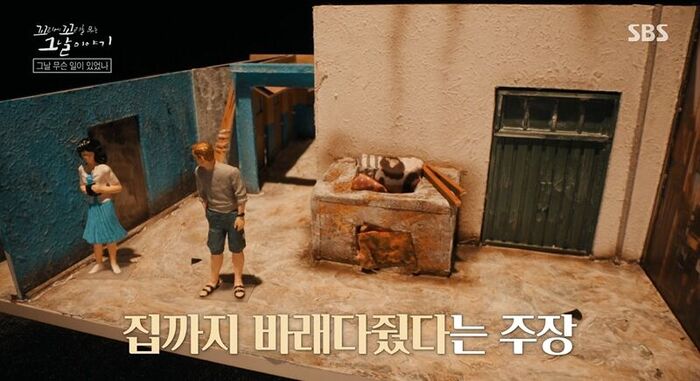
If Markle's claim were true, why did Geum-i die? This is Markle's statement during the first trial hearing.
"She kept attacking me, so I hit her with a bottle four times. However, I deny that she was dead before I left the room."
- From Markle's statement during the first trial hearing
He claimed that as he was trying to leave after safely bringing Geum-i to her room, she suddenly lunged at him with a beer bottle. He argued that he only hit her in self-defense and had no intention of killing her. Of course, this was merely Markle's one-sided testimony about what happened in a space where only the two of them were present. In particular, Markle claimed that the bizarre acts of inserting foreign objects and sprinkling laundry detergent were not his doing.
However, starting from the next hearing, Markle began to tell an even more absurd story. He claimed that the real killer was someone else. In fact, on the day of the incident, there was one more person the two met in front of the house. It was Lambert, a U.S. soldier who was acquainted with Geum-i. He was a specialist in the 702nd Maintenance Support Battalion. This was also confirmed by eyewitness accounts from neighbors.
Seeing Geum-i next to a strange man, Lambert asked what was going on. Markle reportedly ignored Lambert and headed toward the house with Geum-i. Lambert then kept following them. Their verbal argument escalated, and the two eventually got into a physical scuffle in front of the house. After knocking Markle to the ground and punching him a few times, Lambert left the scene. The person Markle pointed to as the real culprit was this very Lambert. This was Markle's testimony during the second trial hearing.
"He was very angry at the victim that night. Before I left the house, I saw Lambert heading toward her room. The photos of the scene I saw later did not reflect the condition of the room when I left."
- From Markle's testimony during the second trial hearing
His claim was that Lambert, upon seeing Geum-i and Markle entering the room together, brutally murdered Geum-i and desecrated the scene out of jealousy. However, Lambert, who appeared as a witness in court, had his alibi verified. Markle was repeatedly lying.
▲ The True Face of the Culprit
Also present in the courtroom was Seo Ju-ho, then a college freshman (class of '93).
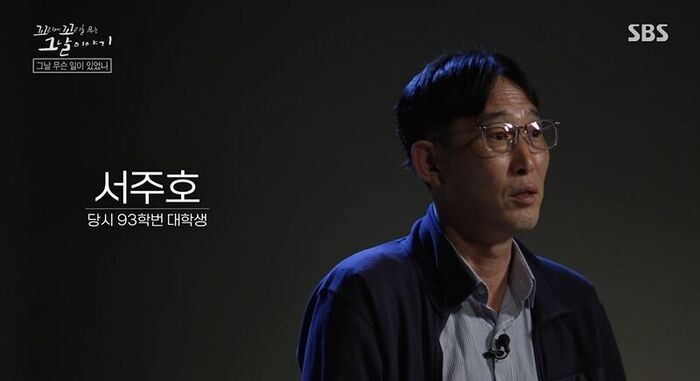
"As I recall, Kenneth Markle did not admit to his crime throughout the trial, and his attitude was extremely insincere. Of course, trials must be conducted strictly and solemnly, but because of the unique nature of the case, people's emotions were highly agitated. So, I remember us shouting in the courtroom whenever Markle talked nonsense or sneered."
- Seo Ju-ho, then-freshman college student (class of '93)
Furthermore, as the trial progressed, Markle's true thoughts about the incident were revealed. Investigator Evans of the U.S. Army Criminal Investigation Division (CID) testified in court as follows.
Prosecutor: "To what extent did the defendant admit to this crime?"
Investigator: "He said that the woman did not do anything to deserve death. However, he said she did do something to deserve a beating."
What on earth could "deserve a beating" mean? Markle enraged the public once again in his final statement during the first trial.
"I officially apologize to the citizens of the Republic of Korea. I pray for the soul of the deceased and still wish she were alive. I... my life has been ruined by this tragic incident. There was a tragic event, but this is the most tragic. My friends and family believe in me. I did not kill her. Please believe me."
- From Markle's final statement in the first trial
Nowhere in his final statement was there an apology to the deceased Geum-i. After apologizing to the public, he suddenly began to lament his own fate.
According to the forensic results from the National Forensic Service (NFS), Markle's fingerprints were detected on the object inserted into Geum-i's body. Furthermore, detergent components from the scene were found on the shoes Markle was wearing. This proved that Markle was indeed the culprit who assaulted and humiliated Geum-i and desecrated the scene. The NFS analysis revealed another shocking fact: all the bizarre acts committed by Markle occurred while Geum-i was still alive. Until the very last moment of her life, Geum-i had to endure horrific pain.
The court found Markle guilty of both murder and desecration of a corpse, sentencing him to life imprisonment. Considering his heinous crimes, the spectators in the courtroom felt that even life imprisonment was too light. However, Markle refused to accept this outcome and appealed, claiming that life imprisonment was too harsh compared to the crime he committed. What was the result of the appeal? This is how people looked after the sentencing hearing of the appellate court on December 16, 1993.
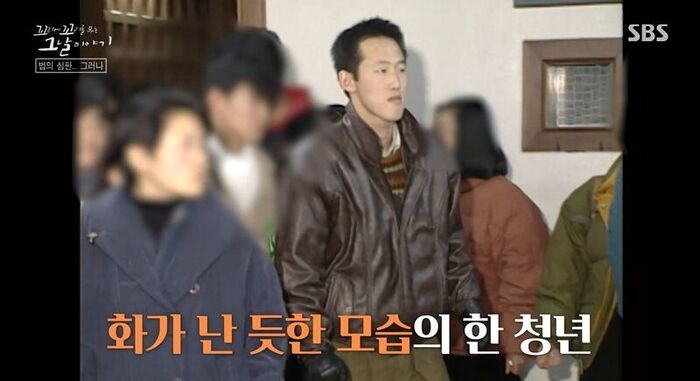
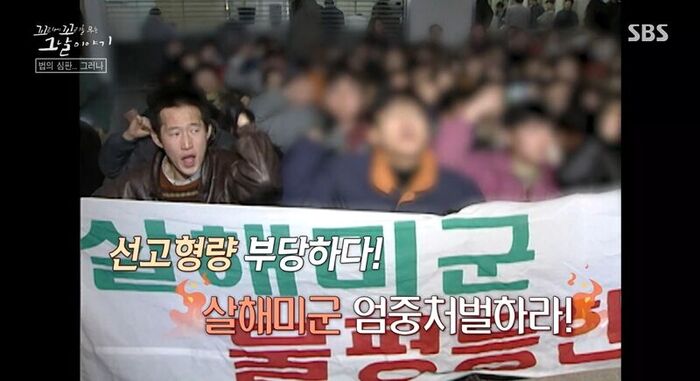
This young man with an angry expression is Seo Ju-ho, who was 20 years old at the time.
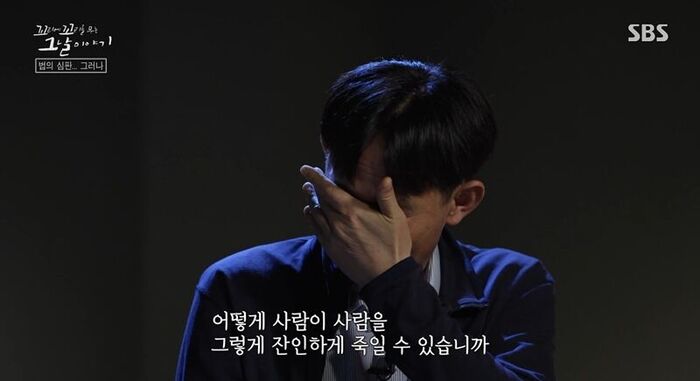
"When the sentence was announced back then, we students shouted a lot, saying the sentence was ridiculous. I think we were almost kicked out. Everyone was truly filled with... filled with rage. It felt like an incident that must never happen again. How can a human being kill another human being so brutally?"
- Seo Ju-ho, then-freshman college student (class of '93)
As a result of the appeal, his sentence was reduced to 15 years in prison. The court's reasoning was as follows:
"Considering that the defendant is a first-time offender with no prior criminal record and committed this crime impulsively, and that after the incident, the victim's bereaved family reached a settlement by receiving 71,453,075 won from the U.S. government as alimony and damages through deliberations by both South Korean and U.S. authorities, the sentence handed down by the lower court is deemed somewhat heavy and unjust."
- From the appellate court ruling
The fact that the bereaved family received alimony and compensation from the U.S. government after the first trial was accepted as a mitigating factor. After the trial ended, students and citizens occupied the courthouse corridors. They held a condemnation rally to vent their anger, and it is said that, unusually, there was no intervention to stop them. Afterward, Markle appealed to the Supreme Court, claiming that even the 15-year sentence was too heavy. However, the Supreme Court dismissed his appeal, finalizing his sentence.
▲ The Reality of Markle
On October 28, 1992, when he committed the horrific, torture-like crime against 26-year-old Geum-i, Markle was only 19 years old. What kind of person was he? Let's hear from an expert.
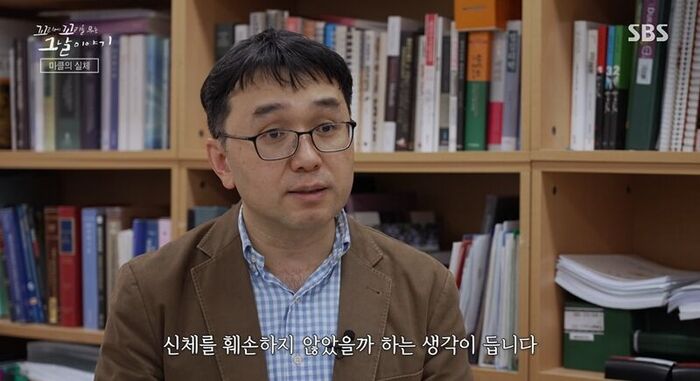
"This is what we call displaced aggression. For this individual, expressing his anger was a more central purpose than the goal of killing the person. For example, Lambert was a difficult target to overpower at will or to project his violence onto. I believe he may have desecrated the victim's body while she was still alive to further humiliate her, treat her as an object, and display his anger or sense of omnipotence."
- Choi Yi-moon, Professor of Public Administration at Korean National Police University
A classic case of being weak to the strong and strong to the weak. It is highly likely that Markle's crime began with his anger toward Lambert. Markle, a private, and Lambert, a specialist. Instead of taking it out on Lambert, who was higher in rank and older, Markle vented his anger on Geum-i to assert his dominance. The expert also noted that Markle appeared to have antisocial personality disorder. This is characterized by a lack of empathy for others, a failure to conform to social norms or rules, repeated criminal behavior and lying, and impulsivity and aggressiveness.
Markle was finally incarcerated in a South Korean prison. What was his prison life like? More shocking stories follow.
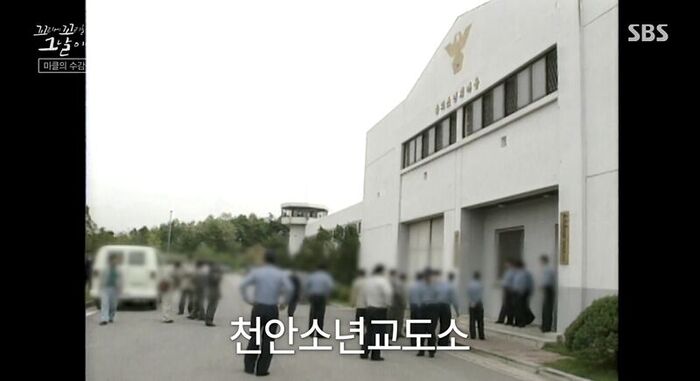
Time passed, and on May 17, 1994, at Cheonan Juvenile Prison. Prison officer Cheon Dong-sung was coming out into the corridor after finishing organizing items in the warehouse. Suddenly, a loud noise was heard through the window. A transport vehicle entered the prison, and amid intense media coverage, Kenneth Markle arrived at the scene. This was the very day Markle was admitted to the prison. Afterward, Markle reportedly became a major headache for officer Cheon. Normally, when personal belongings are brought in, prison officers inspect the contents, explain any problematic items to the inmate, and discard them. However, during this process, Markle would always swear and cause a scene. Officer Cheon described him as "absolute trash." Then, on May 5, 1995, an incident occurred.
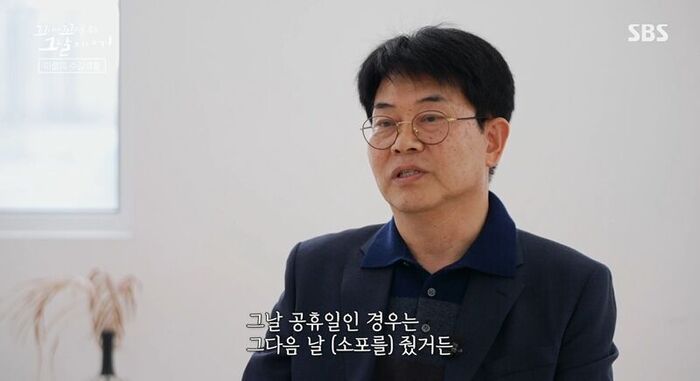
"Every Wednesday, the U.S. military base brings side dishes and packages. But if that day was a public holiday, we would give them the packages the next day. But this guy demanded we bring it immediately today, broke the corridor window, and sprayed a fire extinguisher at the prison officers."
- Cheon Dong-sung, then-prison officer at Cheonan Juvenile Prison
Markle turned the ward into a complete mess. Consequently, Markle was additionally indicted on charges of obstructing public duty, resulting in a fine of 2 million won. However, he refused to pay even that, leading to an additional 100 days of hard labor.
However, the prison where Markle, who had so many complaints, was held was different from the prisons we usually imagine. Let me show you a photo of the place where Markle was incarcerated.
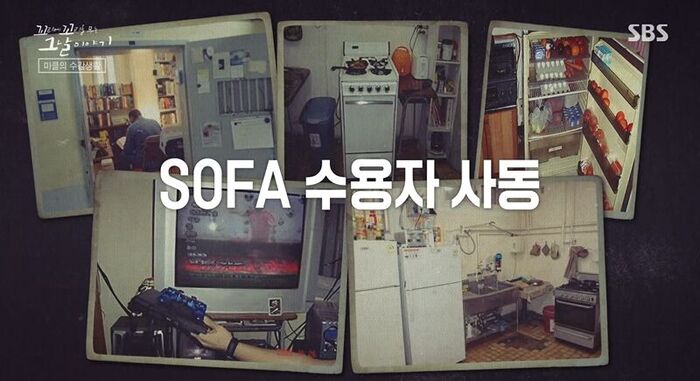
This is the SOFA inmates' ward. U.S. military criminals are provided with a sleeping room measuring 6.69 square meters. This is a much larger space compared to general inmates. The room is equipped with a private bed, and the restroom features a flush toilet. Separate facilities such as a washroom, kitchen, exercise room, laundry room, and visitation room are available for shared use. Food is provided in the exact same portions as other U.S. military bases—even the water.
"Since Cheonan Juvenile Prison was a newly constructed building in the '90s, the facility was clean. Also, when housing U.S. soldiers, we had to provide facilities like a dining hall, laundry room, shower room, exercise space, and game room. The U.S. military brings the exact same amount of food rations that a single U.S. soldier eats once a week from the U.S. base. Then, we had to allow them to cook and eat it in the kitchen there."
- Cheon Dong-sung, then-prison officer at Cheonan Juvenile Prison
The reason such privileges were granted is that the details are specified in Agreed View No. 13 of the South Korea-U.S. SOFA agreement. In addition to this, there are even more demanding conditions.
* Visitation Room: A comfortable environment and satisfactory atmosphere must be created for visitors and inmates.
Recreational equipment, including cards, games, and exercise equipment, must be made available for inmates to use at any time.
The above standards may be supplemented as necessary through agreements between the Eighth U.S. Army Military Police and the Correctional Bureau of the Ministry of Justice of the Republic of Korea.
- Minimum Standards for SOFA Inmate Detention Facilities
The prison environment where Markle stayed. Doesn't it seem better than the 40,000 won (approx. $30 USD) monthly rent room where Geum-i lived? Because of this, demands for SOFA revision erupted from all over. However, Markle did not stay quiet either. On August 21, 2000, Markle sent a contribution to the reader opinion board of The Korea Times. The title was "Why change SOFA." He questioned why the South Korea-U.S. SOFA regulations should be revised, and the content of his article argued that revising SOFA was ridiculous.
▲ Another Tragedy
Around this time, however, another incident occurred. On January 30, 1999, a 45-year-old woman surnamed Shin, who lived in Bosan-dong, Dongducheon, was found dead. Clear signs of assault covered her entire body, and a thick electrical wire was wrapped around her neck. The perpetrator of this horrific crime left only one clue: the word "Whore" written in the victim's lipstick.
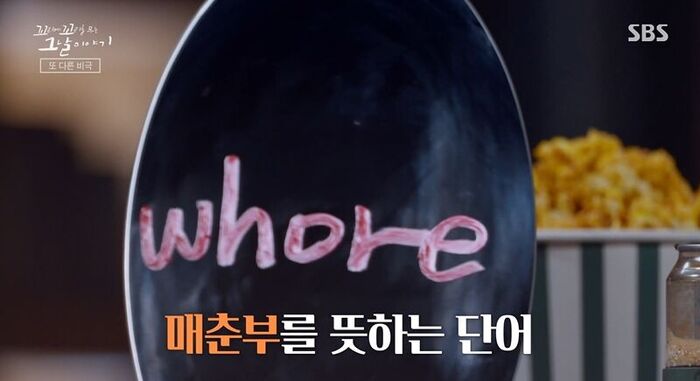
Through their investigation, the police placed several US soldiers on the suspect list, but the case ultimately remained unsolved forever. This was because those identified as suspects had already left for the United States. By the way, this neighborhood where the incident took place—Bosan-dong, Dongducheon. Does it sound familiar? Shin's house was a tiny single room (jjokbang) just 100 meters away from Geum-i's house. This was not their only commonality. Their occupation was that of camp town women, also known as "yanggongju" (Western princesses) or "yangsaeksi" (Western brides) at the time, who served as comfort women for the US military.
Have you ever heard the term "US military comfort women"? On November 9, 1961, the government enacted the Prostitution Prevention Act, banning prostitution. It stated that no one should engage in, arrange, or encourage prostitution. Violations were punishable by imprisonment or fines. However, the following year, in 1962, the government designated 104 locations nationwide as special zones, effectively permitting prostitution as an exception.
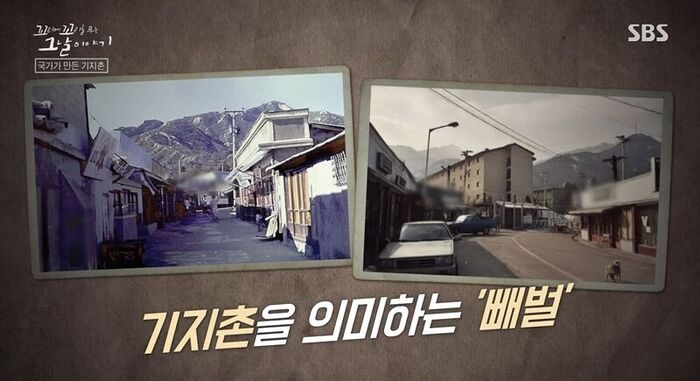
Ppaebeol, where Soon-ok (pseudonym) stayed, was one of those places. Ppaebeol refers to the camp town established in front of Camp Stanley in Uijeongbu, Gyeonggi Province. Some say "Ppaebeol" is a corruption of the Korean word for pear orchard ("baebat"), which US soldiers could not pronounce, while others say it originates from the word "peol" (mudflat), implying that once you enter, you can never escape. Soon-ok reportedly set foot in Ppaebeol when she was around 16 years old.
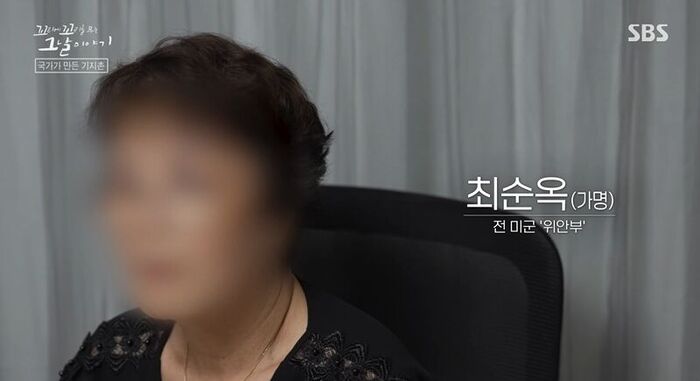
"At that time, many of our older sisters worked as housemaids in other people's homes. Everyone went to earn money because we were all so poor back then. I went to an employment agency in Yeongdeungpo, but then an agency fee was tacked on. After adding the cost of sleeping and eating there for a few days, I ended up being sent to Ppaebeol. At that point, I gave up any thought of running away."
- Choi Soon-ok (pseudonym), former US military comfort woman
Poor girls who visited employment agencies to earn money were driven to camp towns without even knowing why. There were even incidents like this around that time.
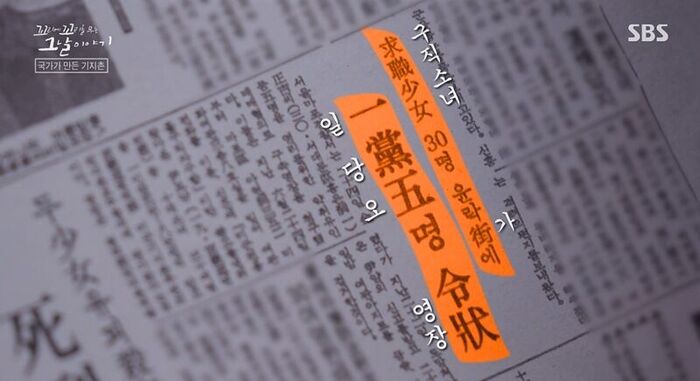
<30 Job-Seeking Girls Sent to Red-Light District, Warrants Issued for 5 Members of Ring>
"The Mapo Police Station in Seoul has requested arrest warrants for five individuals, including Kim, on charges of kidnapping and trafficking for profit. They allegedly placed an advertisement in a newspaper reading 'Seeking Job Seekers for US Military-Only Hall' and then sold 30 teenage girls, including a girl surnamed Yoon, who came to apply, to brothel pimps around the US military camp town in Pyeongtaek County."
- Dong-A Ilbo, July 24, 1970
It was human trafficking, plain and simple. Although some girls were lucky enough to escape, if they were caught and brought back, they were brutally beaten by the pimps. Thus, they did not even dare to think of running away. In this manner, young girls aged 15 and 16 had to deal with US soldiers and earn US dollars. According to 1963 data from the Supreme Prosecutors' Office, there were 13,947 camp town women nationwide, with about 79% of them residing in Gyeonggi Province. Since this number only accounts for those officially confirmed, the actual figure is estimated to be much higher.
▲ State-Created Camp Towns
Then, what was the government's stance? The Park Chung-hee administration encouraged and sponsored camp towns. They provided tax-free alcohol to clubs, subsidized facility funds, and even supported camp town business owners in touring overseas camp towns. In 1969, when South Korea's total exports stood at $622 million, the foreign currency earned through US military-related businesses was immense—a whopping $70 million. Therefore, to the government, camp town women were patriots earning dollars and champions of foreign currency acquisition.
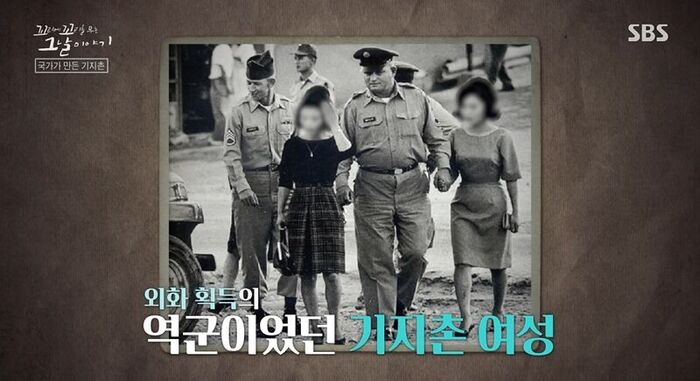
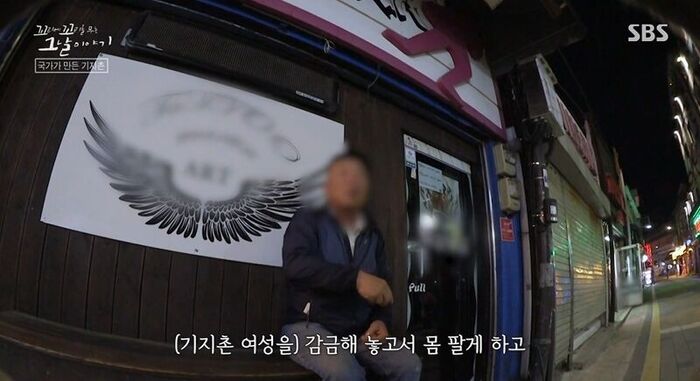
"Back then, there was nowhere else in our country to earn dollars. The 'yanggongju' earned all the money, and that's how dollars were generated back then. So President Park Chung-hee said they were making an active contribution, and at that time, there were pimps. They would have their henchmen bring girls from in front of Seoul Station, lock them up, and force them to sell their bodies. The 'yanggongju' suffered immensely."
- Dongducheon Resident
Then, these camp towns reached another turning point. In December 1971, President Park Chung-hee, who visited the ROK-US I Corps, heard complaints from US soldiers regarding the camp towns. They complained that due to high rates of sexually transmitted infections (STIs) and severe racial discrimination in the camp towns, US soldiers were reluctant to be stationed in South Korea. That is how this came about:
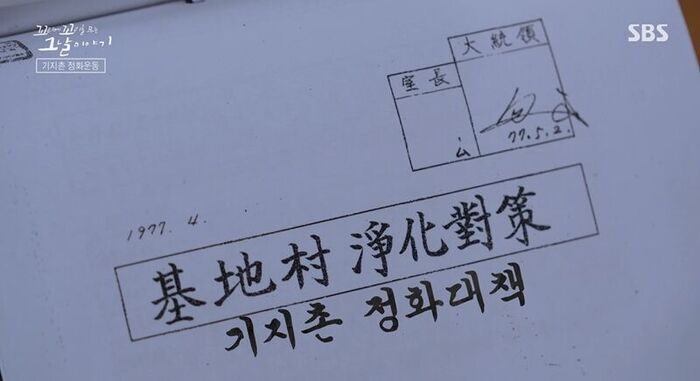
'Camp Town Purification Measures'
This included plans to build exclusive apartments for camp town women, manage STIs, and improve business establishments. So, who was the person responsible for conceiving these measures over several years?
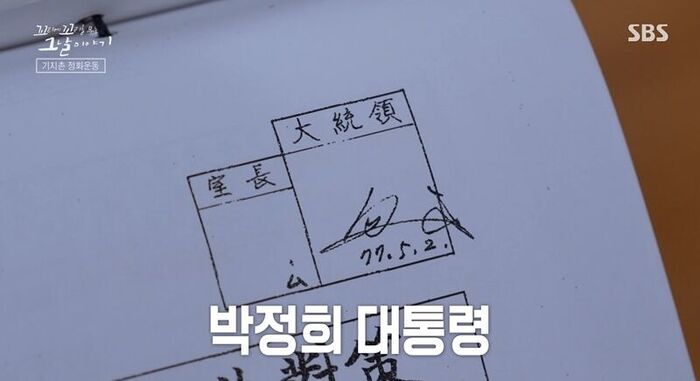
It was President Park Chung-hee. It was a national project approved by the president. Naturally, it progressed rapidly. Public officials who visited camp towns across the country gathered the women and gave speeches like this:
"You are all patriots. You must not forget that you are contributing to earning dollars with pride and dignity."
At the time, officials reportedly called the camp town women "civilian diplomats" and even provided them with English and various liberal arts classes. Among these, the most important initiative was the eradication of STIs. The women, who underwent STI screenings twice a week, always had to carry this with them:
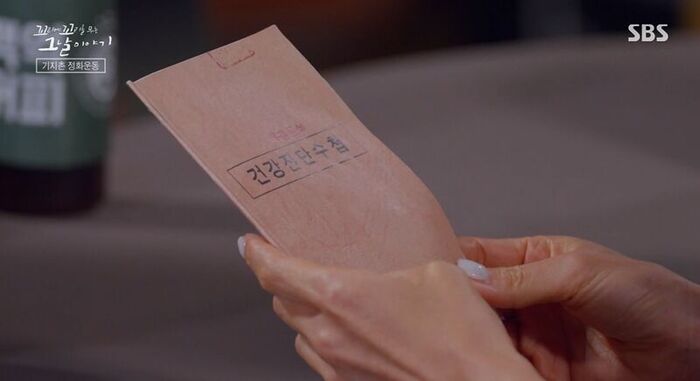
The "Health Diagnostic Booklet." It was a "screening certificate" proving one's health. It even included an AIDS test item. If they tested positive in an STI screening or did not possess the certificate, they were immediately confined in a detention center for those who failed the test (commonly known as the "monkey house"), which served as an STI management facility.
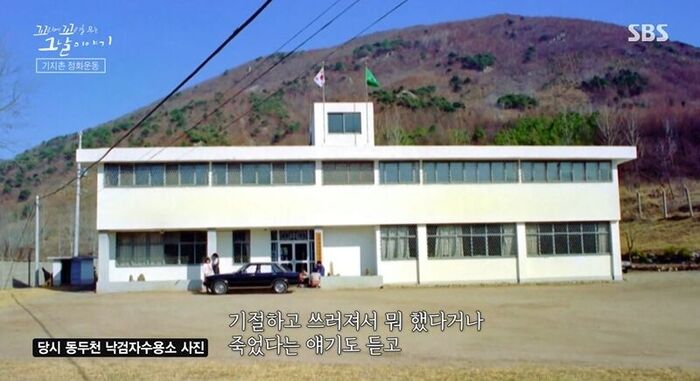
"Accidents occasionally happened there (at the STI management facility). I heard stories of people fainting, collapsing, or even dying. Those penicillin shots are incredibly strong. If you get one, you can't even walk. You literally have to drag yourself along. You have no idea how painful it is."
- Choi Soon-ok (pseudonym), former US military comfort woman
Penicillin was used as an STI treatment at the time. While penicillin is effective in treating bacterial STIs, it carries a risk of shock, requiring sufficient preliminary testing. However, the STI management facility skipped preliminary testing and administered the drug. As a result, some women even died from side effects.
However, the efforts to maintain a healthy, clean body and to acquire cultural knowledge were all for the sake of the US military. Why did they have to go to such lengths? It all began with the Nixon Doctrine of 1969. President Nixon announced a policy to reduce US troops stationed overseas, declaring that Asian security should be maintained by Asians. This was a bolt from the blue for the Park Chung-hee administration.
On January 21, 1968, an incident occurred where 31 armed North Korean commandos infiltrated near the Blue House in Seoul. This was the "Kim Shin-jo incident." In October and November of that year, armed commando incidents occurred consecutively. North Korea's movements were highly unusual. Under these circumstances, President Park Chung-hee was narrowly re-elected in his third presidential election in 1971. Therefore, the presence of US Forces Korea (USFK), which symbolized US support and guaranteed national security, was absolutely desperate. Then, at the end of March 1971, when the US 7th Infantry Division troops and air force units withdrew from South Korea, the South Korean government was thrown into an extreme crisis. They had to do whatever it took to stop the US military withdrawal. One of those methods was the camp town purification movement.
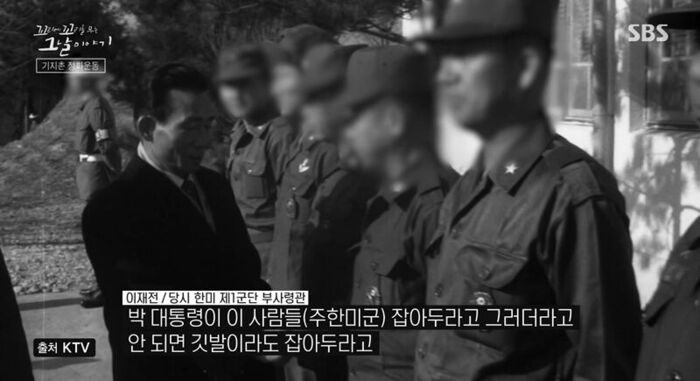
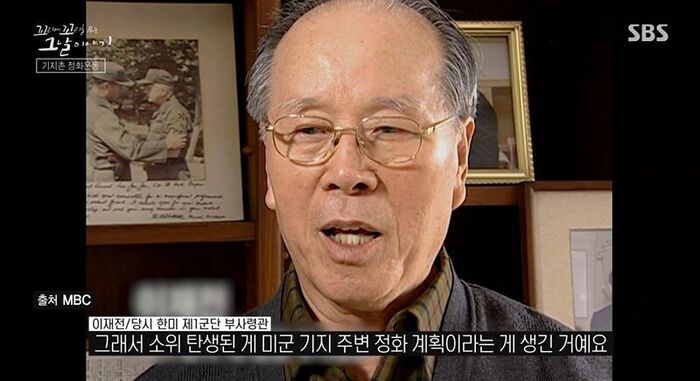
"President Park told us to hold onto these people (USFK). He said if we couldn't, we should at least hold onto their flags. That is how the so-called purification plan around US military bases came into existence. An immense amount of money was poured into it."
- Lee Jae-sun, then-Deputy Commander of the ROK-US I Corps
▲ "Stranger in the Flophouse"
The problem was that during all this, the women there continued to fall victim to US military crimes. Eun-ja in Bupyeong in 1969, Jeong-rye in Paju in 1970, and Bok-soon and Yeong-soon in Gunsan in 1977. Just when people were about to forget, murder cases occurred in camp towns across the country. However, the public never heard news about the deaths of camp town women. Until Geum-i passed away, the deaths of camp town women were never properly publicized. This was because many people did not want any diplomatic conflict with the United States to arise. Consequently, amid everyone's indifference, recovering the bodies and holding funerals was always left to the camp town women themselves.
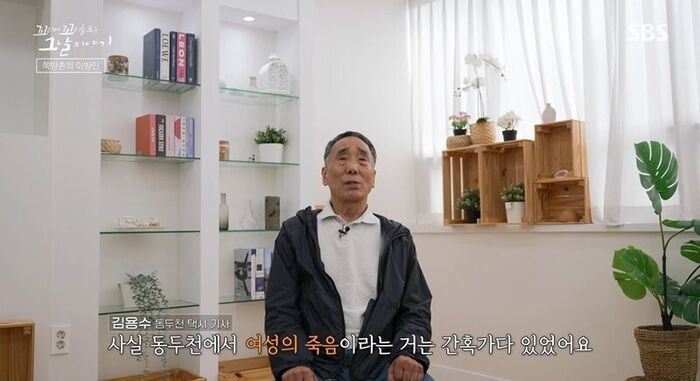
"To be honest, the death of a woman in Dongducheon happened occasionally. In the old days, when a woman died, people would carry a flower-decorated bier and walk all around the city."
- Kim Yong-soo, Dongducheon taxi driver
"I even saw the body of a girl killed by a US soldier. I personally saw it twice with my own eyes. They buried her secretly and covered her with stones, but after she was killed, all of us girls went out and found her, each carrying a stick. Even if they got caught, I don't know if they were punished back in the US. People said they just ended up with a dishonorable discharge. So we never felt protected at all. Later on, we realized, 'Ah, we were abandoned by our country.' We only felt that later; we didn't really know it at the time."
- Choi Soon-ok (pseudonym), former US military comfort woman
Though once praised by the state as "patriots" and "civilian diplomats," those who were actually despised as "yanggongju" and "yangsaeksi" were a shadow that South Korean history wanted to erase. Having spent their youth dealing with strangers who visited South Korea, yet never truly treated as South Korean citizens, the real strangers were the camp town women.
Meanwhile, the producer of "Kkokkomu" (the PD), who was talking with Soon-ok, had one thing on their mind the entire time: the scars on Soon-ok's wrists. The PD cautiously asked about those scars.
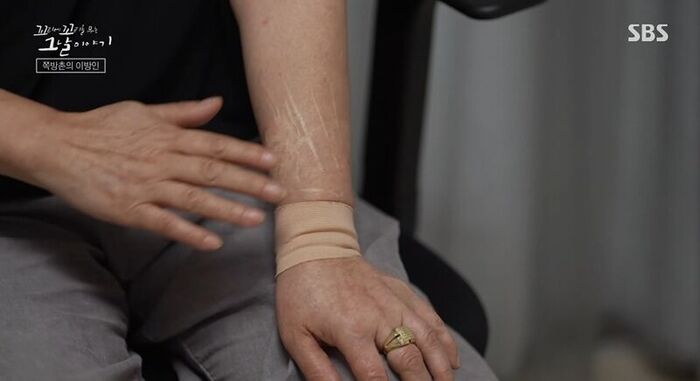
"I tried to die several times. I even set up briquettes a few times... I was just miserable. Myself. When I was young, lying in that room where I was trapped and working, looking up at the ceiling and thinking. I was just upset... just so upset. Because I couldn't do anything about myself. 'Why do I have to live like this?' When I had those thoughts occasionally as a young girl? That's why I tried to die several times. But it didn't work out the way I wanted."
- Choi Soon-ok (pseudonym), former US military comfort woman
Soon-ok's situation of barely surviving amidst looks of discrimination and hatred was not hers alone. In fact, even when Geum-i died, some people made reckless remarks like, "Why is the country making such a fuss over the death of just one yanggongju?" Perhaps the reason Markle could remain so confident all along was because of this.
▲ Crimes That Have Not Ended
On August 14, 2006, after 12 years and 3 months of imprisonment, Markle was paroled. Leaving for the United States the very next day, Markle seemed to have spent peaceful days, watching soccer and hockey.
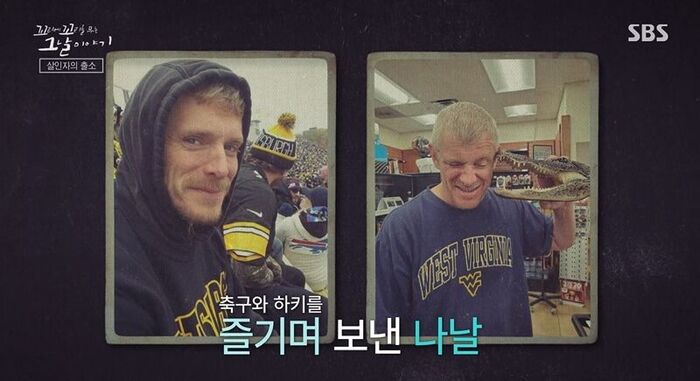
But look at these photos.
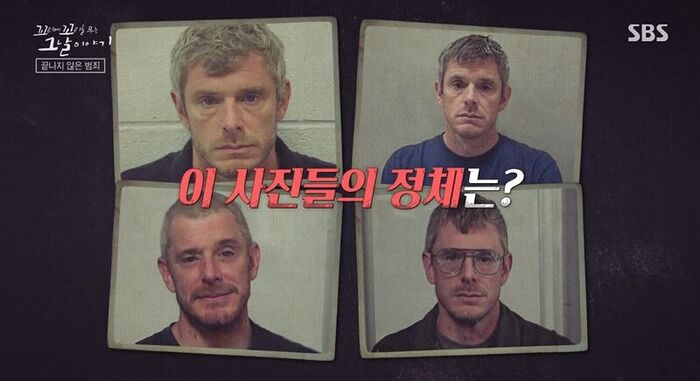
These are all Markle's mugshots. They were taken between 2015 and 2019. They are records of a criminal's appearance. Most of the charges are for drunk driving. Is this all he was arrested for? Unlike in South Korea, criminal records in the United States are generally public in principle, to monitor judicial power and guarantee the public's right to know. Therefore, "Kkokkomu", along with a US law expert, checked Markle's court appearance records.
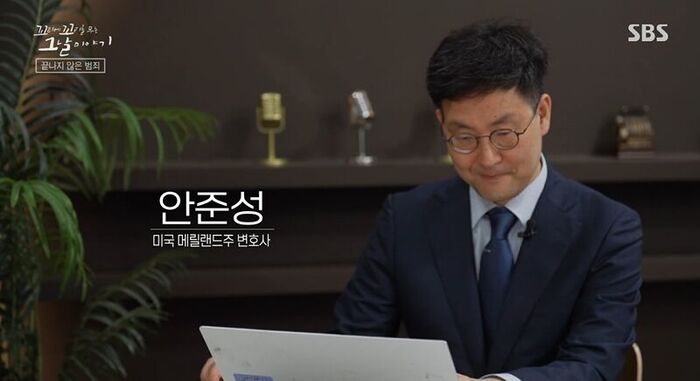
"Looking at the Maryland records, there are about 14 or 15 (criminal records). It is quite unusual that there were a significant number of drunk driving cases. There is also a 'child support payment issue.' What stands out is that there was also a 'domestic violence' case. If you look at his criminal history in West Virginia, there are 24 counts of 'breaking and entering' (burglary/home invasion), followed by 74 counts of 'fraud'... He seems to have been someone who had issues with self-restraint or self-control. And seeing how that connects to domestic violence, he was judged to be a person who has a tendency to resort to violence once he loses self-control."
- Ahn Jun-seong, US attorney admitted in Maryland
He still seems to show neither self-restraint nor remorse. Then, what was his stance on Geum-i's case? In 2010, Markle personally posted an explanatory comment on a blog dealing with issues related to South Korea.
"A friend of mine told me that all kinds of stories about me were being posted on this site. Just to be clear for the record, I did not kill anyone."
- Markle's explanatory comment
Markle, who denied his charges until the very end, passed away on February 14, 2023, at the age of 50. He was buried in a cemetery in the neighborhood where he lived.
▲ Nameless Deaths
Then, what were the final moments of Geum-i like? On October 30, 1992, two days after the incident, Geum-i was reportedly cremated in haste and her ashes were scattered at the Sangpae-dong Public Cemetery. In fact, this place is famous for being where camp town women were buried without a single gravestone.
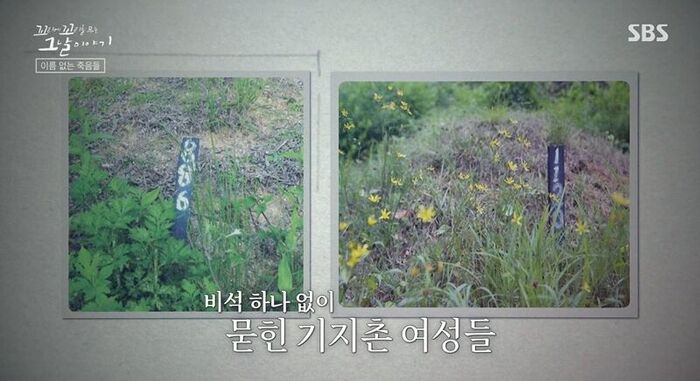
However, last April, the production team of "Kkokkomu" visited the Sangpae-dong Public Cemetery and encountered an unexpected sight. The site where the Sangpae-dong Public Cemetery once stood was in the middle of construction for a neighborhood park.
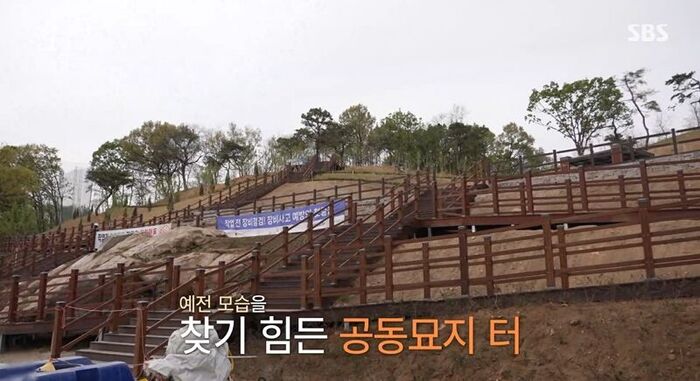
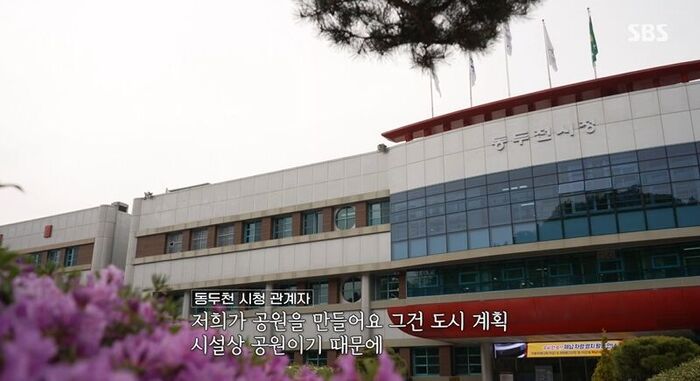
"We are building a park. Because it is a park under urban planning facilities. As a result, we relocated the graves, and there are no graves there now. They have all been relocated."
- Dongducheon City Hall official
The remains of 228 graves with identified relatives were reportedly recovered by their families and relocated elsewhere. For the remains with no known relatives, a funeral service company in Gyeongsangbuk-do, selected through a bidding process, took charge of the relocation. However, there were as many as 780 graves with no known relatives. Most of them belonged to camp town women.
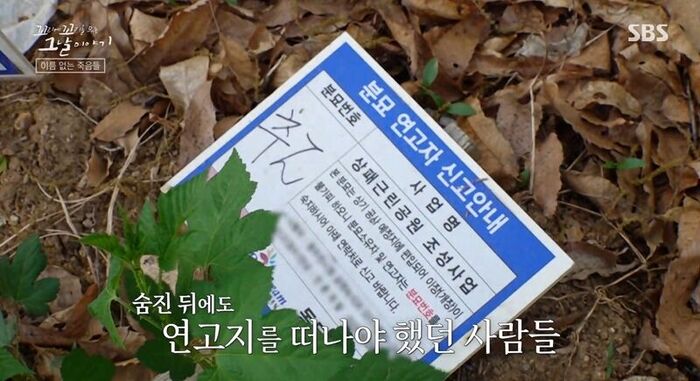
A site where only a few markers remain. These are people who had to leave their resting places even after death. They lived as wanderers away from their hometowns during their lifetimes, and even after death, they became unclaimed souls wandering in unfamiliar lands as strangers. They were Geum-i, Jeong-rye, Eun-ja, and Bok-sun, but their deaths went uncalled by their real names. Thus, they were forgotten in the memories of many. How should we comfort their souls?
▲ Defendant: The Republic of Korea
And on September 29, 2022, another trial was held. The person waiting anxiously in front of the court was Sun-ok, who lived in Ppaebeol, Uijeongbu. This was the day of the Supreme Court ruling on the lawsuit for damages that U.S. military comfort women had pursued for eight years. The defendant was the Republic of Korea. The claim was that the government justified prostitution and encouraged illegal acts for the U.S. Forces Korea. In fact, Sun-ok had delivered a representative speech in court during the appellate trial.
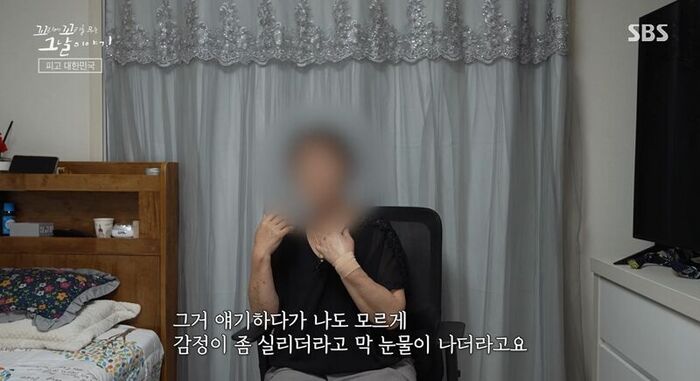
"I trembled, wondering if it made sense for us to dare do something like this to the country. I was nervous, but I felt I had to do it. While talking about it, I unknowingly got emotional. Tears just started flowing. So I cried, and I later found out that everyone in the gallery was crying too."
- Choi Sun-ok (pseudonym), former U.S. military comfort woman
Sun-ok said this in the courtroom:
"Respected Your Honor. We believe the state is responsible for establishing and neglecting the camp towns. The state, which praised us as patriots, did not punish the frequent violence by U.S. soldiers and vicious pimps in the camp towns, nor did it crack down on employment agencies that served as conduits for human trafficking, leading to many women being sold into the camp towns. What did we do wrong to be abandoned by our own country? Our lives, spent as dollar-earning patriots on the inside but pointed at with fingers on the outside, are so deeply unfair."
- From the representative statement of the U.S. military comfort women victims
Then, what was the Supreme Court's judgment? The Supreme Court concluded that "the Republic of Korea is liable for compensation." It ruled that the treatment of U.S. military comfort women constituted state violence that condoned violence by U.S. soldiers. Tears streamed down the face of Sun-ok, who had turned from a young girl into an elderly woman before she knew it. The person next to her, and the person next to them, began to weep aloud one by one.
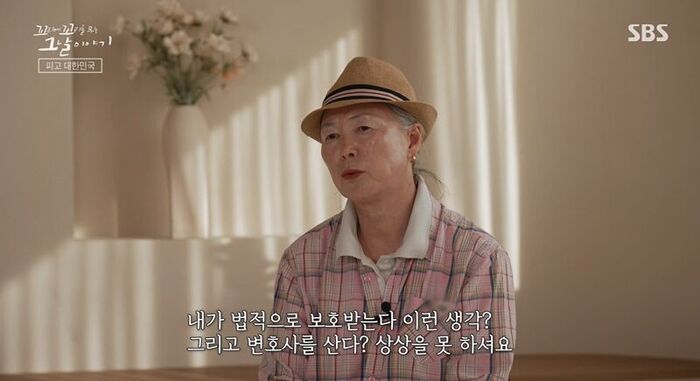
"We lived without ever doubting that we were citizens of the Republic of Korea. But they say, 'I have never felt like I was treated as a human being.' The idea of being legally protected? Hiring a lawyer? They couldn't even imagine it. One of them said as their first words, 'I feel like I have finally become a citizen of the Republic of Korea for the first time.' That was the part that made me the most emotional."
- Ahn-Kim Jeong-ae, representative of the Solidarity for the Human Rights of US Military Camp Town Women
When the lawsuit was filed in 2014, the number of participating U.S. military comfort women was 122. However, in the meantime, 27 of those women passed away. For those who could not see the end of the fight, the survivors reportedly placed the written judgment in front of the deceased's graves.
On March 7 of this year, ahead of International Women's Day, the Ministry of Gender Equality and Family apologized for the issue of U.S. military comfort women. It was the first apology in which the government acknowledged the state's human rights violations regarding the U.S. military comfort women issue.
Sun-ok, who said she finally felt like a citizen of the Republic of Korea after living her entire life as a stranger, had just one final wish.
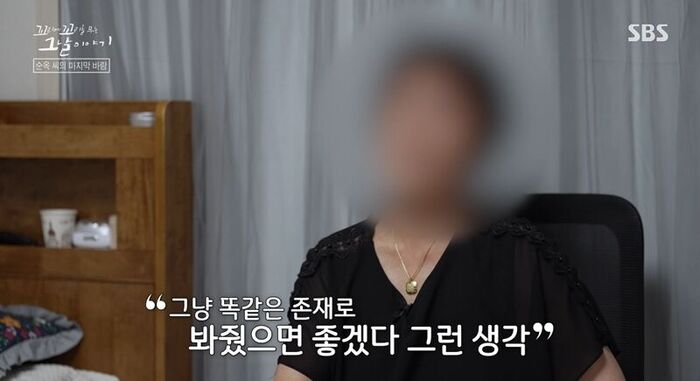
"I just... wish people would look at us normally. It's not like I went to a place like that because I wanted to. The way people look at us (camp town women) must not be good. I just wish they would see us as the same human beings, that's what I think..."
- Choi Sun-ok (pseudonym), former U.S. military comfort woman
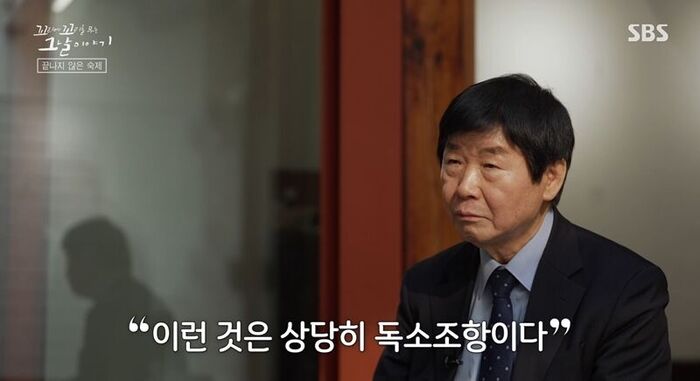
"Influenced by the case of Yoon Geum-i, the timing of custody transfer (for U.S. soldiers who committed crimes) was moved forward in 2001. On the other hand, under the sub-regulations (of the revised SOFA), a provision was added stating that if a U.S. military suspect is acquitted by a court, our prosecution can no longer appeal. Also, interrogations conducted without the presence of a U.S. representative are not considered valid evidence, which is a highly toxic clause. South Korea has changed a lot compared to the past. Therefore, to match this, all such (SOFA) regulations must be deleted now."
- Lee Jang-hee, professor emeritus at Hankuk University of Foreign Studies
What are your thoughts "today" after hearing the story of "that day"?
Reported by Kang Seon-ae
(Reported by Kang Seon-ae, SBS Entertainment News)
※ Please note: This article was translated by AI and may contain errors.
Copyright Ⓒ SBS. All rights reserved. Unauthorized reproduction, redistribution, and use for AI training are prohibited.