SBS News
Supreme Court Issues First Opinion on Abolishing Prosecutors' Supplementary Investigation Powers
Published : Jul 12, 2026 2:28 PM
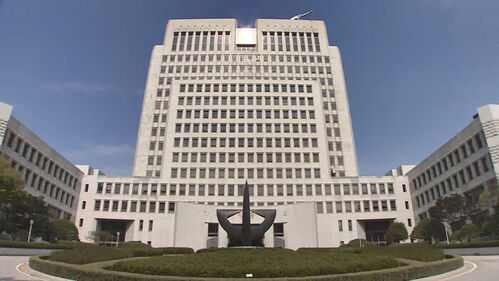
▲ The Supreme Court of Korea
The Supreme Court has stated that while the proposed amendment to the Criminal Procedure Act, which seeks to abolish the supplementary investigation powers of prosecutors, is a matter of legislative policy, "supplementary measures must be prepared to prevent potential side effects."
According to Representative Shin Dong-wook of the People Power Party, the National Court Administration (NCA) recently submitted its review opinion to the National Assembly regarding the amendment bill proposed by Representative Kim Yong-min of the Democratic Party of Korea and Representative Park Eun-jung of the Rebuilding Korea Party.
The amendment bill aims to fully abolish the direct investigation powers and supplementary investigation powers of prosecutors, while retaining only the authority to request supplementary investigations.
It also seeks to abolish the prosecutors' authority to direct investigations by special judicial police officers and restrict the prosecutors' direct application for warrants.
In response, the NCA stated, "This is a matter concerning the adjustment of authority between investigative agencies, and it is a matter to be decided through legislative policy after the National Assembly carefully examines the pros and cons of the institutional changes, as well as the diverse opinions of the public and experts, through sufficient deliberation and review."
The NCA added, "However, there is a need to simultaneously prepare sufficient supplementary measures to prevent potential side effects that may arise from such institutional changes."
This marks the first time the NCA has expressed an opinion at the judicial level regarding the abolition of supplementary investigation powers, which is a key issue in the adjustment of investigative powers between the prosecution and the police.
Regarding the provision to establish a prosecution review committee in each district court to deliberate and decide on the appropriateness of indictments, the NCA expressed that further review is needed, stating, "The appropriateness of an indictment can be controlled through trials after the indictment is filed, and through applications for adjudication (fiscal applications) in cases of non-indictment decisions."
The NCA explained, "If the court were to organize and operate a prosecution review committee, there is a concern that it could influence trials, such as making it difficult for the court to reach a judgment different from that of the committee during the trial or the adjudication application process; therefore, sufficient research and careful review are required before introducing such a system."
The NCA expressed support for the amendment's provisions to introduce a conditional detention and release system for both the investigation and trial stages, as well as a preliminary questioning procedure by judges for search and seizure warrants.
The NCA noted that a conditional release system during the investigation stage could contribute to the practical implementation of the presumption of innocence, the principle of non-detention investigation, and the trial-centered principle, while overcoming the limitations of the current binary choice between detention and non-detention.
The NCA stated, "It appears this could improve the misguided perception that 'detention equals punishment' and resolve the abnormal situation where criminal justice is so focused on the warrant stage that the actual main trial receives little public attention," adding that "similar systems exist in the legislation of most developed countries."
In particular, the NCA viewed that it would be possible to implement practices consistent with the principle of non-detention investigation without hindering investigative efficiency, as conditions such as attaching electronic monitoring devices and restricting residence can be imposed to offset the risk of flight.
Regarding the introduction of a preliminary questioning procedure for search and seizure warrants, the NCA stated, "During document reviews, there was no way to resolve questions or conduct additional deliberation if doubts arose regarding the requirements, subjects, or scope of a search and seizure," adding, "If preliminary questioning is introduced, it will secure sufficient means for deliberation and create conditions for judges to make prudent decisions."
The NCA further noted, "We also expect an effect of preventing 'exploratory search and seizure' (searches conducted by investigative agencies without specifying concrete criminal charges) and encouraging more cautious investigations."
Addressing concerns that this could hinder the speed and confidentiality of investigations, the NCA stated, "The amendment targets investigative agencies and witnesses requested by them for questioning, and the questioning can be held in private," adding, "The possibility that the speed and confidentiality of investigations will be hindered simply by the appearance of investigative agencies or witnesses in court is low."
However, the NCA expressed a cautious stance regarding the provision allowing suspects to file for adjudication against suspension of indictment decisions, stating, "There are concerns about hindering the efficient distribution of limited judicial resources, and there are doubts about its effectiveness."
Currently, suspension of indictment decisions are remedied through constitutional complaints.
The NCA argued that if the courts were to handle this, it would follow the process of "application for adjudication to re-appeal to the Supreme Court to constitutional complaint," which could lead to "the possibility that the remedy procedure for suspects who receive a suspension of indictment becomes more prolonged than it is currently (via constitutional complaint)."
(Photo: Yonhap News TV, Yonhap News)
※ Please note: This article was translated by AI and may contain errors.
Copyright Ⓒ SBS. All rights reserved. Unauthorized reproduction, redistribution, and use for AI training are prohibited.