'Permeable Blocks,' a Solution to Avoid Monsoon Deluges?
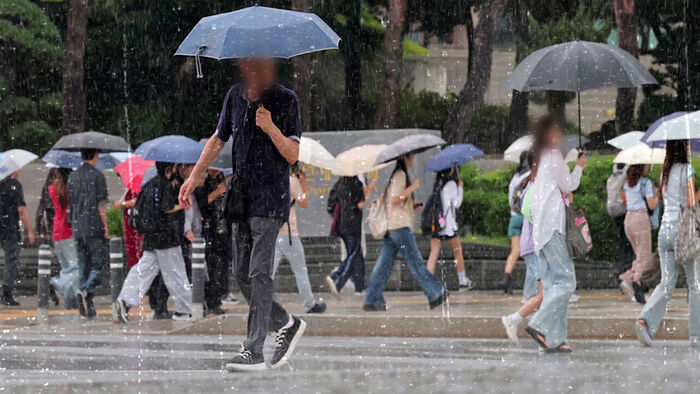
The monsoon season has arrived. In the past, this was a time of great inconvenience due to frequent rain and high humidity. However, due to climate change, we now experience unimaginable amounts of torrential rain and massive damage. It seems that the monsoon season these days is no longer just an inconvenience, but a period we must endure with anxiety. The risk is particularly high in urban areas because the ground around us is covered entirely with asphalt or concrete. This structure prevents rainwater from soaking into the ground. In the cities where many of us live, the soil has lost its ability to absorb rainwater, causing water to accumulate and run off as soon as it rains. Conversely, because the ground cannot absorb rainwater, the surface cannot store water, leaving cities vulnerable to water shortages during droughts. To address this issue of increasing impermeable surface areas, "permeable blocks" were introduced. These are sidewalk blocks designed to let rainwater pass through and drain into the soil below. The principle is simple: countless microscopic pores are created when manufacturing the blocks, allowing water to drain through the gaps.
[Cho Si-hyeong / Seoul Metropolitan Government official in charge of permeable blocks: Permeable blocks absorb some of the rainwater, playing a role in preventing urban flooding.]
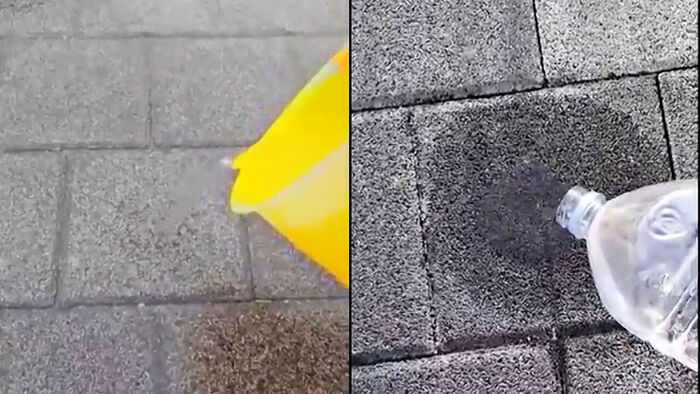
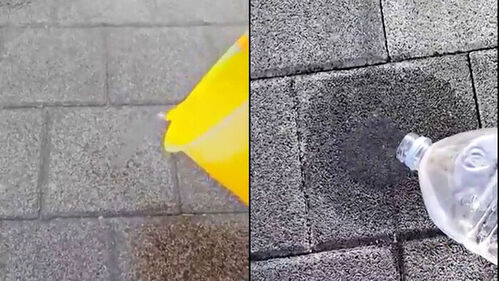
Indeed, when placed side-by-side with regular sidewalk blocks, conventional blocks have a smooth surface, while permeable blocks are rough and show many gaps. How do permeable blocks perform when it actually rains? Videos taken in areas paved with permeable blocks show rainwater pooling in various spots on regular asphalt. In contrast, areas paved with permeable blocks clearly show little to no water pooling. Even in experimental videos where water is intentionally poured, it drains away almost instantly. Because of these benefits, the Seoul Metropolitan Government enacted the Basic Ordinance on Water Cycle Recovery and Low Impact Development in 2015, making the use of permeable blocks mandatory. More than 10 years have passed since then, but how many have actually been installed? They now cover about 15% of the total sidewalk area in Seoul. Permeable blocks are about 10% to 20% more expensive than regular blocks. Since replacements only occur when old blocks are removed and repaved, only a fraction of the city has been fully replaced even after a decade.
Is the Performance Being Maintained?
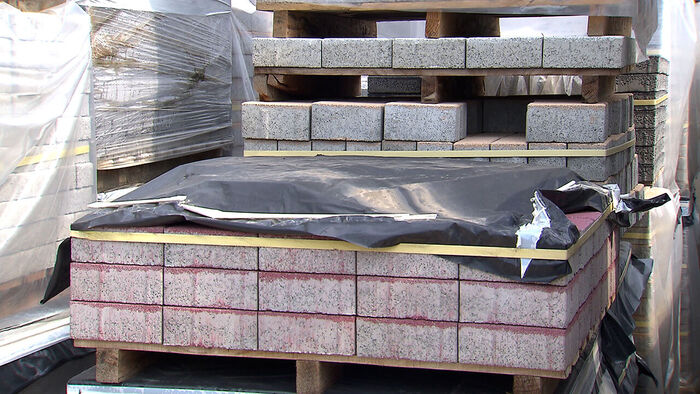
But is the performance of these installed blocks actually being maintained? The Seoul Institute conducted a field measurement survey. They selected 30 locations in Seoul where permeable blocks had been installed for less than a year and conducted an investigation. The performance of permeable blocks is measured based on how many millimeters of water they can absorb per second. Currently, products are classified into Grades 1, 2, and 3. Until last year, installing Grade 3 or higher products was required, but starting this year, the standard has been tightened to Grade 2 or higher. Here, Grade 1 refers to absorbing 1 millimeter or more of water per second, Grade 2 is 0.5 millimeters per second, and Grade 3 is 0.1 millimeters per second. All 30 locations surveyed had been paved with Grade 3 products at the time of installation. However, when the Seoul Institute measured their performance, only 10 locations met the Grade 3 standard of 0.1 millimeters. Another 18 locations only achieved 40% of the Grade 3 performance (0.1 millimeters), and the remaining 2 locations showed no permeability at all. In short, two-thirds of the total locations were effectively deemed defective.
[Park Dae-geun / Senior Research Fellow at the Seoul Institute: The results showed that about two-thirds were either clogged or mostly clogged. With these performance test results, we wanted to raise awareness of the severity of the issue...]
Two-Thirds 'Defective'—What is the Reason?
Why did this happen? There are two possibilities. First, the products were originally fine, but various foreign substances and pollutants clogged the pores after installation. Second, defective products may have been used from the very beginning. The Seoul Institute maintains that it cannot draw a definitive conclusion based on this survey alone. However, the block manufacturing industry is viewing the situation with suspicion, questioning whether a normal product would clog in less than a year. Indeed, another study by the Seoul Institute supports this suspicion. This study tracked the long-term durability of the permeability of these blocks. For the Grade 3 products mentioned earlier, it took about 3.2 years for their permeability to drop to the management standard of 0.1 millimeters. In other words, it took 3.2 years after installing a new product for its performance to degrade. For Grade 1 products, it took 5.1 years. There are also permeable blocks laid on roadways rather than pedestrian sidewalks; the study showed that for Grade 1 roadway blocks, it took 17 years for the permeability to drop to 0.1 millimeters. Therefore, critics point out that it makes no sense for two-thirds of the blocks to lose their permeability in just one year. Of course, some factors must be considered. Since the pores are artificially created, clogging due to dust and foreign substances over time is fundamentally inevitable. This is why the current system requires performance maintenance checks every two years.
Why Were the Checks Not Properly Conducted?
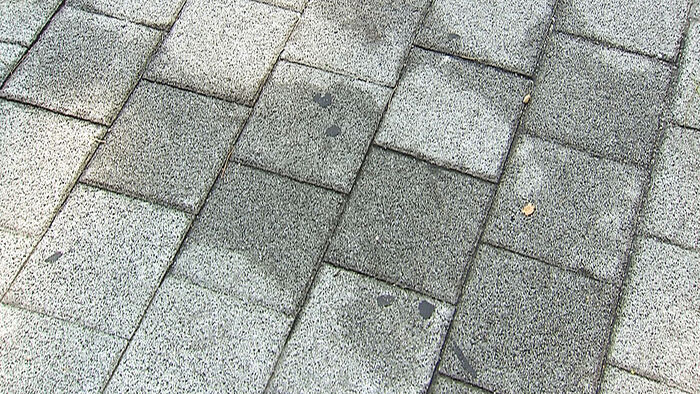
However, these performance maintenance checks have not been properly conducted. Why is that? The main reason was the lack of a suitable testing method. Applying foreign standards to domestic sites did not work well, and taking blocks to a laboratory for measurement was difficult as it required breaking them. It was only last year that the Seoul Institute developed a testing method suitable for domestic use, which led to the measurement results for the 30 locations mentioned above. Furthermore, to gain a more precise understanding of the situation, the Seoul Metropolitan Government is currently conducting a performance survey on 1,000 permeable block locations across the city. The results are expected around November this year. Not only must the exact state of the installed permeable blocks be revealed, but this opportunity must also be used to conduct a clear investigation into whether the cause of the defects is natural clogging due to aging after installation or if defective products were installed from the very beginning.
 Video
Video
 Video
Video