SBS News
KOSPI Recovers to 7,300 Level, KOSDAQ Reclaims 800 Mark
Published : Jul 9, 2026 11:23 AM

▲ The KOSPI, KOSDAQ, and won-dollar exchange rate are displayed on the trading board at the Hana Bank headquarters in Jung-gu, Seoul, on the 9th, as the KOSPI rebounds following two consecutive days of sharp declines.
The KOSPI is moderating its gains on the 9th after opening higher, shaking off two consecutive days of sharp declines.
As of 10:30 a.m. today, the KOSPI is at 7,466.69, up 219.90 points (3.03%) from the previous trading day.
However, the growth rate has since narrowed to around 1%, with the index trading at the 7,300 level.
The index opened at 7,486.64, up 239.85 points (3.31%) from the previous close, and has maintained an upward trend.
During the session, it jumped as much as 4.10% to 7,543.86, briefly surpassing the 7,500 mark.
Foreign investors are net buyers in the KOSPI market, with a net purchase of 294.4 billion won.
This marks their second consecutive day of buying.
Institutional investors are also net buyers, with a net purchase of 873.5 billion won.
Conversely, individual investors are the sole net sellers, offloading 1.1075 trillion won, which is capping the KOSPI's upside.
Foreign investors are also net buyers in the KOSPI 200 futures market, with a net purchase of 164.4 billion won.
Overnight, the three major U.S. stock indices closed mixed amid renewed geopolitical tensions between the U.S. and Iran.
The Dow Jones Industrial Average and the S&P 500 index fell 1.09% and 0.28%, respectively, while the tech-heavy Nasdaq Composite index rose 0.20%.
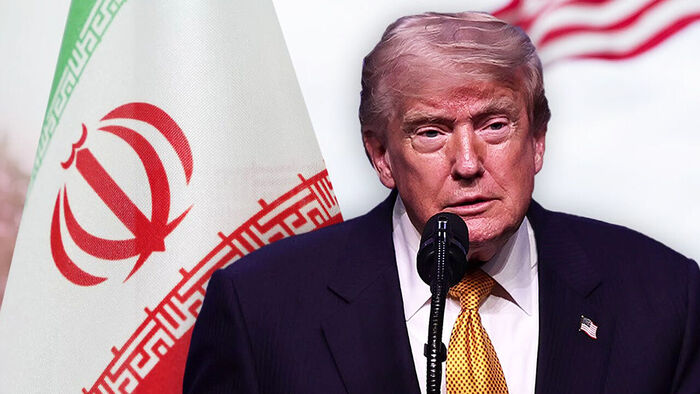
Market anxiety was fueled by reports that U.S. President Donald Trump, while visiting Ankara, Türkiye, for the NATO summit, stated that the memorandum of understanding (MOU) on ending the war with Iran "seems to be over" and mentioned the possibility of additional strikes.
However, President Trump subsequently remarked that he "does not think the war with Iran will start again," which appeared to somewhat ease the anxiety.
The Nasdaq, in particular, saw its losses narrow as bargain-hunting buying flowed into semiconductor companies that had recently been showing weakness.
Broadcom surged 4.83% on news that it had expanded a $30 billion semiconductor supply contract with Apple, while other semiconductor-related stocks such as SanDisk (6.77%) and Micron (1.11%) also showed strength.
Nvidia also rose 3.65%.
The Philadelphia Semiconductor Index jumped 2.23%.
The domestic stock market appears to have regained upward momentum today as bargain-hunting buying flowed into semiconductor stocks that had fallen consecutively in recent days.
Although geopolitical tensions escalated following reports that air raid sirens were sounded in Bahrain and Qatar, and missile alerts were triggered in Kuwait during the session, the KOSPI is maintaining its upward trend.
However, as it is an option expiration day, there is a possibility that supply and demand volatility could increase.
Han Ji-young, an analyst at Kiwoom Securities, noted, "Despite the burden of the U.S.-Iran truce being broken, the domestic stock market is expected to recoup yesterday's sharp losses today, as the rebound in U.S. semiconductor stocks and the strength of KOSPI 200 overnight futures create incentives for bargain buying, driven by the perception that the recent three-day consecutive plunge was an overreaction."
The two major domestic semiconductor leaders are rebounding, overcoming the downward trend that continued until yesterday.
Samsung Electronics is up 2.88% at 285,500 won.
After opening with a 3.96% jump, it briefly climbed to 291,500 won early in the session.
SK Hynix is rising more sharply.
It is trading at 2,232,000 won, up 7.51% from the previous close.
The stock, which soared 7.32% from the opening, briefly recovered to 2,270,000 won during the session.
Expectations for the listing of SK Hynix's American Depositary Receipts (ADRs) scheduled for the 10th appear to be driving the demand.
On the 8th (local time), Bloomberg reported that demand for SK Hynix's ADRs exceeded the public offering volume by more than seven times.
If the offering price is determined based on the previous day's closing price (2,076,000 won), the fundraising scale is expected to be $24.5 billion (approximately 37.14 trillion won), which would be the second-largest U.S. listing by a foreign company in history, following Alibaba ($25 billion).
Among other stocks with large market capitalizations, SK Square (4.88%), Samsung Electro-Mechanics (2.16%), LG Energy Solution (2.85%), KB Financial Group (0.82%), and HD Hyundai Heavy Industries (1.35%) are rising.
On the other hand, Hyundai Motor (-2.49%), Samsung Life Insurance (-4.48%), Samsung Biologics (-1.69%), Kia (-4.53%), and Hanwha Aerospace (-5.57%) are showing weakness.
By sector, electrical and electronics (4.50%), manufacturing (3.29%), and medical and precision equipment (3.30%) are seeing significant gains, while insurance (-4.69%), entertainment and culture (-2.03%), and textiles and clothing (-2.25%) are declining.
At the same time, the KOSDAQ index is at 812.73, up 27.73 points (3.53%).
It has reclaimed the 800 mark, which it had fallen below yesterday for the first time in about 10 months.
The index opened at 792.99, up 7.99 points (1.02%), and after fluctuating early in the session, it is currently rising.
Many of the top market-cap stocks in the KOSDAQ market, such as Alteogen (0.80%), EcoPro BM (1.95%), EcoPro (3.85%), Rainbow Robotics (4.55%), and Jusung Engineering (8.25%), are rising.
The atmosphere is the opposite of yesterday.
Some stocks, such as PSK (-0.53%), PharmaResearch (-0.61%), and Seojin System (-0.92%), are declining.
(Photo: Yonhap News)
※ Please note: This article was translated by AI and may contain errors.
Copyright Ⓒ SBS. All rights reserved. Unauthorized reproduction, redistribution, and use for AI training are prohibited.