SBS News
Japan's Rare Earth Recycling: Why China Dismisses the Strategy [Reporter's File]
Published : Jul 7, 2026 9:16 AM

 Mitsubishi Electric is not working alone on this rare earth recycling project. Its affiliates handle collection and dismantling, while partner companies are responsible for the primary processing—safely and efficiently separating rare earth magnets from the dismantled components. A Japanese chemical company then melts these magnets to refine them into high-purity rare earth elements, including neodymium, which are then reused by Mitsubishi Electric in the manufacturing of new air conditioners.
While this resource circulation system appears well-structured, why did Chinese state media dismiss it? Zhang Xiaolong, director of the Beijing Institute of Advanced Technology, cited high costs as the primary reason. According to industry analysis, a typical 1-horsepower Japanese inverter air conditioner contains only about 10.5 grams of pure rare earth elements. Zhang argues that because the amount of rare earth extracted per unit is so small, Japan's plan is merely for show. His analysis suggests that even if large quantities of used air conditioners are imported from overseas, the costs of collection and refining far exceed the price of purchasing raw ore, making the project economically unviable.
Mitsubishi Electric is not working alone on this rare earth recycling project. Its affiliates handle collection and dismantling, while partner companies are responsible for the primary processing—safely and efficiently separating rare earth magnets from the dismantled components. A Japanese chemical company then melts these magnets to refine them into high-purity rare earth elements, including neodymium, which are then reused by Mitsubishi Electric in the manufacturing of new air conditioners.
While this resource circulation system appears well-structured, why did Chinese state media dismiss it? Zhang Xiaolong, director of the Beijing Institute of Advanced Technology, cited high costs as the primary reason. According to industry analysis, a typical 1-horsepower Japanese inverter air conditioner contains only about 10.5 grams of pure rare earth elements. Zhang argues that because the amount of rare earth extracted per unit is so small, Japan's plan is merely for show. His analysis suggests that even if large quantities of used air conditioners are imported from overseas, the costs of collection and refining far exceed the price of purchasing raw ore, making the project economically unviable.
 Zhang added that most of the rare earth elements recycled from air conditioners are light rare earths, with almost no heavy rare earths, which are essential for electric vehicles and military applications. Rare earth elements are categorized into 17 types based on their atomic numbers. Generally, light rare earths are relatively abundant and easier to refine, whereas heavy rare earths are rarer, more difficult to separate and refine, and tend to be more expensive and strategically significant.
In February, Japan succeeded in collecting rare earth-rich mud from the deep sea at a depth of 6,000 meters near Minamitorishima. Zhang dismissed this as well, stating that deep-sea mining is also prohibitively expensive and cannot be a short-term solution, as large-scale production is impossible within the next 10 years. He argued that while rare earth resources are distributed across various countries, the bottleneck exists because the entire industrial chain, including refining and processing technology, is concentrated in China. This reflects a confidence that even with alternative resources, it would take a long time to build a fully independent supply chain.
How much truth is there in Japan's efforts and China's assessment? When asked, Dr. Han Yo-seop of the Korea Institute of Geoscience and Mineral Resources (KIGAM) agreed that from a cost perspective, China's assessment is correct.
Zhang added that most of the rare earth elements recycled from air conditioners are light rare earths, with almost no heavy rare earths, which are essential for electric vehicles and military applications. Rare earth elements are categorized into 17 types based on their atomic numbers. Generally, light rare earths are relatively abundant and easier to refine, whereas heavy rare earths are rarer, more difficult to separate and refine, and tend to be more expensive and strategically significant.
In February, Japan succeeded in collecting rare earth-rich mud from the deep sea at a depth of 6,000 meters near Minamitorishima. Zhang dismissed this as well, stating that deep-sea mining is also prohibitively expensive and cannot be a short-term solution, as large-scale production is impossible within the next 10 years. He argued that while rare earth resources are distributed across various countries, the bottleneck exists because the entire industrial chain, including refining and processing technology, is concentrated in China. This reflects a confidence that even with alternative resources, it would take a long time to build a fully independent supply chain.
How much truth is there in Japan's efforts and China's assessment? When asked, Dr. Han Yo-seop of the Korea Institute of Geoscience and Mineral Resources (KIGAM) agreed that from a cost perspective, China's assessment is correct.
"From an industrial and economic standpoint, resource recycling is not a viable business. The process of crushing, separating, and sorting incurs massive costs. Economically, it is impossible to compete one-on-one with the existing Chinese industry."
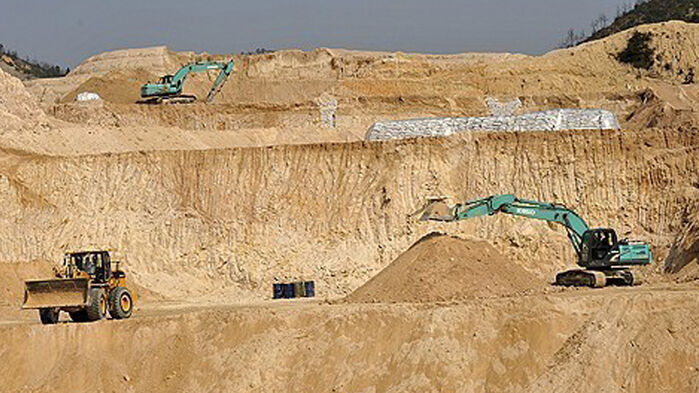
"Recycling typical home appliances mostly yields light rare earths like neodymium. Heavy rare earths are used in very small amounts in industry. They are used in things like high-performance AI motors and electric vehicles, but because only a tiny amount is needed for large products, it is much better to extract them from ore. It is very difficult to source heavy rare earths even from raw ore. There are mines in Australia, but they contain almost no heavy rare earths; they are all light rare earths."
 Nevertheless, he noted that there is a reason why they have no choice but to do this.
"If you only consider economics, buying them is the right choice. (These recycling projects) are being carried out by countries other than China to secure resources because rare earths have become weaponized. It is about stockpiling in preparation for when China exerts control, not about trying to defeat China. China says it is not cost-effective because their unit prices are so low and their ore is abundant, but resource-poor countries have no choice but to do it."
※ Please note: This article was translated by AI and may contain errors.
Copyright Ⓒ SBS. All rights reserved. Unauthorized reproduction, redistribution, and use for AI training are prohibited.