SBS News
Cousin Killed, Acquaintances Framed as 'Accomplices': Tragedy Caused by Twisted Jealousy
Published : Jul 4, 2026 4:24 PM

The story of "that day" we want to share with you is from the episode titled "Four Kidnappers – Who Is Lying?", which aired on July 2. The guest storytellers (listeners) were Zhang Hao, a member of the group AND2BLE, singer Soyou, and actor Park Tam-hee. (In line with the style of "Kkokkomu," this review is written in an informal tone.)
▲ Eun-ji Has Disappeared
The time is October 10, 1994, at a home in Busan. Kim, a homemaker, keeps looking out the window. Her 10-year-old daughter, Eun-ji (pseudonym), has not returned home yet. Eun-ji, a third-grader, usually comes home from school around 1:00 PM. But on this day, she is still not home even as 4:00 PM approaches. Just then, the house phone rings.
"If you want to find Eun-ji, listen to me carefully. Prepare two million won in cash and come to the Busan Theater by 2:30 PM the day after tomorrow."
Eun-ji has been abducted by a kidnapper. However, the "two million won in cash" demanded by the kidnapper was not 20 million won, but 2 million won. Usually, kidnapping is a planned crime aimed at securing a large sum of money, but back in 1994, 2 million won was worth less than 5 million won in today's value. The kidnapper did not demand an exceptionally large amount of money.
Furthermore, Eun-ji's father was an ordinary office worker. The family was not wealthy enough to be targeted for such a crime. So why did the kidnapper target Eun-ji?
Upon receiving the report, the police immediately trace Eun-ji's last steps. While canvassing the school area with a photo of the child, a witness who saw Eun-ji emerges. It is So-young (pseudonym), Eun-ji's friend from the same after-school academy.
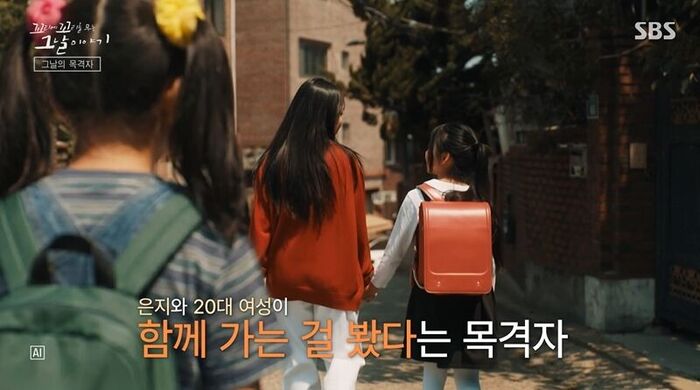
"Eun-ji was walking over there with an older girl earlier. She had long straight hair."
Around 1:00 PM on the day of her disappearance, she saw Eun-ji walking with a young woman in her 20s. What's more, Eun-ji was smiling at the time. Hearing this, the detectives' eyes sharpened.
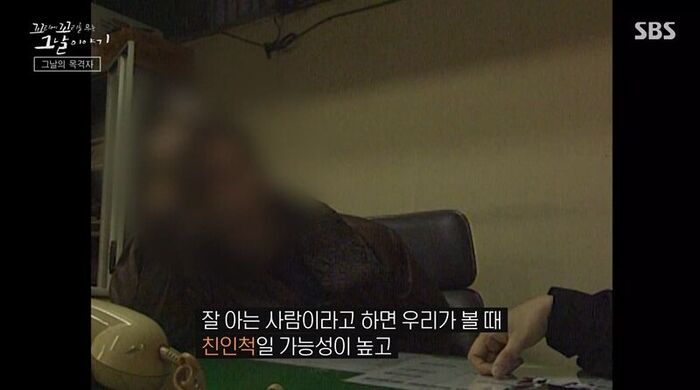
"If they walked past smiling, it means they definitely weren't strangers; it must have been someone she knew well. From our perspective, if it was someone she knew well, there was a high probability it was a relative."
- Police officer in charge of the case
The detectives checked if any of Eun-ji's relatives lived in the direction the two had walked. Eun-ji's maternal aunt lived in that direction. The witness had seen a young woman in her 20s. The aunt's daughter—Eun-ji's maternal cousin—was indeed in her 20s.
Her name was Na Kyung-ae (pseudonym). She was a 20-year-old student preparing for college entrance exams, and she had long straight hair. Was the young woman in her 20s walking with Eun-ji really her cousin, Na Kyung-ae? The next day, the police brought her in for voluntary questioning.
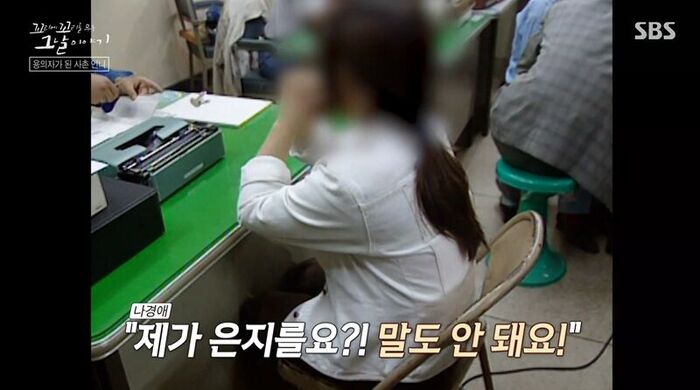
"Me, Eun-ji?! That's absurd!"
- Na Kyung-ae
Na Kyung-ae vehemently denied it. Just as the detectives were beginning to harbor doubts, someone made an urgent phone call. It was Na Kyung-ae's father.
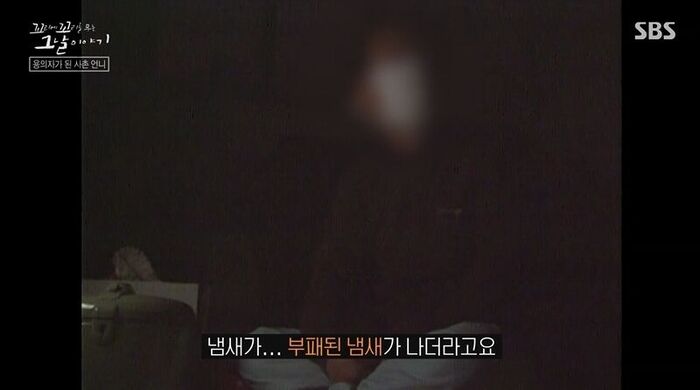
"When I got home, the house was a mess. Police officers were coming and going. I was so out of it that I initially just sat in Kyung-ae's room. As I gradually collected my thoughts, I kept smelling a strange odor. It was a rotting smell. I got goosebumps, thinking, 'Ah, something is wrong here.'"
- Na Kyung-ae's father
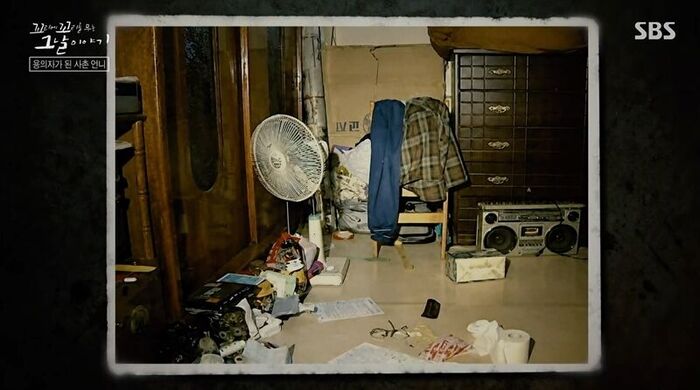
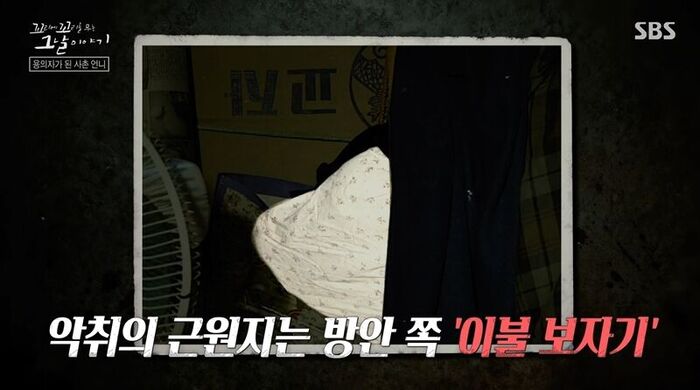
The source of the chilling stench was a blanket bundle inside the room. That night, inside Na Kyung-ae's room, police discovered Eun-ji's body wrapped in the blanket bundle.
Only then did she confess to the crime. Even more shocking was that she had killed the child on the very day of the kidnapping. While her family was away, she hid the body in her house. However, this was not the only secret Na Kyung-ae revealed.
"Hyun-woo told me to kidnap her and just take the money. I really had no intention of killing her."
- Na Kyung-ae
She claimed there were accomplices. From here on, we will tell you the horrific story of that day as recounted by Na Kyung-ae.
▲ The Four Kidnappers
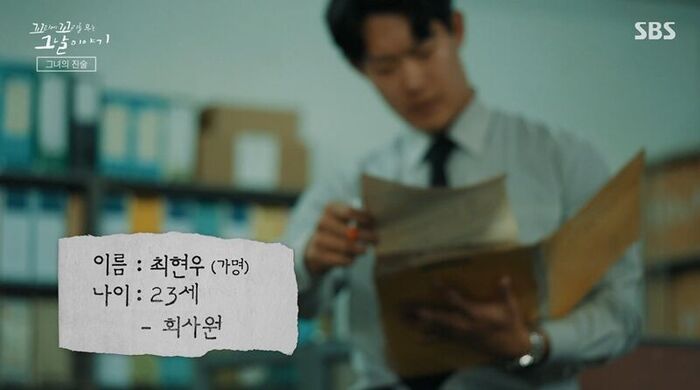
His name was Choi Hyun-woo (pseudonym), a 23-year-old office worker. Na Kyung-ae claimed he was the one who initially planned the crime, making him the mastermind. There were other accomplices.
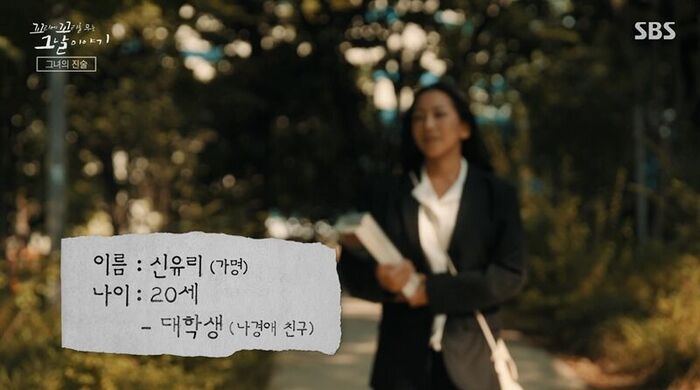
Her name was Shin Yu-ri (pseudonym). She was Na Kyung-ae's high school classmate and best friend. Unlike Na, who was retaking college entrance exams, Shin had entered college that year. Na Kyung-ae, Shin Yu-ri, and Choi Hyun-woo reportedly knew each other beforehand. And there was one more.
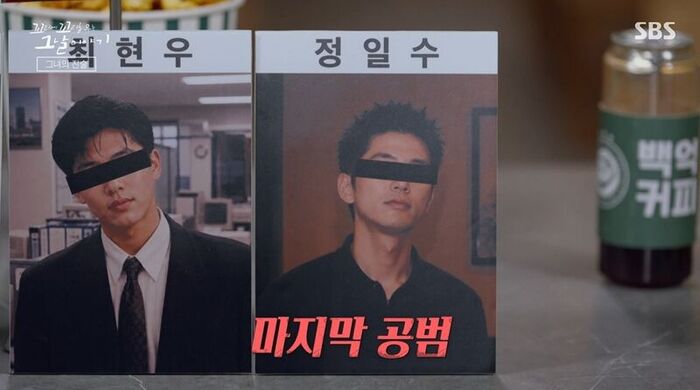
His name was Jeong Il-soo (pseudonym). He was a 23-year-old restaurant owner and a neighborhood friend brought in by Choi Hyun-woo.
These young people who had just become adults—why did they, who were attending school and working normal jobs, commit such an act? It was because of this incident.
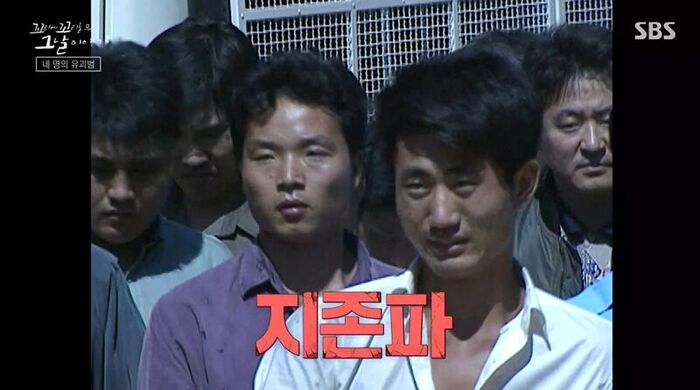
It was the "Jijonpa," a criminal gang that shocked South Korea in 1994. Claiming to hate the rich, they built a murder factory and killed innocent people, acting with complete inhumanity. On October 9, 1994, the day before the crime, when the four first plotted their scheme, Choi Hyun-woo reportedly said:
"Did you guys see the news about the Jijonpa? I'm bored, so why don't we pull off a job too? My mom said she won't give me any money for a while."
- Choi Hyun-woo
In fact, except for Na Kyung-ae, the other three were all from wealthy families. Yet, they allegedly planned the crime out of curiosity after seeing the Jijonpa. They committed a horrific copycat crime simply to make money for entertainment.
The next day, the four lured Eun-ji as she was leaving school and put her in a pre-arranged car. They could have just taken the ransom and returned the child, so why did they kill Eun-ji? According to Na Kyung-ae, Shin Yu-ri argued:
"The kid saw our faces. What if she goes home and tells everything? Let's just get rid of her."
- Shin Yu-ri
In the end, the four decided to kill Eun-ji. They parked the car in a suitable spot, and Na Kyung-ae and Shin Yu-ri got out to keep watch. Then, Choi Hyun-woo strangled Eun-ji inside the car. Afterward, Jeong Il-soo wrapped the body in a blanket bundle and put it in the trunk. The next day, they moved the body to Na Kyung-ae's house. This was Na Kyung-ae's claim.
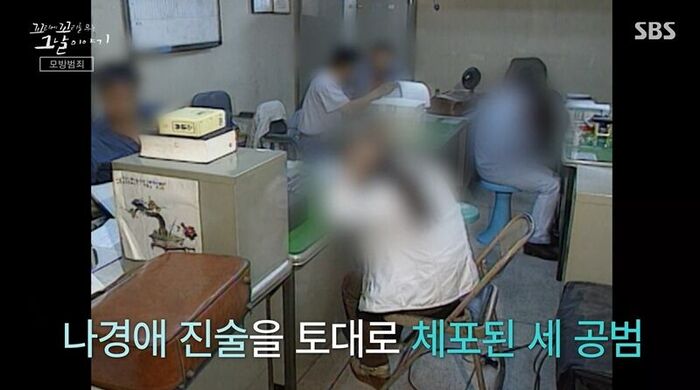
Based on Na Kyung-ae's statement, the police arrested the three accomplices. Following the Jijonpa incident, the entire country was shocked once again.
▲ Conflicting Statements
However, at that time, there was a place that was thrown into chaos for a different reason. It was the Busan Maeil Shinmun, one of the three major newspapers in Busan at the time. It was the only one among the three major newspapers that published a morning edition. However, the previous evening, other newspapers had broken the story first as an exclusive.
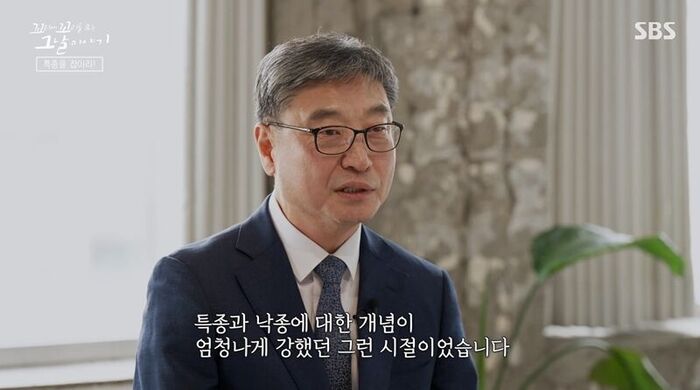
"It was an era when the concepts of scoops and missed scoops were incredibly strong. Even if we missed a minor traffic accident or a routine non-fatal incident during our reporting, we would face severe reprimands."
- Kim Hyeong-jin, then-reporter for the metropolitan desk at Busan Maeil Shinmun
Having missed such a massive scoop, the newspaper office was in an uproar. A special reporting team was hastily assembled, and Reporter Kim and his colleagues rushed to the police station handling the case. By pleading with a friendly detective, they managed to speak with one of the kidnappers: Shin Yu-ri, Na Kyung-ae's classmate.
However, Shin Yu-ri did nothing but cry silently in front of the reporter. Just as they were about to leave empty-handed, Shin Yu-ri spoke up.
"I... I really didn't do it. I was taking a typing test that day!"
- Shin Yu-ri
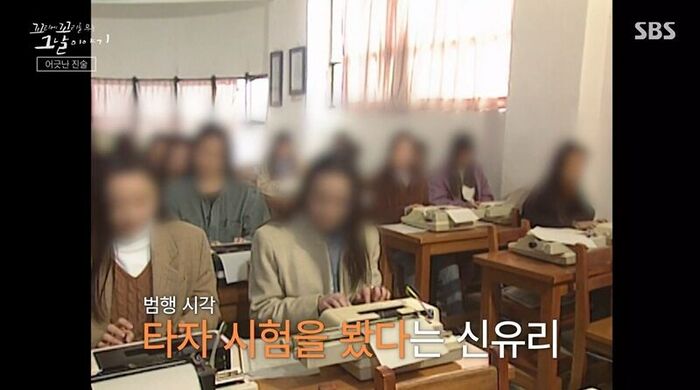
She claimed she had absolutely nothing to do with the case. Shin Yu-ri presented an alibi, stating that she was taking a typing test at school on the day of the crime.
"During the investigation, when asked, 'What did you do yesterday? Why did you participate in the crime?' she replied, 'I was at school at the time. I did not participate in the crime.'"
- Kim Hyeong-jin, then-reporter covering the case
The reporters rushed to Shin Yu-ri's school to verify the facts. The verification revealed that it was true there was a typing test on the day of the crime. Shin Yu-ri's classmate said:
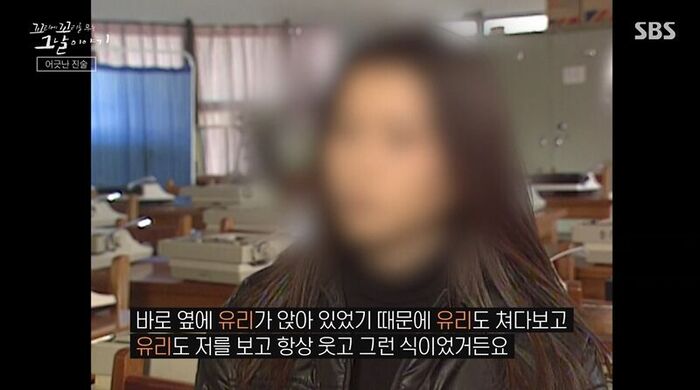
"While taking the test, my paper slipped and tore, so I spent that time just looking at the classmate next to me. Since Yu-ri was sitting right next to me, I looked at her, and she looked at me and smiled. It was like that."
- Shin Yu-ri's department classmate
Reporter Kim obtained written statements from Shin Yu-ri's classmates. The statements contained detailed eyewitness accounts such as, "I saw Shin Yu-ri sitting in her seat, around the middle of the first row," "I saw Shin Yu-ri walking down the stairs after the typing test," and "When I turned around to borrow a stapler from a student behind me, I saw Yu-ri sitting there." One student even drew a seating chart of the typing test to testify that Shin Yu-ri was present at the scene.
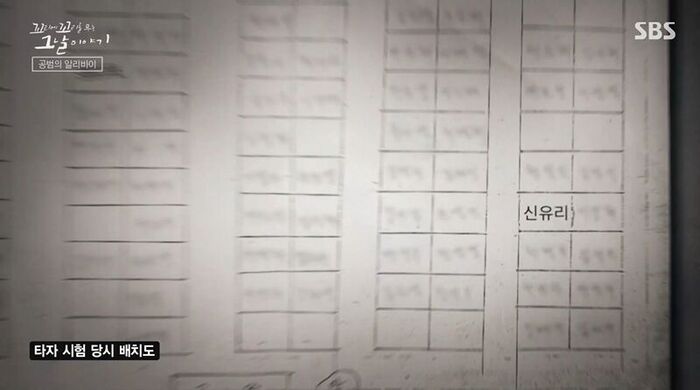
With this level of detail, was Shin Yu-ri's alibi of taking a typing test at school on the day of the incident true?
Shin Yu-ri's alibi of being at school on the day of the crime was an exclusive scoop obtained solely by the Busan Maeil Shinmun. But just then, a middle-aged man visited the newspaper office and pleaded, "Please help me." This man was the father of Choi Hyun-woo, who had been identified as the mastermind.
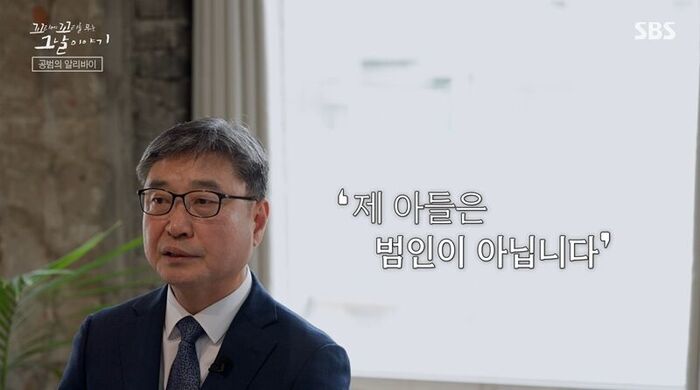
"The next day, the father of Choi Hyun-woo, who had been identified as the mastermind, came to our newspaper office. He kept speaking in a highly distressed tone, claiming his son was not the culprit, and said he had gone to other newspapers but they wouldn't listen to him..."
- Kim Hyeong-jin, then-reporter covering the case
His father handed over envelopes containing evidence of Choi Hyun-woo's alibi on the day of the crime. The first envelope contained written statements from Choi Hyun-woo's colleagues, stating they saw him working on the day of the crime. The second envelope contained Choi Hyun-woo's home phone call records. This was a record showing that Choi Hyun-woo had spoken with his girlfriend from home after work on the day of the crime.
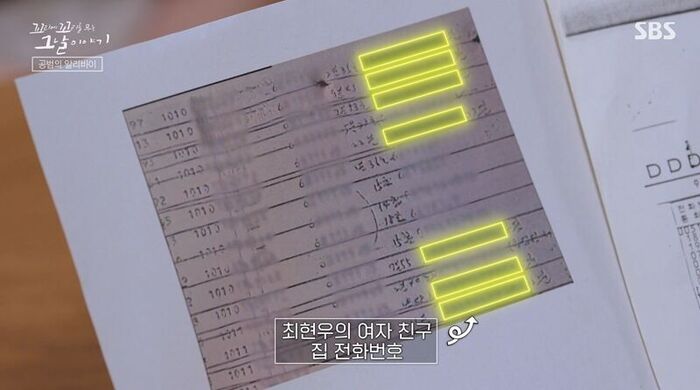
Furthermore, his home and workplace were located in a different region, not in Busan. In other words, Choi Hyun-woo was not even in Busan on the day of the crime. Looking at his colleagues' statements and the call records with his girlfriend, was Choi Hyun-woo's claim true?
Out of the three accomplices named by Na Kyung-ae, two were claiming alibis. Did the last accomplice, Jeong Il-soo, also have an alibi? Reporter Kim rushed to the restaurant operated by Jeong Il-soo. There, he met Jeong Il-soo's friends, who stated that Jeong was at his restaurant on the day of the incident, meaning he also had an alibi. What was even more puzzling was that Jeong Il-soo said he saw Na Kyung-ae and Shin Yu-ri for the very first time at the police station. They did not even know each other before then.
The three accomplices claiming innocence, and Na Kyung-ae claiming they committed the crime together. Someone among them is lying.
▲ Shattered Alibis
The Busan Maeil Shinmun immediately compiled and reported on the alibis of the three accomplices.
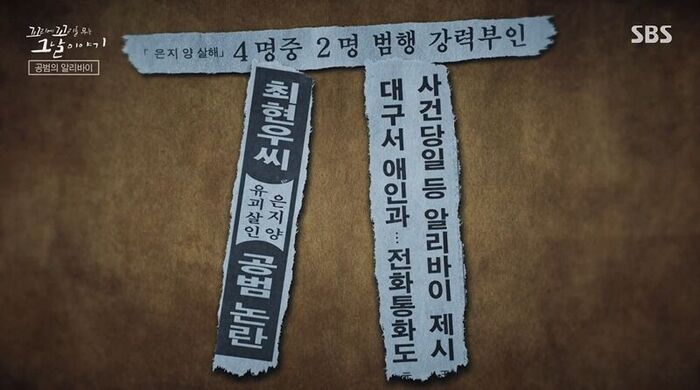
This caused an uproar on the police side. They had announced the resolution of a kidnapping case that had gripped the nation, but now there was an article suggesting that three of the suspects might not be the culprits. The police immediately refuted the report, claiming that the alibis presented by the accomplices were entirely fabricated. From here on, we will present the police's side of the argument.
First, regarding Shin Yu-ri's alibi of taking a typing test at college. The police acknowledged that Shin Yu-ri did go to school on the day of the crime. However, they claimed that among the students who took the test that day, one friend made an unexpected confession. It was Shin Yu-ri's friend, Miss A.
"I did wrong. That day, Yuri asked me to, so I had no choice but to take the exam for her."
- Miss A, a friend of Shin Yu-ri
Miss A stated that she took the typing exam instead of Shin Yu-ri, and Shin Yu-ri arrived late only to sign the answer sheet. In other words, Shin Yu-ri had set up a "fake alibi" in advance. As for the statements of classmates who said they saw Shin Yu-ri on the day of the exam, the police explained that they had seen Shin Yu-ri when she arrived late at the testing site. Later, the police referred Miss A to the prosecution on charges of taking the exam on behalf of Shin Yu-ri.
"Actually, it was a lie that I saw my friend at the shop that day. I lied because I wanted to help my friend."
- A friend of Jeong Il-soo
The friend who had provided Jeong Il-soo's alibi also belatedly testified to the police in this manner, admitting that he had lied to reporters to help his friend.
The police also claimed that Choi Hyun-woo's alibi was unreliable. At the time, the president of the company where Choi Hyun-woo worked was none other than his father. Therefore, the police argued that the employees might have made false statements under pressure from the father, Mr. Choi. Then what about the phone call records with his girlfriend? After consulting with experts, the police claimed that it was theoretically possible to manipulate call records. They argued that the father, Mr. Choi, an influential local figure, had bribed a telephone office employee to create fake records.
Now, what do you think after hearing the police's claims? Can the alibis of the three accomplices be trusted? Regarding the alibis of the three accomplices, Na Kyeong-ae said:
"I have committed a great, unforgivable sin. I will gladly accept any punishment. However, I can never forgive those who do not repent."
- Na Kyeong-ae
Na Kyeong-ae strongly asserted that the accomplices were lying. The prosecution, which later took over the case, recognized the charges against the three accomplices, just as the police did. Ultimately, the truth of this case was to be determined in court.
▲ Discrepancies in Testimonies
However, the judge in charge of this trial was nicknamed the "Tiger Judge," famous for handing down heavy sentences in heinous, anti-humanitarian violent crime cases.
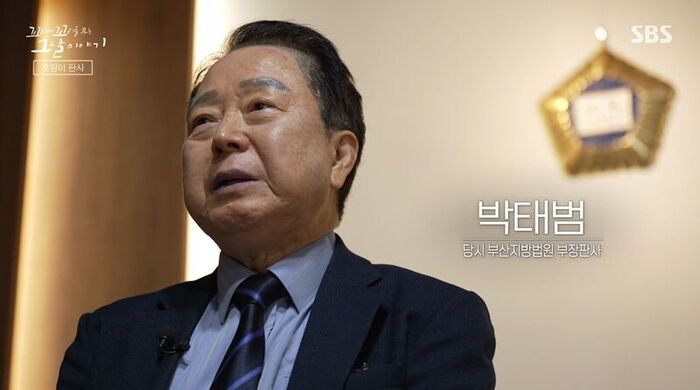
"At the time, the entire nation was extremely interested in whether these people were the real culprits or not. I felt that 'this case especially required a very careful trial.' When citizens suffer an injustice or face difficulties, isn't the court their last resort? If so, isn't it most desirable for the judges in that court to work together to find the right answer..."
- Park Tae-beom, then-presiding judge of the Busan District Court
However, as Judge Park examined the case records, he found one puzzling detail. Let's look at Na Kyeong-ae's statement again to see what it was.
On October 9, 1994, the four planned the crime following Choi Hyun-woo's suggestion. The next day, October 10, Na Kyeong-ae lured Eun-ji on her way home from school and took her to her house. Later, at the promised time, she took the child to a prearranged location. There, they put Eun-ji into a car driven by the accomplices. At this point, they reportedly had no intention of harming Eun-ji, thinking they only needed to get money from her parents. So, they drove for about an hour to Nampo-dong, Busan. At the time, this place was a hot spot known as the "Myeong-dong of Busan." Taking a kidnapped child and driving for an hour to a bustling downtown area? Isn't that a bit strange?

Na Kyeong-ae claimed that they later decided to kill the child as Shin Yu-ri suggested, and they discussed the location of the murder with the accomplices. The murder site pointed out by Na Kyeong-ae was an alley in Bupyeong-dong, just across the street from Nampo-dong. She claimed they parked the car there and killed Eun-ji inside it. Committing such a crime on a street rather than indoors? This, too, is hard to understand.
So, Judge Park decided to conduct an "on-site verification." He wanted to go to the scene himself to verify Na Kyeong-ae's statement.
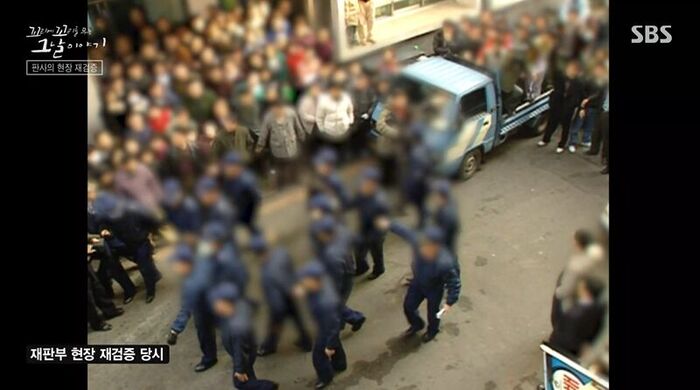
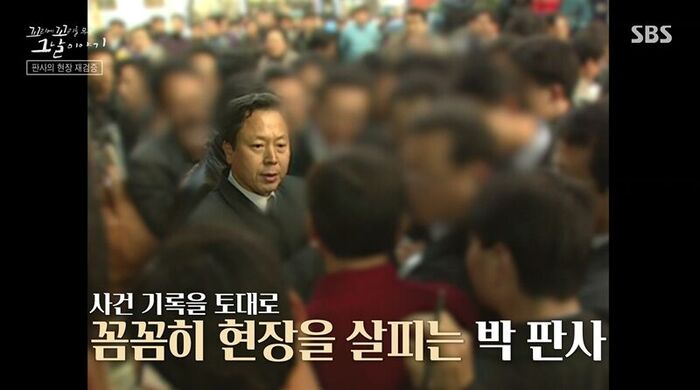
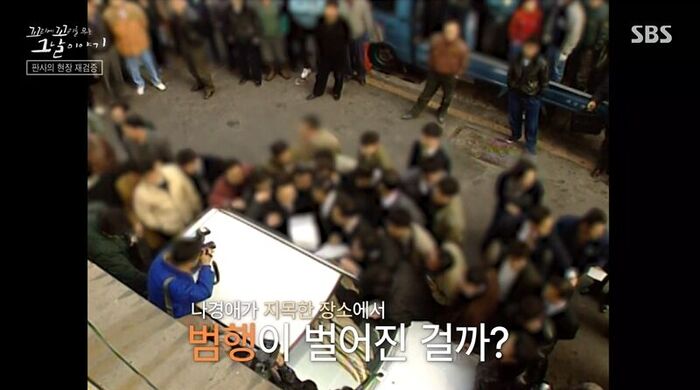
However, upon checking directly, the murder scene pointed out by Na Kyeong-ae was strange. Realistically, it was hard to believe that a murder could have been committed there.
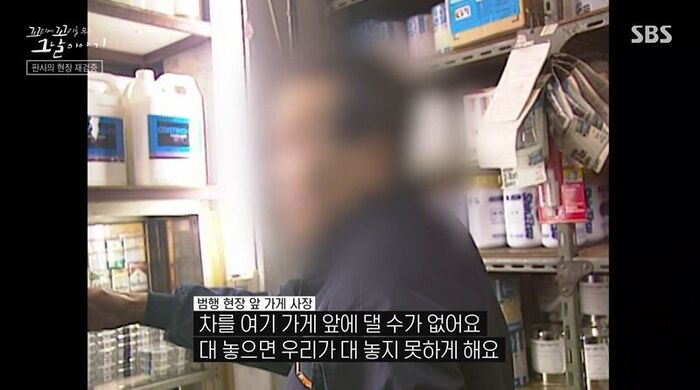
"You can't park a car in front of this shop. If someone parks here, we don't let them. We are running a business, and if a car blocks the front of the shop, customers can't come in."
- Owner of the shop in front of the crime scene
When the reporting team checked directly at the time, this alley had so much vehicle traffic that it was impossible to park a car even for a single minute. How did Na Kyeong-ae react at the scene when this was pointed out?
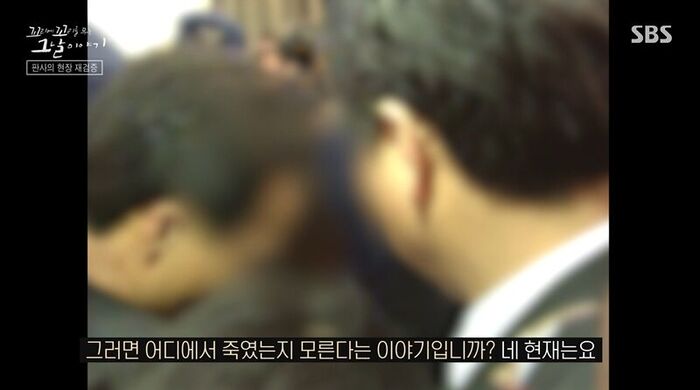
"When I got out of the car, I got out saying I would keep watch, but actually, I didn't keep watch after coming out..."
(When asked if she meant she didn't know whether this was the murder scene or not)
"Right now, yes..."
- Na Kyeong-ae
As a result of the on-site verification, Na Kyeong-ae's statement lost credibility. Conversely, the probability that the alibis of the three accomplices were true increased.
▲ New Evidence
At that time, Reporter Kim of the Busan Maeil Shinmun was in a dilemma. The evidence proving their alibis had become useless during the police investigation. If the three accomplices were truly framed, another piece of evidence was needed to prove their innocence. Just then, a young woman came to Reporter Kim and asked for help. She was none other than Choi Hyun-woo's girlfriend.
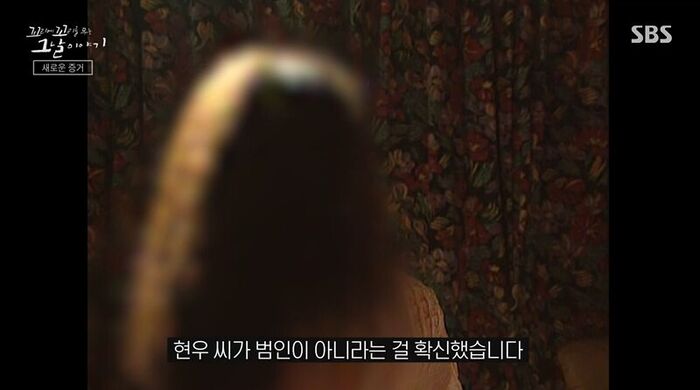
"He used to call me every time he moved locations or changed places. He had a very thoughtful personality. Since he arrived in Daegu at 2 p.m. on October 8 and was definitely with me through the 8th, 9th, and until 1 a.m. on the 10th, I was certain that Hyun-woo was not the culprit."
- Choi Hyun-woo's girlfriend
She insisted that the two did indeed talk on the phone on October 10, the day of the crime, and that the call records were not manipulated. Choi Hyun-woo's girlfriend showed a timetable she had made summarizing their movements at the time. It contained the following:
"Sunday, October 9, 1994. My older sister, Hyun-woo, me, and four nieces/nephews went to the sports day in Hyun-woo's car."
On October 10, the day of the crime, he went to work, and on October 9, when they allegedly plotted the crime, he attended his girlfriend's nephew's sports day. Reporter Kim called the kindergarten that held the sports day and asked if there was any video footage filmed on that day. The kindergarten said they had hired a videographer to shoot a video. If Choi Hyun-woo was captured on that videotape, his alibi would be proven. However, upon checking, Choi Hyun-woo could not be found in it. Just as Reporter Kim was feeling disappointed, the kindergarten shared a piece of information. In 1994, video cameras were rare. However, there was exactly one parent who had brought a camcorder.
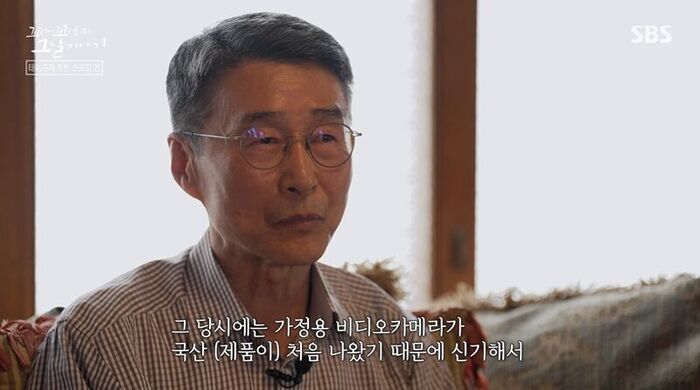
"At the time, home video cameras had just been released as domestic products, so it was a novelty. When ordinary people saw me carrying it around and filming, they would ask, 'Which broadcasting station are you from?' Video cameras were rare back then. Even at the sports day, other mothers asked me to film their kids, so I kept filming there with a tripod."
- Lee Sang-choon, who filmed the kindergarten sports day at the time
That night, Reporter Kim and Choi Hyun-woo's lawyer visited Lee Sang-choon's house and watched the tape together.
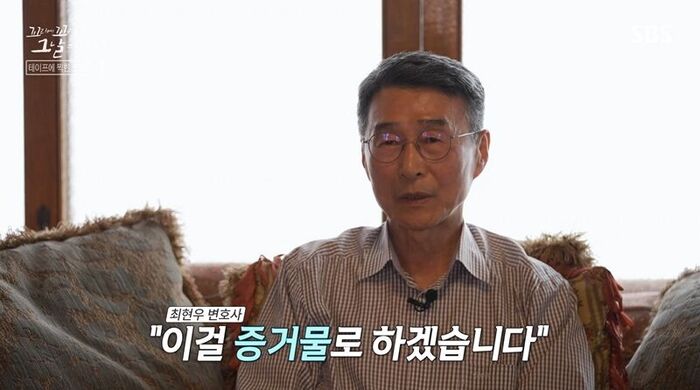
"So we watched the video together at my house, and as we were watching, they said, 'Stop!' After rewinding and playing it back a few times, they said, 'We will use this as evidence.'"
- Lee Sang-choon, who filmed the kindergarten sports day at the time
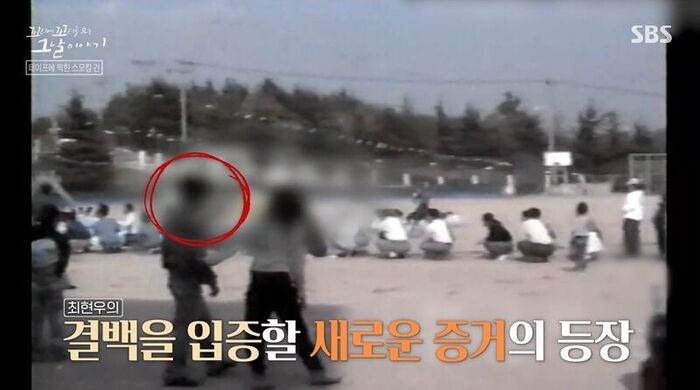
This man walking in front of the parents playing tug-of-war was indeed Choi Hyun-woo. Would Choi Hyun-woo's alibi be proven in court?
"Since the prosecution claimed that the sports day video was manipulated or composited, we asked an expert at the time if it was composited, and they said, 'It is not composited.' It was clearly proven that on October 9 (the day of the alleged conspiracy), Choi Hyun-woo was in Daegu, not Busan."
- Park Tae-beom, then-presiding judge of the case
The situation of Choi Hyun-woo, who was accused of being the ringleader, was completely overturned. Was everything fabricated by Na Kyeong-ae?
▲ Reveal the Truth
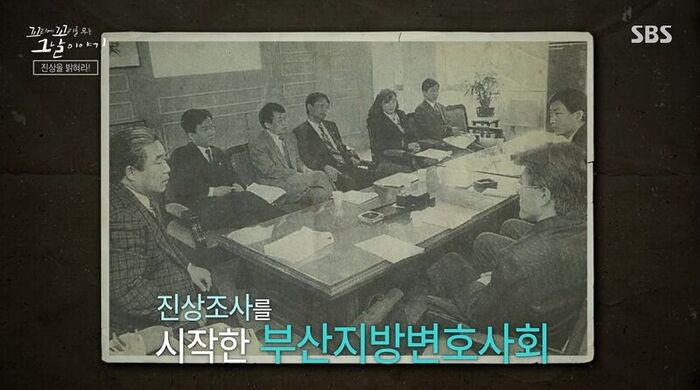
Afterward, lawyers in Busan began to take action. The Busan Bar Association launched a truth investigation into the case. The head of this truth investigation team was former President Moon Jae-in, who was a practicing lawyer at the time.
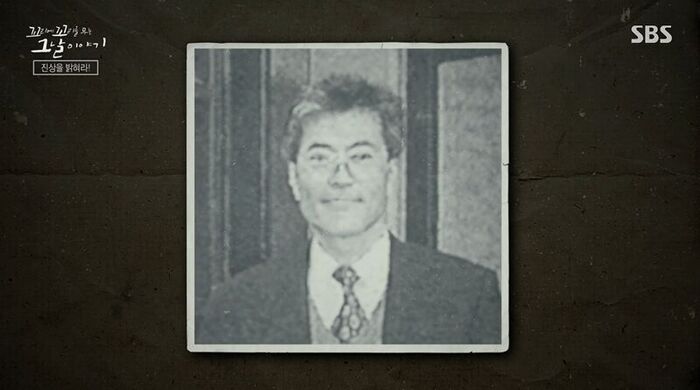
"At the time, attorney Moon Jae-in was very passionate. Even when new facts were confirmed late at night during our reporting, if we told him about them at 11 p.m. or midnight, he would immediately rush to the scene and verify them himself, showing incredible dedication."
- Kim Hyeong-jin, reporter covering the case at the time
Attorney Moon and the truth investigation team met not only the four defendants but also all the witnesses. Once the results were announced, the case entered a new phase that no one had anticipated. They found the real accomplice who had manipulated the case behind Na Kyeong-ae.
▲ The Third Accomplice
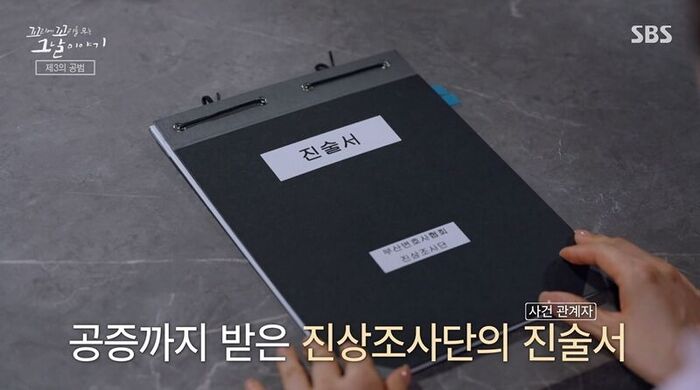
This is a written statement recorded directly and even notarized by the truth investigation team. The statement was made by a witness, Mr. Oh. He was being investigated for a different case at the police station handling Eun-ji's case. He said he happened to see Choi Hyun-woo and Jeong Il-soo being investigated next to him.
"A person who appeared to be the head of the investigation instructed that their statements must be aligned, saying there were too many discrepancies in the kids' testimonies. As soon as Choi Hyun-woo and Jeong Il-soo entered the office, indiscriminate beatings began, with officers shouting, 'You bastards, you don't deserve to live, you should die.'"
- From the statement of witness Mr. Oh
At the time, the police reportedly sat Na Kyeong-ae next to them and beat the two men until they gave the same answers as Na Kyeong-ae. If the accomplices' stories differed, the police should have questioned Na Kyeong-ae's initial statement. Instead, they assaulted Choi Hyun-woo and Jeong Il-soo, claiming that 16 of their statements did not match. Mr. Oh remembered that every time Choi Hyun-woo returned to the holding cell after being interrogated, he was covered in bruises.
And as mentioned earlier, didn't Jeong Il-soo say he did not know Na Kyeong-ae? In fact, the accomplice Na Kyeong-ae first pointed out was not Jeong Il-soo, but a person named Park Dong-soo (pseudonym).
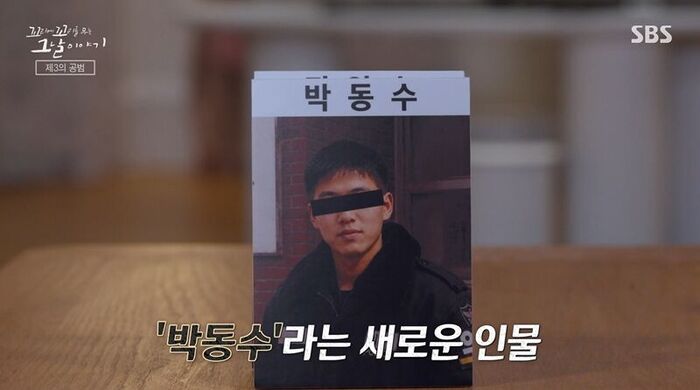
"The accomplice first pointed out at the police station by the cousin, Na Kyeong-ae, was a person named 'Park Dong-soo.' They identified this Park Dong-soo as the culprit, brought him in, and actually investigated him at the police station."
- Kim Hyeong-jin, reporter covering the case at the time
However, when they checked Park Dong-soo's whereabouts, he was serving as a conscripted police officer on the day of the crime. Since he had an airtight alibi that anyone could see, Park Dong-soo was not the culprit. The police then demanded to know the "real accomplice." Instead of asking Na Kyeong-ae, they asked Choi Hyun-woo, even resorting to torture. Ultimately, unable to withstand the torture, Choi Hyun-woo named his friend, Jeong Il-soo. And Jeong Il-soo, after enduring harsh interrogation by the police, also made a false statement claiming he had used the pseudonym "Park Dong-soo."
This was not all. Miss A, who had testified that she took the exam for Shin Yu-ri, revealed to the truth investigation team that "Yuri did take the exam herself that day" and that she had been forced to lie.
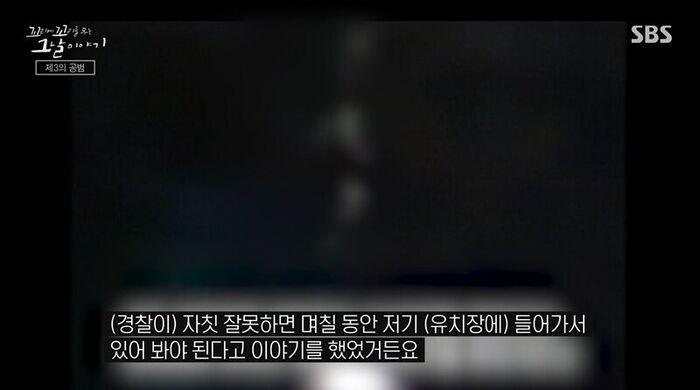
"During the police investigation, what they were saying sounded so real. It wasn't true that I took the exam for her, but since Yuri kept insisting it was true, the police told me that if things went wrong, I might have to spend a few days in the holding cell. I was also terrified of that."
- Miss A, a friend of Shin Yu-ri
According to the truth investigation, Shin Yu-ri was also severely assaulted by the police. That was why she made a false confession claiming she had asked her friend to take the exam for her. Furthermore, Jeong Il-soo's friend, who had recanted his statement, also revealed that he had given false testimony due to police assault.
There were as many as six witnesses who made false statements due to such coercive police investigations. The police assaulted not only the suspects but also the witnesses. In other words, the alibis of the three accomplices were not fabricated; they were the truth. Yet, the police did not believe the three from the very beginning. Why on earth did the police go to such lengths?
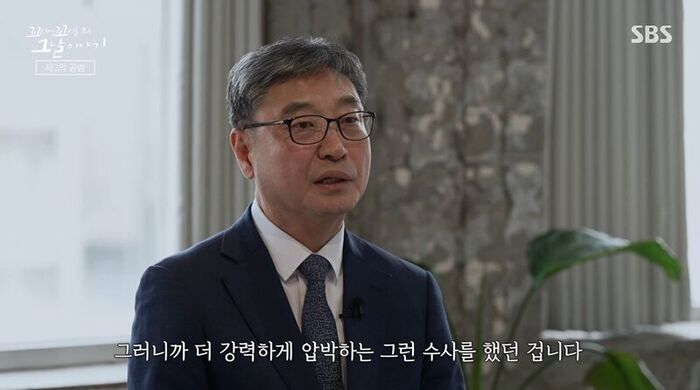
"Police Day is October 21. Since the incident occurred less than ten days before October 21, the police station in charge was in a position to receive an award for this case. That is why they conducted an investigation with even stronger pressure."
- Kim Hyeong-jin, reporter covering the case at the time
At the time, the police announced the three individuals as accomplices based solely on Na Kyeong-ae's confession. Having quickly solved a kidnapping and murder case that shocked the entire nation, they were even slated to receive a presidential commendation. Consequently, suspicions arose that the police might have conducted a coercive investigation to wrap up the case quickly ahead of the commendation.
But was it really just suspicion? There was clear physical evidence in this case.
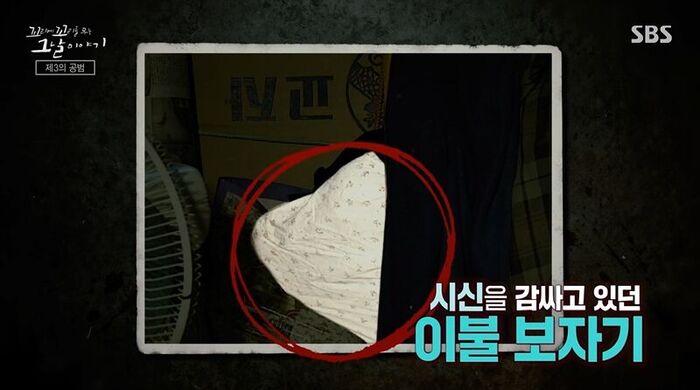
The blanket wrapping Eun-ji's body. This was the sole physical evidence of the case. Naturally, it should have been preserved. When asked about the status of this blanket, the police said:
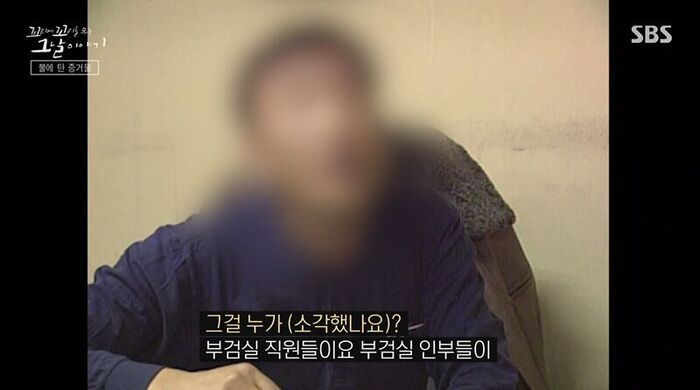
"It has been incinerated and is gone. (When asked who incinerated it) The autopsy room staff. The autopsy room workers."
- Police officer in charge of the case
The police claimed that the autopsy room staff incinerated it without a word. Was this claim true?
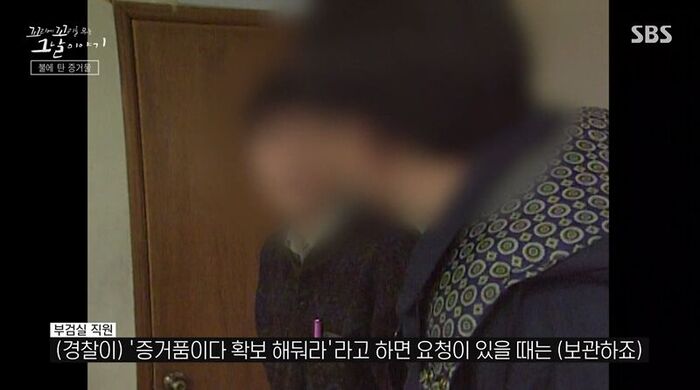
"If the police request us to 'secure it as evidence,' we preserve it. Our job itself is to assist the police with the autopsy, not to lead it. We wouldn't keep it if they told us 'not to leave it,' and we wouldn't destroy something the police told us to 'keep.'"
- Autopsy room staff member
The police had failed to properly manage the sole physical and decisive piece of evidence. Naturally, they did not conduct any investigation into fingerprints or DNA that might have remained on the blanket. If true, this was a massive dereliction of duty, and if it was covered up, it was a criminal act.
Later, lawyer Moon Jae-in and the Busan Bar Association filed complaints against all 14 police officers involved in the torture. As a result of the investigation, charges were acknowledged for seven of them, and three were ultimately convicted.
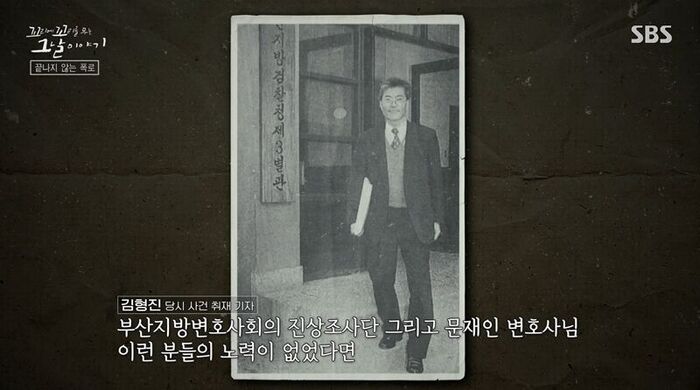
"I believe that without the efforts of the Busan Bar Association's truth-finding committee and lawyer Moon Jae-in, it would not have been easy to reach this stage."
- Kim Hyung-jin, the reporter who covered the case at the time
▲ The Unending Revelations
So, did the trial for Eun-ji's case proceed smoothly as well? Miss A, a friend of Shin Yu-ri, exposed another shocking fact. This is from her written statement:
"I went to the prosecutors' office with the thought of telling only the absolute truth this time. But instead of believing me, they beat me and swore at me, accusing me of lying."
- From Miss A's written statement
Just like the police, the prosecution had also allegedly resorted to assault and intimidation. Reporter Kim Hyung-jin of the Busan Maeil Shinmun immediately reported this. Consequently, the newspaper office was thrown into turmoil.
"I really thought the prosecution organization was formidable. The president of our newspaper graduated from Seoul National University, and they went as far as finding a high-ranking prosecution official who had a connection with him from his boarding house days to contact the president and suggest, 'It would be good to stop reporting on this,' mobilizing various methods to exert pressure."
- Kim Hyung-jin, the reporter who covered the case at the time
Another reporter from the Busan Maeil Shinmun was summoned by the prosecution for questioning, and Kim was even sued for libel by publication. However, the reporters did not back down. They continued to report evidence proving the alibis of the alleged accomplices.
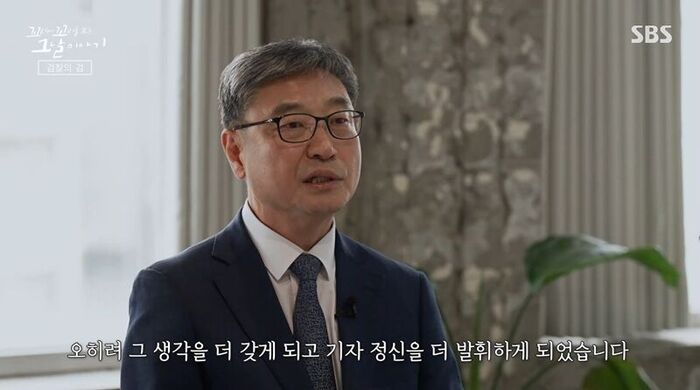
"There were even rumors going around that 'the reporters would be arrested' or 'the company would go under,' but we weren't afraid. It actually made us think more that we could win and that this case must be uncovered, driving us to show even greater journalistic spirit."
- Kim Hyung-jin, the reporter who covered the case at the time
However, the prosecution fought back fiercely, claiming that even if the evidence fabricated through torture was excluded, there was still sufficient evidence to prove the defendants' guilt. The legal battle grew more intense by the day. The number of witnesses requested by both sides reached a whopping 98, which was reportedly the highest record in the history of criminal trials at the time.
After a turbulent 1994, February 1995 arrived, and only the sentencing remained. But just then, someone visited Judge Park's office.
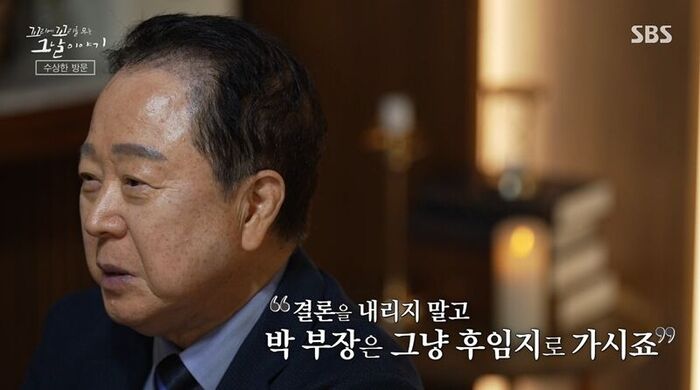
"Because this case was drawing so much national attention, mid-level prosecutors came to me and said, 'Instead of reaching a conclusion, why don't you just leave for your next post, Presiding Judge Park?' Since the prevailing atmosphere strongly suggested an acquittal, they made requests, hoping to have another panel deliver the verdict. They said things like that a lot."
- Park Tae-beom, the judge in charge of the case at the time
At the time, Judge Park was scheduled to be transferred to another court as of March 1, 1995. However, the prosecution had applied twice for additional hearings, claiming they had new evidence. Judge Park accepted all those requests, delaying the sentencing date as much as possible to February 24, just a week before his transfer. Despite this, a senior prosecutor asked to delay the sentencing once again. Judge Park firmly rejected this request.
"'The defendants on trial are waiting and putting their trust solely in this court, so how could I irresponsibly abandon them and just leave?'"
- Park Tae-beom, the judge in charge of the case at the time
On the night of February 23, the day before the sentencing hearing. As Judge Park was preparing to leave work, he called home on a strange hunch. When he asked if any suspicious people had come by or if anyone had left a note, Judge Park's wife replied:
"There are some men standing outside. Why, what's wrong?"
Judge Park felt that he should not go straight home. So, he intentionally went home in the early hours of the morning, well past midnight.
The day of the sentencing dawned. However, unfamiliar men visited his house early in the morning. They were people from the prosecution. Ultimately, Judge Park fled his house and headed to a certain location.

"If I went straight to my office on the day of the trial, I would have faced continuous pressure from all sides to postpone the sentencing. So, I decided to stay on a small island near the court and enter the courtroom just in time for the sentencing."
- Park Tae-beom, the judge in charge of the case at the time
Finally, at 1:30 PM, the scheduled time for the sentencing hearing. As soon as Judge Park arrived at the court, he headed straight to the courtroom. A crowd of about 300 people gathered in the courtroom to hear his verdict that day. In an unusual move for a criminal trial, television cameras even appeared in the courtroom. So, what was Judge Park's final ruling?
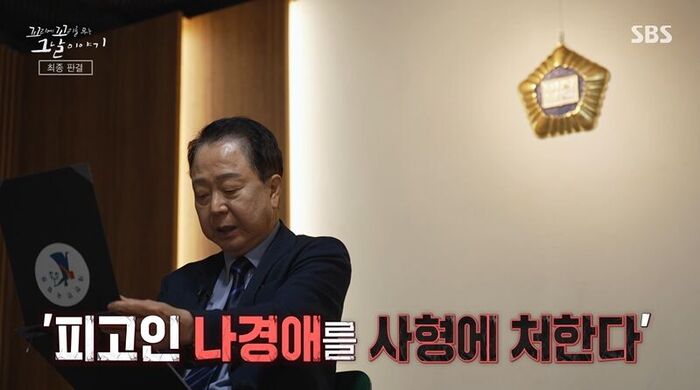
"This case involves the kidnapping and murder of a young cousin who liked and followed the defendant, Na, calling her 'Unni, Unni.' It is an act so contrary to humanity that it cannot be tolerated for any reason. For these reasons, the defendant, Na Kyeong-ae, is sentenced to death. For the other defendants, there is insufficient evidence to substantiate the charges, constituting a lack of proof of crime. Accordingly, all three alleged accomplices are acquitted..."
- From the first-instance ruling
However, the prosecution did not accept this ruling and immediately appealed. On December 8, 1995, the Supreme Court delivered its final ruling on the case. Na Kyeong-ae, who had been sentenced to death in the first instance, had her sentence commuted to life imprisonment because she showed remorse for her crime. The other three individuals were all found not guilty. Thanks to the efforts of many, these three young people were cleared of the false accusations.
▲ An Unsolved Mystery
Yet, Judge Park says there are still unsolved questions about this case, even 30 years later.
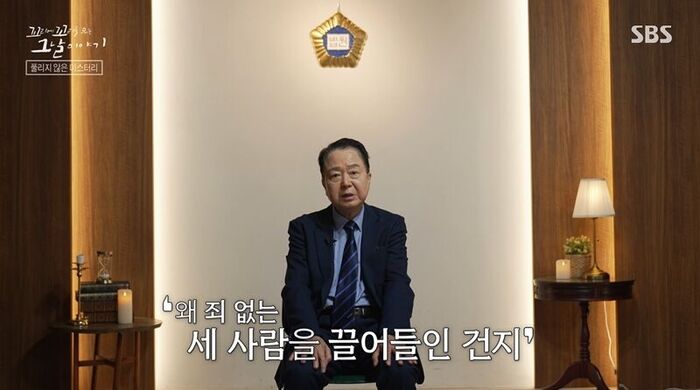
"The female defendant, Na Kyeong-ae, admitted to committing the crime from the very beginning and consistently maintained that she did it together with these three people. Why she dragged three innocent people into this remains a mystery."
- Park Tae-beom, the judge in charge of the case at the time
Now, let us tell you another truth from that day 30 years ago, one not recorded in the ruling. It happened in May 1994, when all this tragedy began.
Five months before the incident, Na Kyeong-ae and Shin Yu-ri were walking along the Haeundae beach at night. A young man approached them, asking, "Would you like me to take a photo of you?" He then mentioned he had a companion and suggested they grab a cup of coffee together. That companion was Choi Hyun-woo. The three of them, who met for the first time that way, went on a trip to Masan shortly after. But on that day, Na Kyeong-ae witnessed an unexpected scene.
"I had taken a liking to Choi Hyun-woo since I first saw him, but when I woke up, I saw him kissing Shin Yu-ri on the cheek, which made me feel strange. I felt regretful, upset, and even humiliated in many ways."
- From Na Kyeong-ae's statement
It is understandable to feel bad seeing the man you like with another woman. But humiliated? In fact, Na Kyeong-ae had experienced something similar before. There was a man she had a one-sided crush on, but he also liked Shin Yu-ri. Shin Yu-ri, on the other hand, had absolutely no interest in him. She had only met him once because he kept contacting her. Perhaps Na Kyeong-ae thought, 'Why does everyone like Shin Yu-ri even when she does nothing, while the man I like doesn't like me?'
The name of the man Na Kyeong-ae had a crush on was Park Dong-su, the very person she first named as an accomplice. In other words, Na Kyeong-ae had falsely accused Park Dong-su, whom she had a crush on, Choi Hyun-woo, and Shin Yu-ri, whom they both liked, of a horrific crime.
However, Na Kyeong-ae's feelings at the time might not have been simple jealousy. Na Kyeong-ae's friends said of her:
"Should I say Kyeong-ae was a bit eccentric? Once, she actually chewed and broke a glass cup with her mouth."
"Kyeong-ae had a bit of an inferiority complex. It got worse after she failed her college entrance exam."
The university Shin Yu-ri was attending at the time was the very university Na Kyeong-ae had failed to get into.
From the early stages of the investigation, the police believed Na Kyeong-ae must have had an accomplice. This was because Eun-ji's mother, who received the threatening call, stated that the kidnapper's voice was that of a man. Could there have been a real third accomplice? It was possible that Na Kyeong-ae named the three individuals to hide him. There is a saying, "A perfect lie is made with the ingredients of truth." Perhaps within Na Kyeong-ae's statements, there lies a piece of truth she hid without even realizing it.
To find that piece, let's go back to the interrogation room from 30 years ago.
▲ The Truth Hidden in the Statements
First, this is the situation where Na Kyeong-ae testified about the threatening phone call.
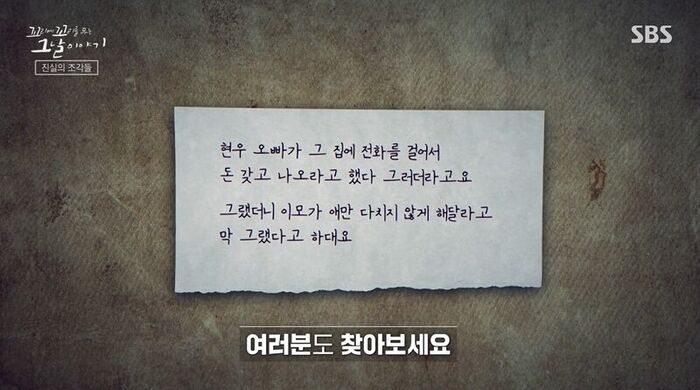
"She said Hyun-woo oppa called that house and told them to bring the money. Then my aunt pleaded, 'Just don't hurt the child.'"
- From Na Kyeong-ae's statement
This statement claiming Choi Hyun-woo made the threatening call is, of course, a lie. However, experts say there is a word to note here.
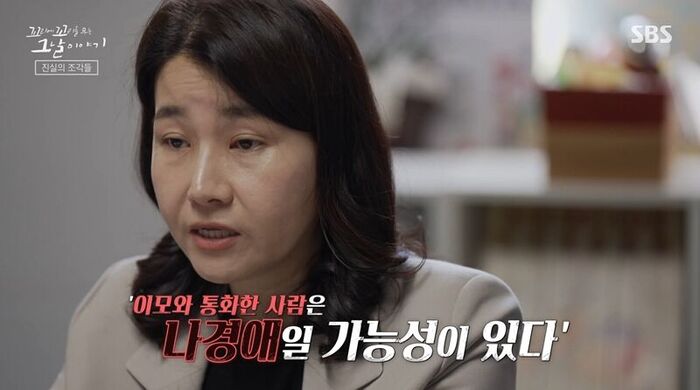
"What Na Kyeong-ae is claiming here is describing what she heard about the call Choi Hyun-woo previously made to Eun-ji's mother. The word that stands out in this statement is 'Imo' (aunt). From Choi Hyun-woo's perspective, it would have been more natural to refer to the person on the other end as 'the person who answered,' 'the child's mother,' or 'the lady' as a third party. However, when Na Kyeong-ae described it, she used 'Imo,' a term that defines her own relationship with the person on the phone. In other words, the person who actually spoke with the aunt is highly likely to be Na Kyeong-ae herself..."
- Park Ji-sun, criminal psychologist
The word 'Imo' was highly likely uttered unconsciously as Na Kyeong-ae spoke from her own experience. In other words, Na Kyeong-ae herself might have made the threatening call directly, mimicking a male voice.
Then, who killed Eun-ji, and why? This time, Na Kyeong-ae is talking about Eun-ji's condition inside the car.
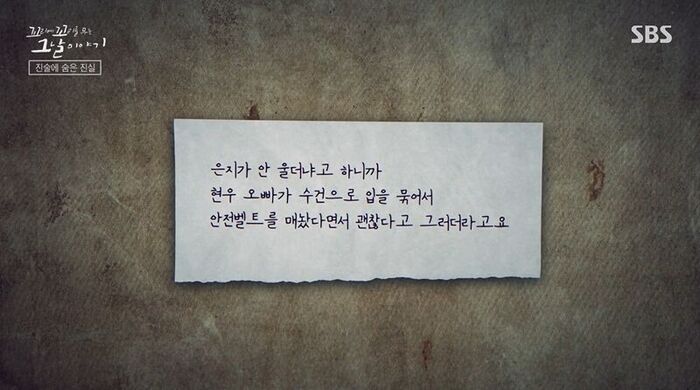
"When I asked if Eun-ji was crying, she said Hyun-woo oppa told her he tied her mouth with a towel and buckled her seatbelt, so she was fine."
- From Na Kyeong-ae's statement
This statement is also a lie by Na Kyeong-ae. There is something unnatural about it.
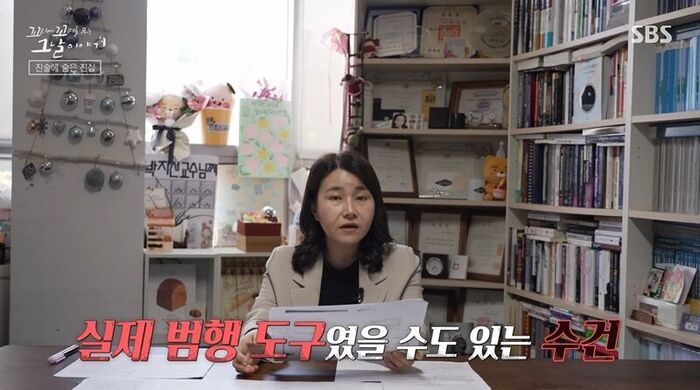
"When discussing the situation inside the car, a very prominent element appears: a 'towel.' We need to consider whether this towel was the actual tool used in the crime. When someone is killed by an acquaintance or someone in a close relationship, they often use tools like clothes or towels to gag or strangle them. It is highly likely that a tool like the towel mentioned in this statement was used to suffocate the child."
- Park Ji-sun, criminal psychologist
Indeed, Eun-ji's cause of death was revealed to be suffocation. If Na Kyeong-ae did indeed use a towel to commit the crime, the place where Eun-ji was killed would have been somewhere a towel is always readily available.
"A towel is an item much more likely to be found inside a house than in a car. Looking at the description of 'the child crying' and other details, it is highly probable that the process leading to the child's death was unexpected and highly accidental."
- Park Ji-sun, criminal psychologist
Professor Park Ji-sun states that it is highly likely Eun-ji was killed at Na Kyeong-ae's house. Just as Na Kyeong-ae claimed, she initially seemed to have taken Eun-ji simply to make some money. She then fed her snacks and let her watch TV at her house. However, something unplanned happened: Eun-ji started crying. Even parents find it difficult to control a child crying hysterically. Consequently, many kidnappers end up killing the child shortly after the abduction because they cannot handle the crying. The expert presumes that Na Kyeong-ae also accidentally killed Eun-ji during that process.
And the room of Na Kyeong-ae where the body was found. If there had been an accomplice, wouldn't they have hidden the body somewhere other than her own house? In other words, this case is presumed to be a sole crime committed by Na Kyeong-ae in her own home.
The most horrific truth remains. It is Na Kyeong-ae's statement about discussing the disposal of the body.
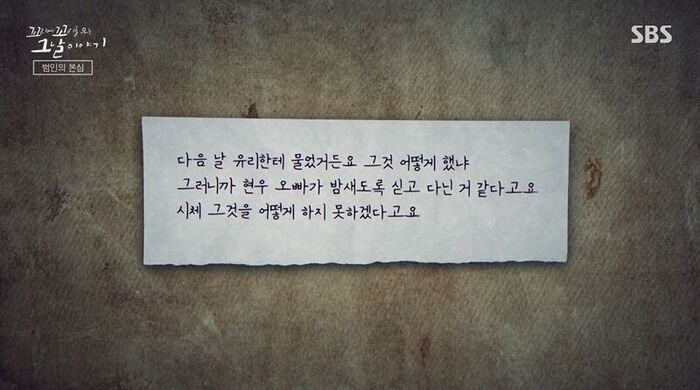
"I asked Yu-ri the next day, 'What did you do with that?' She said Hyun-woo oppa seemed to have driven around with it all night. They didn't know what to do with the body, with 'that.'"
- From Na Kyeong-ae's statement
Na Kyeong-ae's true intentions hidden behind the lies. What could be found here?
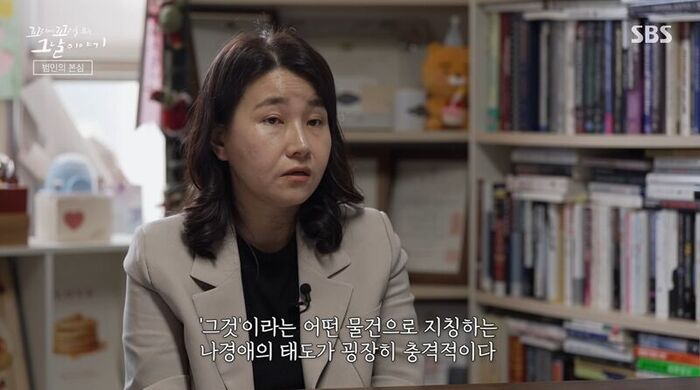
"The most shocking and disturbing aspect of Na Gyeong-ae's statement is the complete absence of any emotion—such as sorrow or remorse—regarding the entire process of the victim being kidnapped and murdered. Furthermore, Na refers to the victim as 'it.' The attitude of Na, who uses the term 'it'—a word for an object—to describe her own relative, is truly shocking."
- Park Ji-sun, Criminal Psychologist
▲ Fish in a Trap
According to experts, Na Gyeong-ae appeared to feel no guilt or similar emotions toward the victim. However, all of this remains mere speculation. Because the investigation relied heavily on Na's statements and torture, the golden time to collect key evidence was lost. Ultimately, even 30 years later, the bereaved family still does not know why or how Eun-ji died. The case remains a half-solved mystery forever.
Thanks to those who worked to uncover the truth, the three accomplices were cleared of their false charges, but this case was never fully resolved. What if the prosecution had chosen to reinvestigate rather than appeal after the first trial? Or if the police had properly verified the suspects' alibis? Or, if Na Gyeong-ae had told the truth? Could the truth about Eun-ji's death have been revealed?
Reporter Kim says that when he thinks of this case, he is reminded of a fish trap.
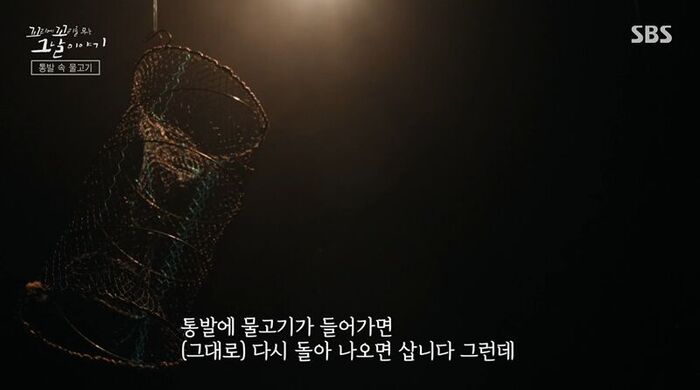
"You know what a fish trap is, right? A trap used to catch fish. If a fish enters this trap and manages to swim back out, it survives. However, I believe the prosecution's stance at the time was like a fish trapped inside. I am certain the prosecution realized back then why the police's initial investigation had gone wrong and where things had started to twist. They could have just turned back then. They could have held the investigation chief accountable and saved these innocent young people. If they had done that, the prosecution would have received applause instead. Yet, they continued to use their prosecutorial power to insist on 'sticking to the original indictment.'"
- Kim Hyung-jin, Reporter who covered the case at the time
A fish in a trap. This might also apply to Na Gyeong-ae. What if she had simply sent the child home when she felt she could no longer handle Eun-ji, who was crying helplessly?
And this is something that applies to all of us. Everyone has, at least once, regretted a mistake made at the very beginning. In the end, what matters is the courage to correct those mistakes. Even if it means taking a detour or suffering a loss, having the courage to willingly admit a mistake and start over—perhaps that courage could become a new 'first button' for a fresh start.
What are your thoughts today after hearing the story of 'that day'?
Reporter Kang Sun-ae
(Reported by Kang Sun-ae | Produced by SBS Entertainment News)
※ Please note: This article was translated by AI and may contain errors.
Copyright Ⓒ SBS. All rights reserved. Unauthorized reproduction, redistribution, and use for AI training are prohibited.