SBS News

The Cheering Chant: "We Should Go to Starbucks"
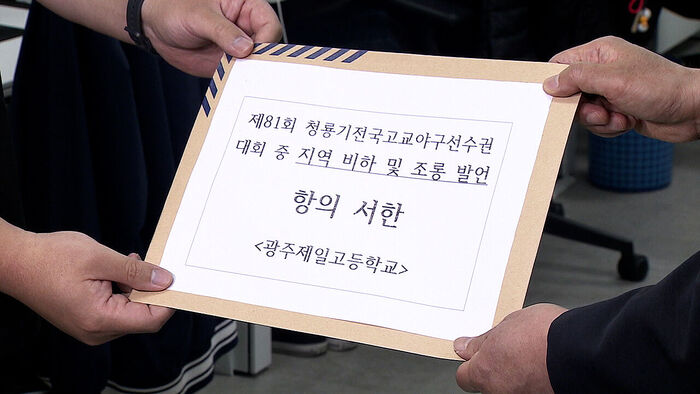
My first thought upon hearing about this incident was, "Why on earth?" Due to this absurd promotional event, Starbucks Korea faced immense public condemnation, leading to the replacement of its CEO. Even Shinsegae Group Chairman Chung Yong-jin bowed his head and apologized to the public. The company also suffered massive economic losses as a boycott ensued for some time. What were these young high school students thinking when they used phrases that had faced such severe public backlash? Did they not think at all that this could be problematic?
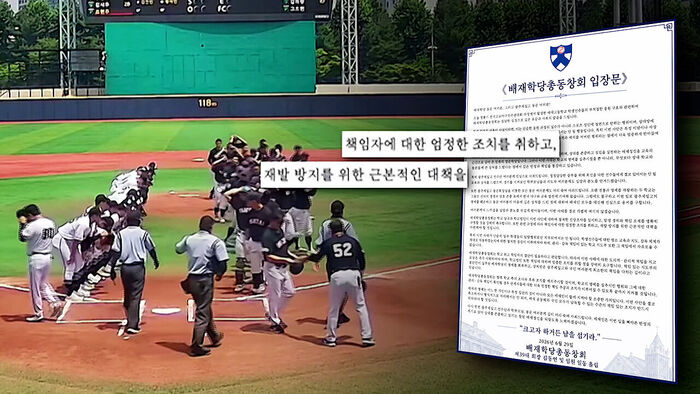
Mocking Solemnity in 'Far-Right Subculture'
① Turning Historical Tragedy into a 'Meme' for Amusement
The core psychology is "moral hazard and turning things into amusement." To them, Starbucks' "Tank Day" incident was not a historical wound or a human rights issue, but merely a "fun controversy" that heated up the internet—a "meme." Instead of seeing it as a serious transgression, they lightly consumed it as "a powerful keyword source that would most easily trigger the opponent (Gwangju)." Accustomed to an online community culture that caricatures tragedy out of context, their historical guilt or empathy is paralyzed, and they only pursue the "fun of mockery."
② 'Collective Conformity' Hiding Behind Anonymity
The dugout is a kind of shield and anonymous space for players. Anti-social hate speech, which they would never dare utter as individuals, gains collective acceptance the moment they "shout and dance together with teammates." By sharing the responsibility, saying "We just playfully chanted together, what's the big deal?", they paralyze even the minimal ethical control mechanisms.
③ Cynical Superiority and Backlash Against 'PC (Political Correctness)'
One of the characteristics of the recent rightward shift among young people is that they seek "the pleasure that comes from breaking social taboos that everyone else solemnly observes." They dismiss social values such as human rights, democracy, and regional harmony as "hypocrisy" or "boring PC-ism." By mocking these values, they feel a distorted sense of superiority, believing they are more "honest and flexible." Underneath lies a kind of trolling psychology that finds a thrill in touching the historical and social raw nerve of May 18.
④ 'Win-at-All-Costs Mentality' Regardless of Means
For high school baseball players, tournament performance is a matter of survival, with professional drafts and college admissions on the line. Under intense competitive pressure, an extreme consequentialism manifests: "As long as we can shake the opponent's psychology and win, it doesn't matter what verbal weapons we use." It is a contradictory psychology where they demand "fairness" yet point the most unfair and base blade of hatred at their competitors.
We believed that the Starbucks incident was settled with "Chairman Chung Yong-jin's apology and the dismissal of the CEO." However, in the subculture of the younger generation, that incident was being reinterpreted and distributed as "a new linguistic template to mock Gwangju." This is not just a problem of a lack of history education among the youth. It is a symbolic sign showing that the grammar of hate in online spaces is rapidly rising as the general grammar of the real world.
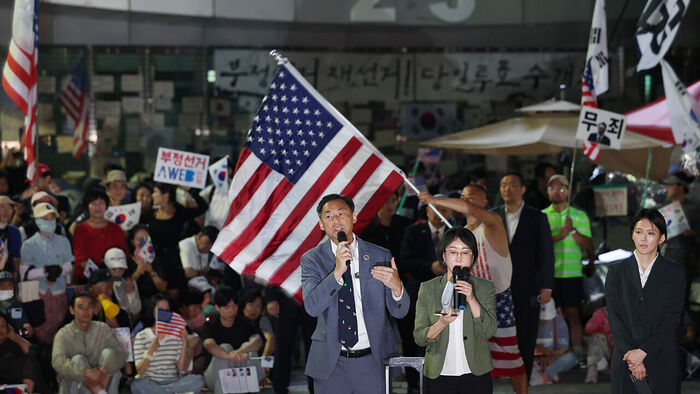
What Is Behind the Expansion of 'Idaenam' (Young Men in Their 20s)?
① Fierce Survival Competition and Anxiety Felt by the 'Generation of Deprivation'
The current generation in their teens and 20s is the first generation to feel anxious that they will be economically poorer than their parents' generation or fail to secure good jobs. Instead of benefiting from an era of high growth, they are frustrated by the excessively high barriers in the employment and real estate markets. The resulting chronic anxiety lowers their tolerance for others and the value of solidarity. It reinforces the mindset of "every man for himself."
② Discourse on 'Mechanical Fairness' and Perception of Reverse Discrimination
Young men felt strong resentment toward minority-preferential policies, such as gender equality and female quotas, which were actively promoted during the Moon Jae-in administration. They expressed a strong sense of deprivation, asking, "Why should we, who have no power, pay the price for the benefits enjoyed by older generations of men?" They argue that while there is no compensation for mandatory military service, policies that accommodate socially disadvantaged groups, such as women or foreigners, constitute "reverse discrimination" and unfairness against them.
③ Echo Chamber Effect of New Media Platforms
The main channels through which young people consume information have shifted to algorithm-based media and internet communities such as YouTube, DC Inside, and FM Korea. Provocative content featuring anti-feminism, xenophobia, and mockery of progressive politicians is mass-produced because it easily attracts views. As young men are continuously exposed to content of similar tendencies by algorithms, they become trapped in an echo chamber effect, believing that their biased thoughts are the "common sense of the entire society."
④ The Political Sphere's Strategy of 'Dividing Gender Conflict'
Some conservative politicians have used this anger of young men as a political asset. They provided "political efficacy" to their anger with intuitive slogans such as "abolishing the Ministry of Gender Equality and Family" or "abolishing quotas." As a result, they have bound them as a strong core support base for conservative parties.
 The conservative shift among young men is not the "anti-communist conservatism" of the Cold War era. It has a strong, survival-oriented, pragmatic character of "opposing feminism, PC-ism, and progressive politics that break even mechanical fairness in a fierce world where it is hard enough to protect my own share." In this process, it entails side effects where hatred and extreme mockery culture are accepted without filtering. The culture and grammar of the far-right, which mock and despise the values of past generations such as human rights, solidarity, and tolerance, are growing in influence.
There is much to listen to in the arguments of young men. The older generation has a responsibility to resolve their dissatisfaction and anxiety. However, the pathological side effects that eat away at the health of society must be prevented and treated. The problem is that this disease is gradually becoming part of their constitution. Once it becomes chronic, reversing it is an extreme challenge. This is why the political sphere, which is only taking a political engineering approach to this issue, must wake up as soon as possible.
※ Please note: This article was translated by AI and may contain errors.
Copyright Ⓒ SBS. All rights reserved. Unauthorized reproduction, redistribution, and use for AI training are prohibited.