SBS News
Waking Up Drowsy Students and Blocking Everything but Online Lectures: The 'AI Sparta' Study Rooms Taking Over Daechi-dong
Published : Jun 30, 2026 11:44 AM

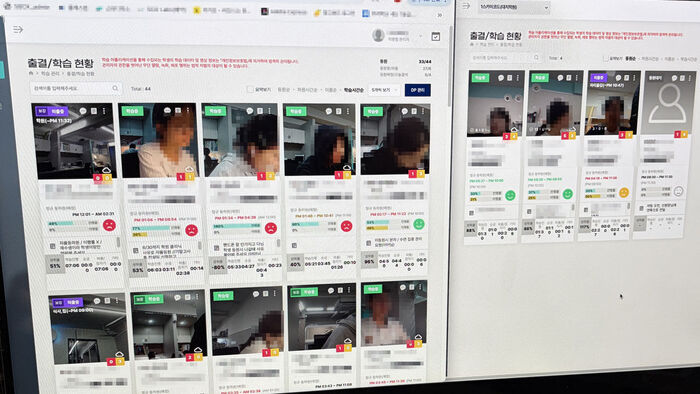
▲ A manager at a managed study room in Daechi-dong, Gangnam-gu, Seoul, monitors students via screen.
"If I just nod off because I'm sleepy, the staff comes in right away to wake me up."
This is why Kim, an 18-year-old third-year student at Chung-Ang University High School in Seoul, has been frequently visiting a 'managed study room' in Daechi-dong, Gangnam-gu.
On the evening of June 24, as the time approached for middle and high school students to finish their school day and private academy classes, students began to gather here one by one.
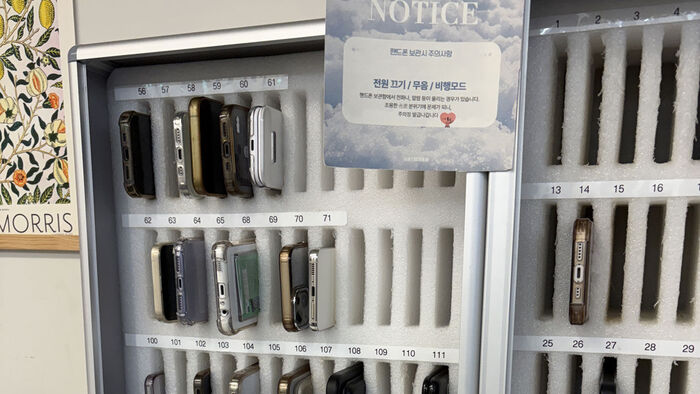
Upon entering, the students, as if by habit, handed over their mobile phones to a storage locker and quickly took their assigned seats.
Each desk was equipped with a tablet PC featuring a camera and a timer.
Nowadays, signs for 'managed study rooms' can be easily found throughout the Daechi-dong academy district.
Unlike traditional study rooms of the past that simply provided space to study, these facilities have evolved into systems that go beyond controlling smartphones and checking attendance to managing students' overall study habits and daily lives.
Managed study rooms not only track attendance and collect mobile phones but also operate on a 'period system' that separates study time from break time.
Furthermore, some managed study rooms, which have gained attention for their so-called 'Spartan-style study management,' utilize artificial intelligence (AI) and mobile applications to systematically manage everything from study plans to drowsiness, outings, and sleep time.
On-site management staff monitor the real-time study status of students at a glance through screens transmitted from the tablet PCs.
If a student needs to leave their seat, they must enter the reason into the app, and if they are late returning, a notification is sent to the parent's mobile app.
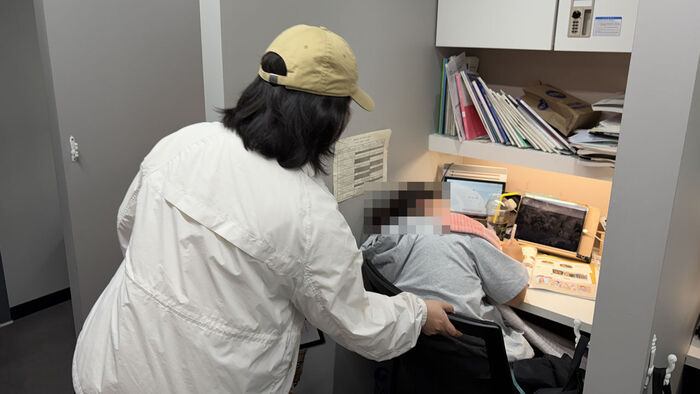
Even if they are sitting at their desk, if there is no movement for a long time, sensors recognize it as the student dozing off, and a manager comes to wake them up.
If a student needs a break, they can set a sleep time in the app, and staff will wake them at the designated time.
Study volume is also managed.
When students enter their daily study plans into the tablet at their desk, the system automatically tracks whether they have been fulfilled.
Internet lectures can only be viewed on the study tablet, and access to YouTube, games, and social media is restricted via a firewall.
There is also a warning system.
If rules are violated—such as tardiness, unexcused absences, unauthorized outings, or being unreachable—a 'warning notice' is issued.
The warning notice is notified to parents via the app, and if a certain number of warnings is exceeded, the student is expelled.
A representative for the study room stated, "Parents are satisfied that their children are developing study habits without them having to nag."
The students said that this systematic management is helpful for their studies.
Kim, an 18-year-old third-year student at Dongduk Girls' High School, said, "When I was in my second year, I would sit in a study cafe for four hours, but I only really studied for about one hour. Since coming here, I've been able to focus and study for about six hours a day on average."
Lee, an 18-year-old third-year student at Chungdong High School, said, "It feels like the posture for studying is being formed naturally. My grades have also gone up by about three levels."
Some students even come from outside the Seoul metropolitan area to find these Spartan-style managed study rooms.
Students from regions such as North Jeolla, Chungcheong, and Gangwon provinces attend special lectures at Daechi-dong academies during their vacations and spend their free time at these facilities.
However, not all students adapt to this system.
Lee, the student from Chung-Ang University High School, said, "I have friends who gave up because the system was too strict. It seemed like they were struggling because they didn't enroll of their own volition."
Experts advise that while management like that of these study rooms can help in forming temporary study habits, students must ultimately cultivate self-directedness.
The concern is that if students study mechanically by relying on the management of others, they may face difficulties with self-directed learning the moment that management is removed.
Kwak Keum-joo, a professor emeritus of psychology at Seoul National University, said, "For students who find it difficult to maintain study habits through willpower alone, external management can help reduce laziness. They seek out these management systems because there is a limit to setting and practicing goals on their own."
However, Professor Kwak added, "If they become overly dependent on the system from the beginning, it can be difficult to develop the ability to study on their own. It should be used to build consistent study habits, but ultimately, it should lead toward a direction where they can study in a self-directed manner."
(Photo: Yonhap News)
※ Please note: This article was translated by AI and may contain errors.
Copyright Ⓒ SBS. All rights reserved. Unauthorized reproduction, redistribution, and use for AI training are prohibited.