SBS News
Trump Set Tariff Rates Just Before Announcement, Googling After Distrusting Gov't Data
Published : Jun 24, 2026 4:10 AM
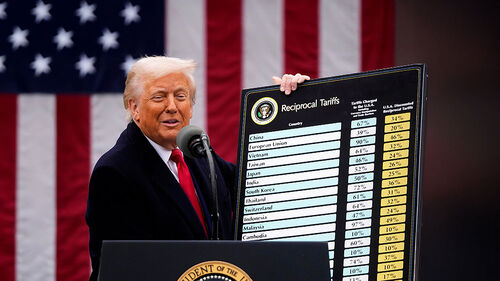
▲ Trump announces tariff policy
Specific tariff rates were not finalized until just days before U.S. President Donald Trump shook the world by announcing his reciprocal tariff policy on April 2 last year, New York Times (NYT) reporters revealed in a new book published on June 23 (local time).
Maggie Haberman and Jonathan Swan, NYT White House correspondents, detailed the chaos inside the White House around "Liberation Day"—the day the reciprocal tariff policy was announced—in their book "Regime Change," published on the same day.
According to the book, a few days before the announcement of the reciprocal tariff policy, U.S. Commerce Secretary Howard Lutnick and U.S. Treasury Secretary Scott Bessent divided up the task of contacting officials from trading partners around the world to deliver warning messages.
But the warnings were vague, and the two secretaries merely urged the trading partners not to take retaliatory measures.
The authors wrote, "The warnings were vague because neither secretary knew what Trump was going to do," adding, "Trump didn't know either; he had not yet made a decision."
The reason specific figures were not finalized until just before the announcement was that the tariff policy was not derived through thorough analysis and simulation, but was instead adjusted based on President Trump's personal intuition and stubbornness.
The book also introduced an anecdote in which President Trump, distrusting the official data reported by the administration during the policy-making process, ordered an aide to "Google" to find numbers that suited his taste.
On March 26, 2025, a week before Liberation Day, President Trump complained during a meeting with aides in the Oval Office about the tariff strategy, saying, "Nobody brings me the fucking numbers."
He then instructed aide Natalie Harp, who was sitting near the wall in the corner of the office, "Google it. And bring me the real numbers."
Harp is an aide who stays near President Trump, searches social media posts or news, and hands him printouts. Trump reportedly showed his trust in Harp, saying, "She's never going to leave me."
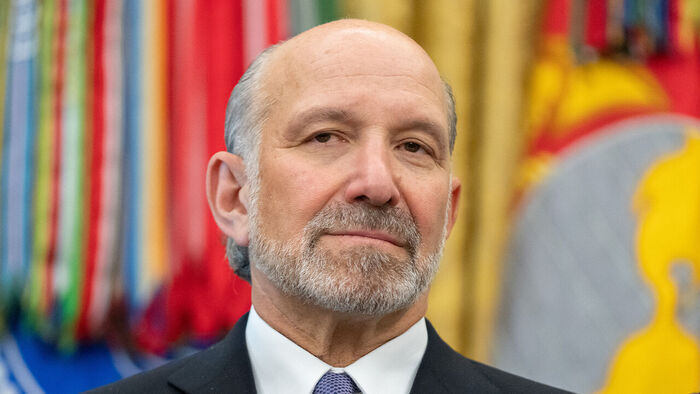
Although Secretary Lutnick presented data on other countries' tariff rates on the U.S. calculated by the Office of the United States Trade Representative (USTR), President Trump did not believe it, calling them "fucking bullshit numbers."
This was because President Trump believed that the tariff rates imposed on the U.S. by China or India were much higher than the figures compiled by the USTR.
Secretary Lutnick turned to USTR Representative Jamieson Greer and urged him to "say something," but Greer, who had no intention of confronting President Trump, remained silent.
President Trump finalized the reciprocal tariff rates for each country in consultation with Peter Navarro, his "tariff strategist" and White House trade and manufacturing adviser. It was revealed that even White House aides complained as the rates were determined in a haphazard manner.
The tariff rates announced by President Trump at the time were calculated by dividing the trade deficit by the import value and then dividing that figure in half, drawing criticism for being arbitrarily calculated without any theoretical basis.
Secretary Lutnick expressed his frustration with this flimsy formula to his close associates, making a self-deprecating joke, "Because I only went to middle school."
This was interpreted as a sarcastic remark targeting Navarro, who holds a PhD in economics from Harvard University.
When the tariff policy was battered by the media the day after the announcement, President Trump blamed Navarro in private, complaining about "Peter's fucking stupid numbers."
The problem was the reaction of the financial markets.
Following the announcement of the reciprocal tariff policy, the S&P 500 index on Wall Street plummeted by 12% over two days, and even the U.S. Treasury market, considered a safe haven, saw a sell-off, causing U.S. Treasury yields to surge (bond prices plunged).
At the time, President Trump tried to hold onto unreasonably high tariff rates longer than aides like Secretary Bessent and Secretary Lutnick could tolerate, the authors reported.
In private, Secretary Bessent marveled at President Trump's high risk tolerance, viewing it as a key factor in Trump's political success.
Secretary Bessent compared President Trump to his former boss, hedge fund legend George Soros, calling them "the same breed of animal" and noting that both possessed an immense appetite for risk and survival skills.
※ Please note: This article was translated by AI and may contain errors.
Copyright Ⓒ SBS. All rights reserved. Unauthorized reproduction, redistribution, and use for AI training are prohibited.