SBS News
'A Gift Worth Hundreds of Billions of Dollars': Why Jensen Huang Singled Out South Korea
Published : Jun 16, 2026 5:28 PM
Do you know who the hottest figure in South Korea has been recently? It is none other than Nvidia CEO Jensen Huang, who visited South Korea on June 5.
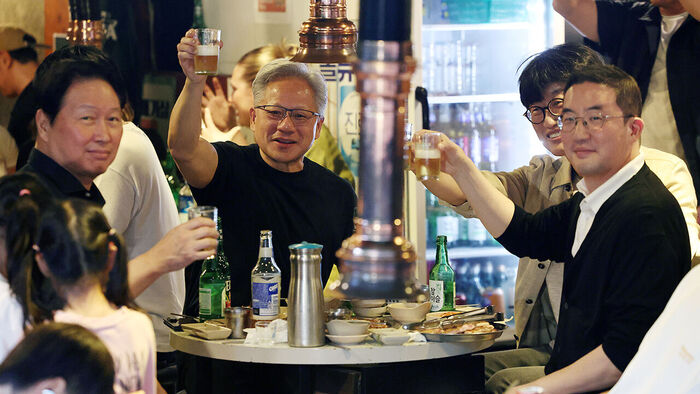
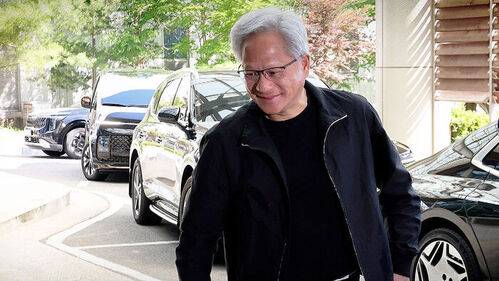
Jensen Huang, who greeted the country by saying he brought a surprise gift to South Korea, literally showed a wide range of activities during his five-day visit. As soon as he got off the plane, he rushed to an internet cafe (PC bang) to meet e-sports legend Faker. He then had a so-called "brotherly" meeting over samgyeopsal (grilled pork belly) and soju with SK Group Chairman Chey Tae-won, LG Group Chairman Koo Kwang-mo, and Naver Global Investment Officer Hae-jin Lee, and even appeared on an entertainment show and threw the ceremonial first pitch at a baseball game.
For his final schedule in South Korea, he visited major domestic companies one by one to solidify AI alliances and announced cooperation plans in areas such as AI factories and physical AI. He emphasized that he brought potential business worth hundreds of billions of dollars, calling it the largest business gift in South Korean history.
Let's unpack the bundle of gifts Jensen Huang left behind.
The most emphasized aspect of this visit was the "AI Factory" business.
An AI factory is a next-generation data center for AI. Going beyond a data center that simply serves as a repository for vast amounts of data, it allows AI to learn and infer using this data, ultimately creating customized AI to be used in actual systems such as robots and autonomous vehicles. Jensen Huang defines AI factories as essential infrastructure for the AI era and essentially views them as Nvidia's current and future cash cow.
Then, why did he bring the AI factory business to South Korea? It is because South Korea is the optimal place to build and operate AI factories. First, AI factories require semiconductors to process massive amounts of power and data. Communication networks are also crucial for fast data processing, and cloud services are needed so that various companies can use the AI factories. Ultimately, industries are needed where the customized AI created in AI factories will be applied. That industry is physical AI. Various physical AIs are expected to take place in robotics, mobility, and manufacturing as a whole, and South Korea is the country richest in manufacturing industries where physical AI can be implemented.
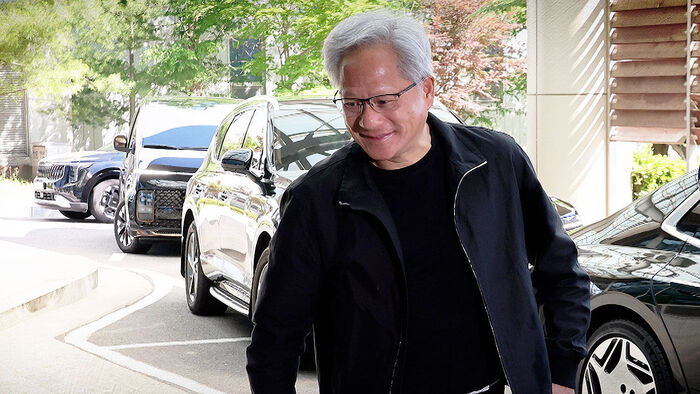
This is evident just by looking at the companies Jensen Huang met this time. SK leads in semiconductors and telecommunications, LG in robotics and data center technology, Hyundai Motor in robotics and mobility, and Naver in cloud services—all of these companies lead industries essential for AI factories. Doosan, where he threw the first pitch, is also a key partner in the AI factory alliance through cooperation in power sectors such as physical AI and small modular reactors (SMRs).
Then, is the AI factory industry really a surprise gift? First of all, it is indeed a gift. Just being able to cooperate on future growth engines with Nvidia, the absolute powerhouse of the AI era, is a massive opportunity. South Korean companies will handle key processes in the AI factories and may receive priority supplies of Nvidia's GPUs.
However, this gift is actually more precious to Jensen Huang and Nvidia themselves. Ultimately, Nvidia's GPUs are essential for AI factories. At a time when U.S. big tech companies like Google, Microsoft, and Meta are accelerating the development of their own chips to reduce their reliance on Nvidia, this secures a guaranteed stream of stable revenue. By proposing to build AI factories together, Nvidia has secured future buyers for its GPUs.
Although it was called a gift worth hundreds of billions of dollars, the largest share of the fruits belongs to Jensen Huang himself. Still, up to this point, it can be seen as a win-win. The concern lies in what comes next.
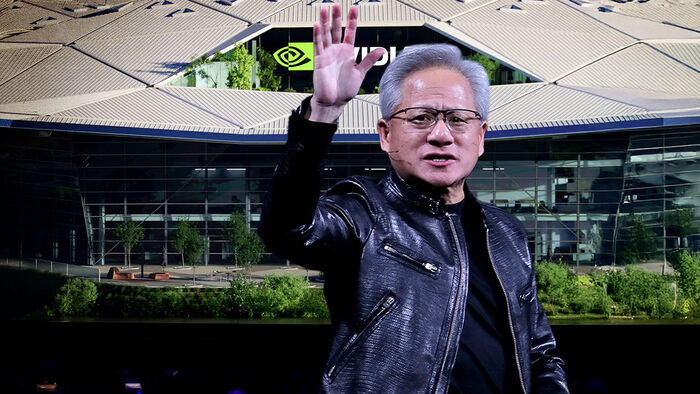 What Jensen Huang is aiming for is Nvidia's complete dominance over the AI ecosystem. The secret behind Nvidia becoming the world's top company is its ecosystem strategy. Until recently, Nvidia's GPUs and AI chips have been irreplaceable, ensuring that the development of the AI industry directly translates into Nvidia's growth.
Amid intensifying competition in AI chips, Nvidia is preparing its ecosystem strategy once again, this time in physical AI. The goal is to preemptively dominate AI Models to be used in robotics and mobility. To do this, data on robots and mobility used in various fields is key. The entities that can provide this data are South Korean companies. By partnering with South Korean physical AI companies, Nvidia aims to train and develop actual Models, ultimately making Nvidia the standard Model for physical AI, such as robotics and mobility, just like Windows for PCs and Android for smartphones. While this is an opportunity for South Korean companies to grow together through cooperation with Nvidia, which leads AI technology, there is also a clear risk of becoming dependent on Nvidia's ecosystem.
A two-track strategy is needed. While gaining what we can from Nvidia, we must also focus on our own independent research and development, including our own Models, to avoid dependency. The day after Jensen Huang left, the South Korean government announced that it would embark on developing independent physical AI technology. It seems that the government and businesses must not miss this window of opportunity.
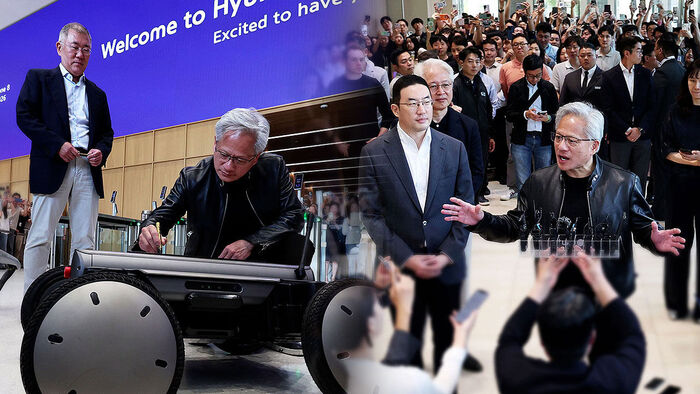
During his visit, CEO Jensen Huang drew massive crowds wherever he went, receiving idol-like attention. In particular, he brought group chairmen, who rarely make public appearances, out to the streets, personally grilling samgyeopsal, clinking beer glasses, and putting his arms around their shoulders. Building a friendly image is also evaluated as a highly sophisticated strategy by CEO Jensen Huang. By showing himself enjoying Korean culture and praising South Korea's AI ecosystem, he made cooperation with Nvidia easily acceptable without resistance.
While CEO Jensen Huang brought a bundle of gifts to South Korea, we must not forget that behind his friendly image lie Nvidia's economic profits and a fierce survival strategy.
 Video
Video
Jensen Huang, who greeted the country by saying he brought a surprise gift to South Korea, literally showed a wide range of activities during his five-day visit. As soon as he got off the plane, he rushed to an internet cafe (PC bang) to meet e-sports legend Faker. He then had a so-called "brotherly" meeting over samgyeopsal (grilled pork belly) and soju with SK Group Chairman Chey Tae-won, LG Group Chairman Koo Kwang-mo, and Naver Global Investment Officer Hae-jin Lee, and even appeared on an entertainment show and threw the ceremonial first pitch at a baseball game.
For his final schedule in South Korea, he visited major domestic companies one by one to solidify AI alliances and announced cooperation plans in areas such as AI factories and physical AI. He emphasized that he brought potential business worth hundreds of billions of dollars, calling it the largest business gift in South Korean history.
Let's unpack the bundle of gifts Jensen Huang left behind.
Why the AI Factory Business in South Korea?
Jensen Huang / CEO of Nvidia
Building AI factories is very important. Anyone would want more AI factories if they are profitable.
An AI factory is a next-generation data center for AI. Going beyond a data center that simply serves as a repository for vast amounts of data, it allows AI to learn and infer using this data, ultimately creating customized AI to be used in actual systems such as robots and autonomous vehicles. Jensen Huang defines AI factories as essential infrastructure for the AI era and essentially views them as Nvidia's current and future cash cow.
Then, why did he bring the AI factory business to South Korea? It is because South Korea is the optimal place to build and operate AI factories. First, AI factories require semiconductors to process massive amounts of power and data. Communication networks are also crucial for fast data processing, and cloud services are needed so that various companies can use the AI factories. Ultimately, industries are needed where the customized AI created in AI factories will be applied. That industry is physical AI. Various physical AIs are expected to take place in robotics, mobility, and manufacturing as a whole, and South Korea is the country richest in manufacturing industries where physical AI can be implemented.
This is evident just by looking at the companies Jensen Huang met this time. SK leads in semiconductors and telecommunications, LG in robotics and data center technology, Hyundai Motor in robotics and mobility, and Naver in cloud services—all of these companies lead industries essential for AI factories. Doosan, where he threw the first pitch, is also a key partner in the AI factory alliance through cooperation in power sectors such as physical AI and small modular reactors (SMRs).
Jensen Huang / CEO of Nvidia
From robotics to future AI factories, we are cooperating as one giant team.
Is It Really a Surprise Gift for South Korea?
However, this gift is actually more precious to Jensen Huang and Nvidia themselves. Ultimately, Nvidia's GPUs are essential for AI factories. At a time when U.S. big tech companies like Google, Microsoft, and Meta are accelerating the development of their own chips to reduce their reliance on Nvidia, this secures a guaranteed stream of stable revenue. By proposing to build AI factories together, Nvidia has secured future buyers for its GPUs.
Although it was called a gift worth hundreds of billions of dollars, the largest share of the fruits belongs to Jensen Huang himself. Still, up to this point, it can be seen as a win-win. The concern lies in what comes next.
Jensen Huang / CEO of Nvidia
Nvidia's greatest contribution to South Korea is inventing the AI industry and creating the AI ecosystem.
What Is Jensen Huang Really Aiming For?
Jang Young-jae / Chair Professor at KAIST
The background of Nvidia's growth lies in such an ecosystem strategy, and in physical AI as well, they want to build their own ecosystem and eventually lock users in.
Amid intensifying competition in AI chips, Nvidia is preparing its ecosystem strategy once again, this time in physical AI. The goal is to preemptively dominate AI Models to be used in robotics and mobility. To do this, data on robots and mobility used in various fields is key. The entities that can provide this data are South Korean companies. By partnering with South Korean physical AI companies, Nvidia aims to train and develop actual Models, ultimately making Nvidia the standard Model for physical AI, such as robotics and mobility, just like Windows for PCs and Android for smartphones. While this is an opportunity for South Korean companies to grow together through cooperation with Nvidia, which leads AI technology, there is also a clear risk of becoming dependent on Nvidia's ecosystem.
What Strategy Does South Korea Need?
During his visit, CEO Jensen Huang drew massive crowds wherever he went, receiving idol-like attention. In particular, he brought group chairmen, who rarely make public appearances, out to the streets, personally grilling samgyeopsal, clinking beer glasses, and putting his arms around their shoulders. Building a friendly image is also evaluated as a highly sophisticated strategy by CEO Jensen Huang. By showing himself enjoying Korean culture and praising South Korea's AI ecosystem, he made cooperation with Nvidia easily acceptable without resistance.
While CEO Jensen Huang brought a bundle of gifts to South Korea, we must not forget that behind his friendly image lie Nvidia's economic profits and a fierce survival strategy.
 Video
Video※ Please note: This article was translated by AI and may contain errors.
Copyright Ⓒ SBS. All rights reserved. Unauthorized reproduction, redistribution, and use for AI training are prohibited.