SBS 뉴스
Samsung and SK Consider Semiconductor Investments in Provinces; Gwangju's Cheomdan District 3 Draws Attention
입력 : 2026.06.11 09:12수정 : 2026.06.11 09:12

▲ Samsung Electronics and SK Hynix
Samsung Electronics and SK Hynix are reportedly considering expanding their semiconductor facility investments to the Honam and Chungcheong regions, raising expectations in the Jeonnam-Gwangju area.
The Lee Jae-myung administration is also strongly requesting large conglomerates to invest in the Honam region, which is less developed compared to the metropolitan area, for balanced regional development, drawing attention to whether the actual investments will materialize.
Following President Lee Jae-myung's announcement at a press conference marking his first anniversary in office on June 8 that he would soon unveil a large-scale investment project to achieve a major shift in growth strategy, Min Hyung-bae, the mayor-elect of Jeonnam-Gwangju Special City, also hinted on the same day at his transition committee's inauguration ceremony that there would be semiconductor-related investments in the integrated special city.
With Hyundai Motor Group's announcement in February this year of a phased investment of 9 trillion won in the Saemangeum area of Jeonbuk to build an innovative growth hub encompassing artificial intelligence (AI), robotics, and energy, large conglomerates' investments in regional areas are becoming a reality.
Hyundai Motor Group plans to establish an AI data center, a robot manufacturing and parts cluster, a water electrolysis plant, solar power generation, and an AI hydrogen city on a 1.124 million square meter (approximately 340,000 pyeong) site in Saemangeum.
Following Hyundai Motor Group's decision to make a large-scale investment in Saemangeum, expectations have emerged that Jeonnam and Gwangju will be next in line for investment.
Above all, some analyze that investments by global conglomerates, including Samsung and SK, could be possible as President Lee Jae-myung promised "special compensation" in connection with the administrative integration of Jeonnam and Gwangju.
President Lee supported this view by stating at his recent first-anniversary press conference, "Regarding the Yeongnam-Honam issue, we need to bring more balance to Honam."
South Jeolla Province Governor Kim Yung-rok also wrote on Facebook, "My heart flutters at the thought that we will soon see Samsung Electronics and SK Hynix semiconductor factories built in our Jeonnam-Gwangju, which has been identifying industrial complexes and steadily preparing for RE100 (100% renewable energy) to attract semiconductor factories."
Samsung Electronics and SK Hynix are reportedly reviewing plans to expand their semiconductor production bases to the Gwangju-Jeonnam region.
Possibilities have been raised that Samsung Electronics might build a semiconductor packaging (back-end process) factory in Gwangju.
Analysts suggest that while investments in front-end semiconductor manufacturing plants, which engrave circuits on wafers (the basic material of semiconductors), are expanding mainly in Yongin and Pyeongtaek, a back-end packaging plant could be built in Gwangju.
Back-end packaging is the process of assembling and producing final products, such as High Bandwidth Memory (HBM), after testing. It uses less electricity and water compared to front-end semiconductor manufacturing plants, making investment possible even in locations with somewhat less favorable conditions.
Speculation has also arisen that SK Hynix could locate some back-end facilities, including packaging, in the Honam region.
South Jeolla Province expects that if a back-end packaging plant is established, it will create 500 to 2,000 jobs and generate massive local tax revenue.
Kang Wi-won, Vice Governor for Economic Affairs of South Jeolla Province, also wrote on Facebook, "Along with South Jeolla public officials, I poured all my energy into opening the semiconductor era," adding, "This is the result of fully supporting President Lee Jae-myung, the Blue House, and the central government's unwavering philosophy of 'balanced growth,' as well as the national will for 'Honam's great transformation and great growth.'"
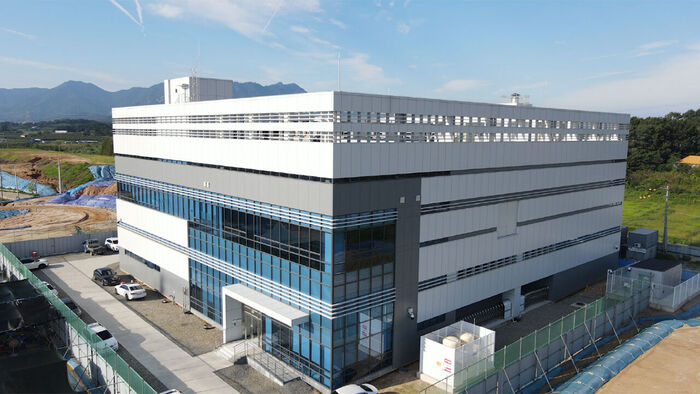
As expectations grow that an investment plan announcement is imminent, the greatest attention is focused on its location.
Gwangju's Cheomdan District 3, which borders Jangseong in South Jeolla Province, is drawing attention as a future growth hub based on its AI-based industrial infrastructure.
Samsung Electronics is reportedly considering Gwangju's Cheomdan District 3 as the location for its semiconductor packaging (back-end) plant.
In November last year, Samsung Electronics completed the acquisition of FläktGroup, Europe's largest air conditioning equipment company, and named Gwangju as one of the candidate sites while announcing plans to establish a production line in South Korea.
Samsung Electronics plans to combine Fläkt's world-class heating, ventilation, and air conditioning (HVAC) technology with its own individual HVAC technology to make a full-scale entry into the AI and data center HVAC market, which is projected to grow to 62 trillion won by 2030.
It is also being mentioned as a candidate site for a southwestern region data center joint venture between SK Group and OpenAI. If Samsung Electronics' semiconductor packaging plant is also built there, Gwangju's Cheomdan District 3 will transform into an AI hub.
Cheomdan District 3 is a 3.62 million square meter general industrial complex currently being developed with the goal of establishing an AI-based science and technology startup complex and a research-industry convergence complex.
It borders Jangseong in South Jeolla Province and is closely connected to major transportation networks such as the Honam Expressway, National Route 13, and Bitgoeul-daero, making transportation convenient.
An official from Gwangju City said, "Cheomdan District 3 is an area with excellent AI-based industrial infrastructure, where data centers and R&D facilities are being established," adding, "It has also been designated as a Free Economic Zone and the Gwangju Research and Development Special Zone, providing favorable conditions for corporate activities."
A semiconductor fabrication plant (fab) that handles both front-end and back-end processes requires large-scale facilities and energy, including 200,000 pyeong of land, 1 GW of power, and 20 tons of water per unit.
Due to the nature of semiconductor processes that must operate 24 hours a day, there are many constraints, such as the need to have an emergency power supply network.
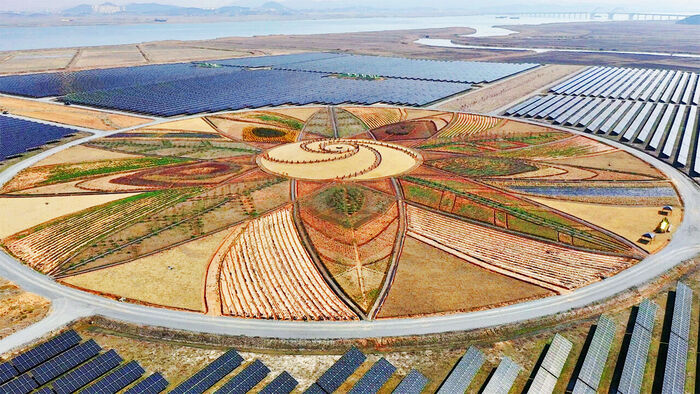
Haenam Solaseado is considered a candidate site because it meets the conditions for a semiconductor factory, including a power system based on abundant solar energy, a large and inexpensive site, water, and workforce.
Solaseado aims to be an energy-independent city based on RE100 (100% renewable energy).
It supplies renewable energy at low prices in connection with a 5.4 GW solar power integration complex built on reclaimed land along the Yeongsan River.
There is also an abundant workforce required for the AI industry, with institutions such as the Korea Institute of Energy Technology (KENTECH) in Naju, Gwangju Institute of Science and Technology (GIST), Chonnam National University, Chosun University, Mokpo National University, and Sunchon National University.
Recently, it was also selected as a candidate site for the National AI Computing Center pursued by the Samsung SDS consortium.
South Jeolla Province maintains that a semiconductor manufacturing fab must be attracted to practically realize regional development.
This is based on the judgment that the regional economy will benefit only if the area becomes a hub that handles the entire semiconductor production lifecycle, going beyond back-end plants or data centers.
An official from South Jeolla Province said, "If a single semiconductor fab is established, it can create tens of thousands of direct and indirect jobs and form a whole new city," adding, "Starting with attracting a back-end plant, we hope Honam can be reborn as a semiconductor hub representing South Korea."
(Photo: Yonhap News)
※ Please note: This article was translated by AI and may contain errors.
Copyright Ⓒ SBS. All rights reserved. 무단 전재, 재배포 및 AI학습 이용 금지
SBS 뉴스